Tata Motors has confirmed that its first flex-fuel passenger vehicle could be ready by the end of 2026 or early 2027. The announcement comes at a time when the Indian government is working on regulations for vehicles that can run on higher ethanol-blended fuels such as E85 and E100.
Speaking during the company’s Q4 and FY2026 earnings interaction, Tata Motors Passenger Vehicles MD and CEO Shailesh Chandra said the company is already prepared from a technology standpoint. According to him, Tata is comfortable with its readiness for higher ethanol blends and expects at least one flex-fuel product to be market-ready within the next year or two.
The development is important as India continues to focus on cleaner mobility solutions and reducing dependence on traditional fossil fuels. Flex-fuel vehicles can run on petrol mixed with a higher percentage of ethanol, which is considered a more environment-friendly alternative.
Tata Motors also highlighted that all its passenger vehicles have been E20-compliant since 2023. This means the company’s current models can already operate on petrol blended with up to 20 percent ethanol. Discussions regarding higher ethanol blends are currently taking place between the government and the automotive industry through SIAM.
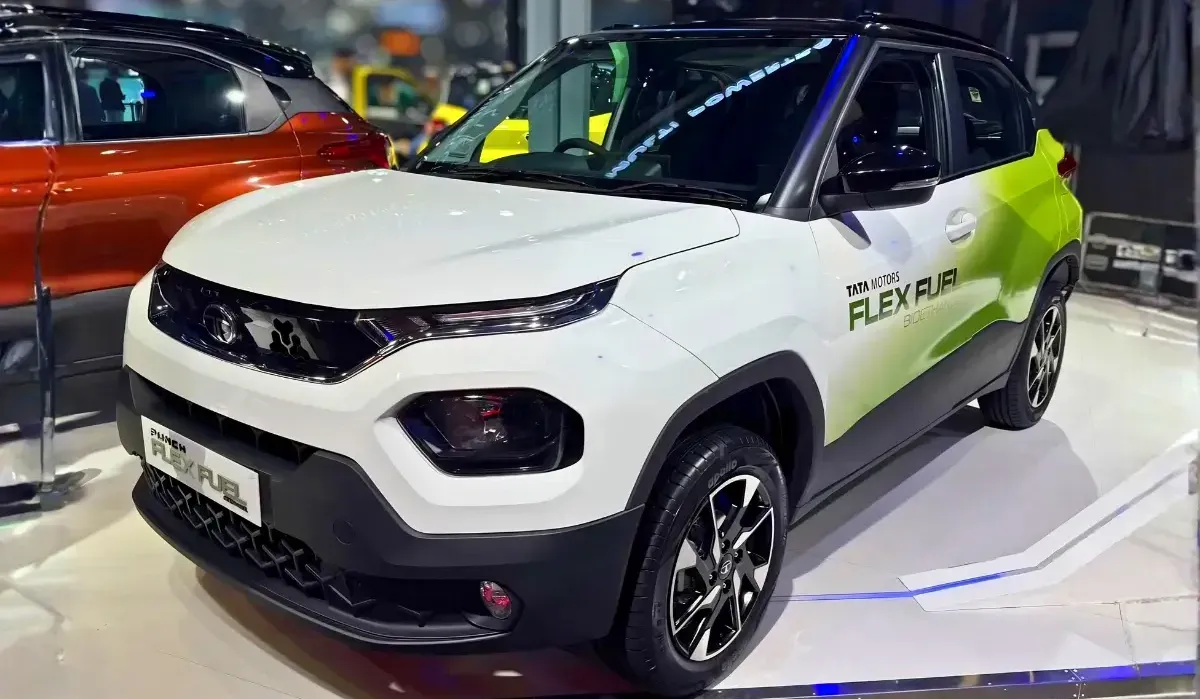
The upcoming flex-fuel model is expected to be based on the Tata Punch. Tata had earlier showcased the Punch flex-fuel concept at the Bharat Mobility Global Expo 2025. The showcased model supported E85 fuel compatibility, allowing it to run on petrol blended with up to 85 percent ethanol.
The flex-fuel Punch used the same 1.2-litre naturally aspirated petrol engine available in the standard version. However, Tata made several technical updates, including changes to the ECU, fuel-injection system and exhaust after-treatment setup. These modifications help the vehicle detect and adapt to different ethanol blend levels.
The Punch is already available with petrol, CNG and electric powertrain options in India. Adding a flex-fuel version would further strengthen Tata Motors’ multi-powertrain strategy in the Indian market.
Several other carmakers, including Hyundai Motor Company, Maruti Suzuki and Toyota, have also showcased flex-fuel vehicle prototypes in recent years as interest in alternative fuel technology continues to grow in India.