What's The Big News?
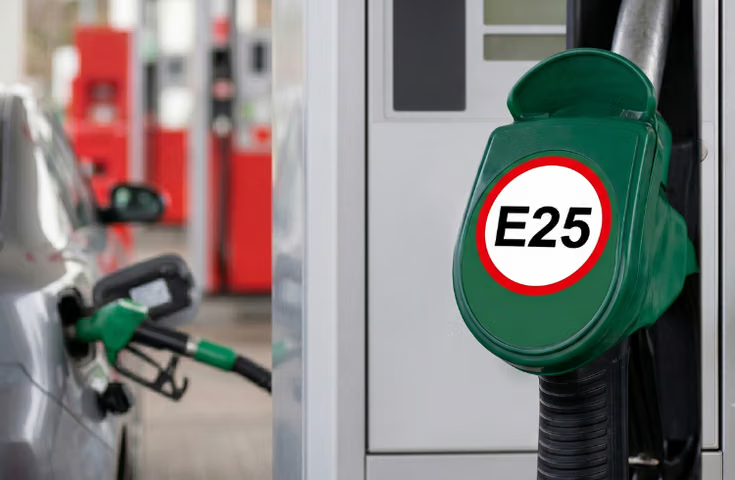
Remember when we were told our cars would have to drink 20% ethanol-blended fuel, and then suddenly the goalpost shifted to E25? Well, hold your horses. Word on the street is that the government is reconsidering its aggressive timeline for rolling out E25 petrol across India (about time, honestly). This delay isn't just a bureaucratic hiccup; it's a massive development for anyone who owns a car or is planning to buy one soon.
Reports suggest that the target of achieving a 25% ethanol blend in petrol by 2025-26 is facing major roadblocks. Automakers and oil companies are sweating over the technical challenges, and it looks like the grand rollout might get pushed back. For you and me, this isn't just policy jargon; it directly affects the health of our cars and our wallets. Let's break down why this is happening and why you should actually be relieved.
Why the E25 Delay is Good News for Car Owners
Let's talk engineering. Ethanol is essentially alcohol, and alcohol is highly corrosive. It loves water. When you pump fuel with high ethanol content into an engine that wasn't designed for it, it starts eating away at rubber hoses, gaskets, and fuel injectors. Most cars on Indian roads today are, at best, compliant with E20 fuel. Pushing them to run on E25 without major modifications is like asking a marathon runner to sprint on a diet of street-side pakodas. It won't end well, and you'll be left with a hefty repair bill.
Car manufacturers have been scrambling to make their engines E25-compliant. But doing this requires expensive material upgrades for fuel tanks, pipes, and engine valves. If the government forces this transition too quickly, automakers will have to pass those R&D costs down to us. In a market where buying a basic hatchback already feels like purchasing a small piece of prime real estate, we really don't need another price hike. This delay gives manufacturers breathing room to test these engines thoroughly instead of rushing half-baked tech into the market.
The Infrastructure Nightmare and the Sugar Dilemma
It's not just about the cars; the fuel stations aren't ready either. To store and dispense E25 fuel safely, oil marketing companies need to upgrade their underground storage tanks and pipelines to prevent moisture contamination. This requires massive capital investment. If they rush it, we risk getting contaminated fuel at the pump, which will leave you stranded on the highway with a dead engine on a rainy night. Nobody wants that level of stress.
Then there is the raw material problem. Ethanol in India is primarily produced from sugarcane. With unpredictable monsoon patterns and fluctuating agricultural yields, relying so heavily on food crops for fuel is a risky gamble. We've already seen the government restrict sugar exports to keep domestic food prices stable. If we don't have enough sugarcane to feed the ethanol plants, where is the E25 going to come from? Rushing the rollout without a guaranteed supply chain is simply putting the cart before the horse.
Specs At A Glance
Fuel Type | Ethanol Content | Engine Compatibility | Expected Efficiency Impact |
|---|---|---|---|
E10 Petrol | 10% Ethanol | Almost all cars post-2010 | Baseline |
E20 Petrol | 20% Ethanol | Vehicles built post-April 2023 | Approx. 6-7% drop in mileage |
E25 Petrol | 25% Ethanol | E25-compliant engines only (TBA) | Approx. 8-10% drop in mileage (estimated) |
How Does It Stack Up Against The Competition?
Comparing these fuels is crucial because ethanol has lower energy density than pure petrol. This means the higher the ethanol blend, the lower your car's fuel efficiency will be. If you transition from E10 to E20, you'll already notice a slight drop in mileage. If we jump straight to E25, your running costs are going to shoot up even further. It is a bit ironic that we're paying more for fuel that gives us less mileage, isn't it?
E10 remains the old faithful, keeping older cars running smoothly without engine damage. E20 is the current standard that most new cars are tuned for, balancing emission reduction with engine reliability. E25, on the other hand, is still a wild frontier. Rushing into it would make our current E20-compliant cars obsolete much faster, forcing buyers to look at expensive retrofitting or early upgrades.
The Good And The Not-So-Good
What We Like
- Saves older and E20-compliant engines from premature wear and tear
- Prevents immediate car price hikes that would come with rushed E25 engine development
- Allows oil companies more time to build robust, moisture-free storage infrastructure
- Reduces the immediate pressure on agricultural resources like sugarcane
What Could Be Better
- Delays India's long-term goal of reducing crude oil import bills
- Slows down the reduction of carbon emissions from passenger vehicles
- Creates temporary uncertainty for manufacturers planning future product portfolios
Price & When You Can Buy It
Official pricing for E25 fuel is yet to be announced, but historically, ethanol-blended fuels haven't been significantly cheaper at the pump for consumers, despite costing less to produce. As for the timeline, the original target of a nationwide E25 rollout by 2025-26 is highly likely to be pushed back by at least a couple of years. We expect a revised roadmap from the government closer to the end of the current fiscal year.
Our Verdict
Here's the thing — rushing into green technology without a solid foundation is a recipe for disaster. While reducing imports and cutting emissions are noble goals, we can't do it at the cost of the average Indian car buyer's peace of mind. This potential delay is a sensible, pragmatic move. It protects our current cars, keeps vehicle prices relatively stable, and gives the industry the time it desperately needs to get the technology right. Sometimes, taking a step back is the best way to move forward safely.