
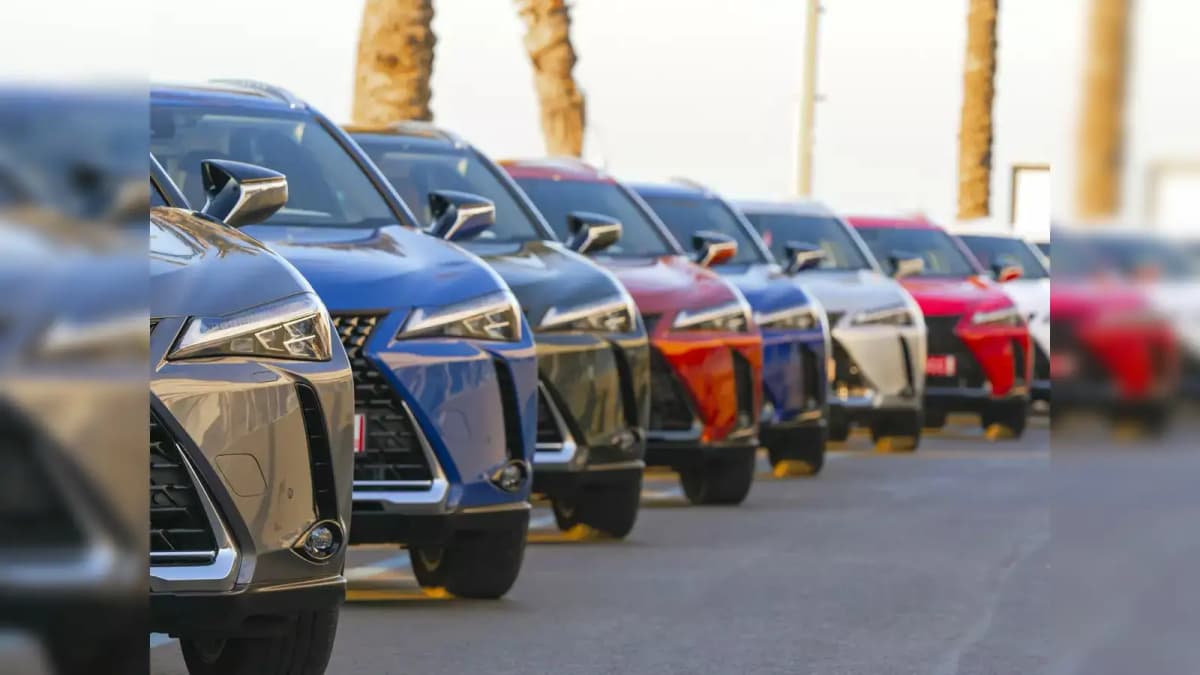
The upcoming festive season has brought a big relief for car and bike buyers in India. In its latest meeting, the GST Council has announced a major tax cut on small cars, commuter motorcycles (up to 350cc), and three-wheelers, reducing GST from 28% to 18%, effective September 22, 2025.
This move will make entry-level and mass-market vehicles more affordable, while luxury cars and high-capacity bikes will now fall under a newly introduced 40% GST slab.
Key Highlights of New GST Rates for Automobiles
- Small cars, commuter bikes, and three-wheelers will now attract 18% GST (down from 28%).
- Luxury cars, large SUVs, and bikes above 350cc will be taxed at 40% (revised from 50%).
- Commercial vehicles and auto parts simplified to a uniform 18% GST.
- Electric vehicles (EVs) continue to enjoy 5% GST with no changes.
Vehicles Now Under the 18% GST Slab
The new rates will directly benefit budget-conscious buyers ahead of the festive season.
✅ Small Cars (up to 1200cc petrol / 1500cc diesel, length ≤ 4,000mm)
Examples: Maruti Dzire, Kia Syros, Tata Tiago, Hyundai i10 Nios
✅ Motorcycles up to 350cc
Examples: Royal Enfield Bullet 350, Classic 350, Honda CB350, TVS Apache RTR
✅ Three-Wheelers / Autorickshaws
Petrol, diesel, and CNG three-wheelers now cheaper.
✅ Compact Hybrids (≤1200cc petrol / 1500cc diesel, under 4,000mm)
Examples: Maruti Brezza CNG, Tata Nexon CNG, Toyota Glanza Hybrid
Vehicles Moving to the 40% GST Slab
A new 40% GST category will apply to premium vehicles and performance bikes:
- Motorcycles above 350cc (e.g. KTM Duke 390, Triumph Speed 400)
- Mid-size & large cars / SUVs with petrol engines above 1200cc or diesel above 1500cc, longer than 4m (e.g. Hyundai Creta, Kia Seltos, Tata Harrier, Mahindra XUV700, Scorpio N)
- Full-size hybrids & strong hybrids (e.g. Maruti Grand Vitara, Toyota Innova Hycross, Honda City e:HEV, Maruti Victoris Hybrid)
- Luxury vehicles & sin goods like yachts, aircraft, recreational vehicles
Earlier, these vehicles were taxed at nearly 50% (including a 22% compensation cess). The cess is now removed, making the effective tax 40% flat.
Commercial Vehicles & Auto Parts
- Buses, trucks, and ambulances: Now taxed at 18% (down from 28%).
- Auto parts: Unified at 18% GST, removing HS code-based confusion.
This simplification is expected to ease operations for automakers and suppliers.
Electric Vehicles (EVs) Stay at 5% GST
All electric two-wheelers, three-wheelers, and cars remain at 5% GST, ensuring they remain the most tax-friendly mobility option in India.
However, clarity on luxury EVs and whether a price cap applies is still awaited.
Why This Matters for Buyers
- A 10% GST cut means big savings on small cars and bikes.
- For example, a ₹6 lakh hatchback (ex-factory) could now be ₹60,000 cheaper.
- Mass-market demand is expected to rise, giving a festive-season boost to the automobile industry.
- Even luxury SUVs and large cars get cheaper, though at a smaller margin due to the cess removal.
When Do the New GST Rates Apply?
All changes will be effective from September 22, 2025, just before the festive season sales rush. If you’re planning to buy a car or bike, waiting until this date could save you thousands.
FAQs: GST Council Meeting 2025 – Car & Bike GST Rates
1. What is the GST on small cars in India now?
👉 Small cars (≤1200cc petrol / ≤1500cc diesel, under 4m) are now taxed at 18% GST (earlier 28%).
2. What is the GST on bikes under 350cc?
👉 Commuter bikes and motorcycles up to 350cc are taxed at 18%.
3. What is the GST on SUVs like Creta and Seltos?
👉 Mid-size SUVs such as Hyundai Creta, Kia Seltos, and Tata Harrier now fall under the 40% GST slab (down from 50%).
4. What is the GST on electric cars in India?
👉 All EVs remain at 5% GST, making them the lowest-taxed category.
5. When will the new GST rates come into effect?
👉 The revised GST rates will apply from September 22, 2025.
