What's The Big News?
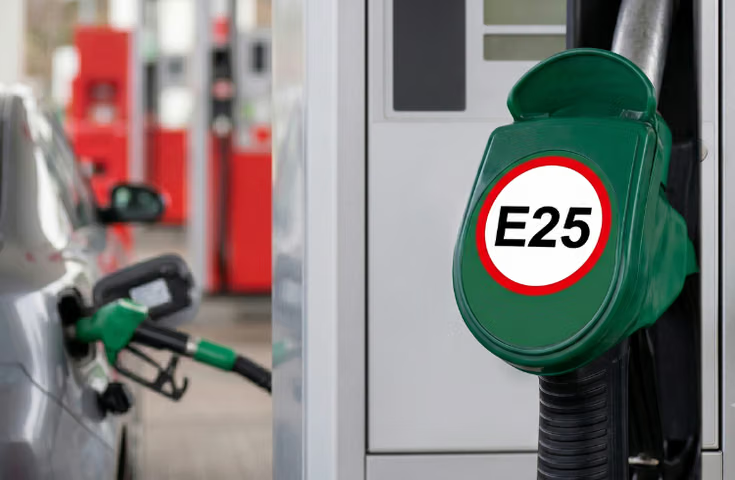
If you've been losing sleep over how 25% ethanol blended fuel will treat your pride and joy, you can finally breathe a sigh of relief. The Indian government is reportedly hitting the pause button on the rapid rollout of E25 petrol. Why? Because the very people making these policies are realizing that forcing higher alcohol content into our fuel lines might actually end up wrecking our beloved cars and bikes.
We've all heard the big claims about green fuel and reducing crude imports. But on the ground, the reality is far more complicated than a shiny press release. It turns out that feedback from manufacturers, testing agencies, and everyday motorists has sparked a massive re-evaluation of how quickly we should move from the current E10/E20 standards to the much harsher E25 blend.
The Silent Killer: Why Ethanol Is Giving Car Makers Nightmares
Think of ethanol as that overly aggressive friend at a party. It looks fun on paper, but it eventually breaks things. Ethanol is highly hygroscopic. In plain English, that means it literally sucks moisture out of the air right into your fuel tank. When water mixes with petrol, it creates a corrosive cocktail that loves to eat through rubber gaskets, fuel lines, and even the aluminum alloys inside your engine.
If you drive a relatively new car that's E20-compliant, you might survive the transition. But what about the millions of older hatchbacks, sedans, and commuter bikes running on our roads today? For the owner of an older, trusty WagonR or a decade-old Splendor, E25 is practically a death sentence for the fuel system. Car manufacturers have quietly raised their hands, warning that moving to E25 too quickly will lead to a nightmare of warranty claims and stranded customers.
The Fuel Efficiency Trade-off: You Pay More For Less
Let's talk about the elephant in the room that no official wants to discuss: fuel efficiency. Ethanol has a lower energy density than pure gasoline. When you pump E20 or E25 into your tank, your engine has to burn more fuel to cover the exact same distance. It's a double whammy for the Indian middle class. You pay premium prices at the pump, only to watch your mileage drop by up to 10-15% on higher blends (and honestly, it shows in your monthly wallet burn).
We've seen this play out in other global markets like Brazil, but their vehicle ecosystem was built from the ground up to handle high-ethanol flex-fuels. In India, we are trying to retrofit a massive, diverse fleet of older machines with a fuel they were never designed to digest. If the government goes ahead with a forced rollout, the average commuter will end up paying the price in frequent garage visits and terrible fuel economy.
Specs At A Glance
Understanding the difference between the fuel blends is crucial for every vehicle owner. Here is how they stack up in terms of properties and compatibility:
Fuel Type | Ethanol Content | Engine Corrosion Risk | Estimated Mileage Drop | Older Vehicle Compatibility |
|---|---|---|---|---|
E10 | 10% | Low | Negligible | Fully Compatible |
E20 | 20% | Moderate | 6% to 8% | Requires E20 Compliant Engine |
E25 (Proposed) | 25% | High | 10% to 15% | Requires Specialized Flex-Fuel Parts |
How Does It Stack Up Against The Competition?
Let's look at how E25 compares with other green options. If you're buying a car today, you're probably torn between pure petrol, CNG, and EVs. CNG remains the king of absolute frugality, though you lose boot space and have to stand in long queues. EVs offer a futuristic, silent drive, but they still cost a hefty premium over standard petrol cars—often costing as much as a mid-spec Swift just for the battery pack!
E25 was supposed to be the middle ground that made standard petrol engines greener without the high entry barrier of an EV. However, when you factor in the potential damage to fuel injectors and the drop in fuel economy, E25 suddenly looks far less appealing than a factory-fitted CNG kit or even a mild-hybrid setup. If the government delays E25, it gives manufacturers more time to perfect robust flex-fuel engines that can actually handle this harsh chemical mix without breaking a sweat.
The Good And The Not-So-Good
What We Like
- Reduced Emissions: Higher ethanol blending does lower the carbon footprint of tailpipe emissions.
- Forex Savings: Blending more ethanol reduces our country's dependency on expensive crude oil imports.
- Support for Farmers: Ethanol is produced from sugarcane and food grains, boosting the domestic agricultural economy.
What Could Be Better
- Engine Durability Issues: Severe risk of rusting fuel pumps and clogged fuel injectors.
- Drop in Fuel Economy: Burning more fuel means you'll be visiting the petrol pump much more often.
- Older Vehicle Vulnerability: Absolute lack of protection or alternative fuels for vehicles built before 2023.
Price & When You Can Buy It
E25 petrol was originally planned for a phased rollout across India by the 2025-2026 financial year. With the government currently reviewing these critical blending concerns, that timeline is expected to be pushed back significantly. Official pricing for E25 fuel remains unannounced, though it is expected to be priced slightly lower than standard petrol to incentivize buyers once it eventually hits the pumps.
Our Verdict
In my opinion, pushing for higher ethanol blends without securing long-term engine protection is like putting the cart before the horse. We feel that this potential delay is actually the best news Indian motorists have received all year. There's no point in rushing green targets if it means destroying the engines of vehicles that hard-working people saved up for years to buy. Let the government take its time, iron out the compatibility issues, and ensure that when E25 finally hits our fuel stations, our cars are actually ready to run on it without blowing up our bank accounts in repairs.