What's The Big News?
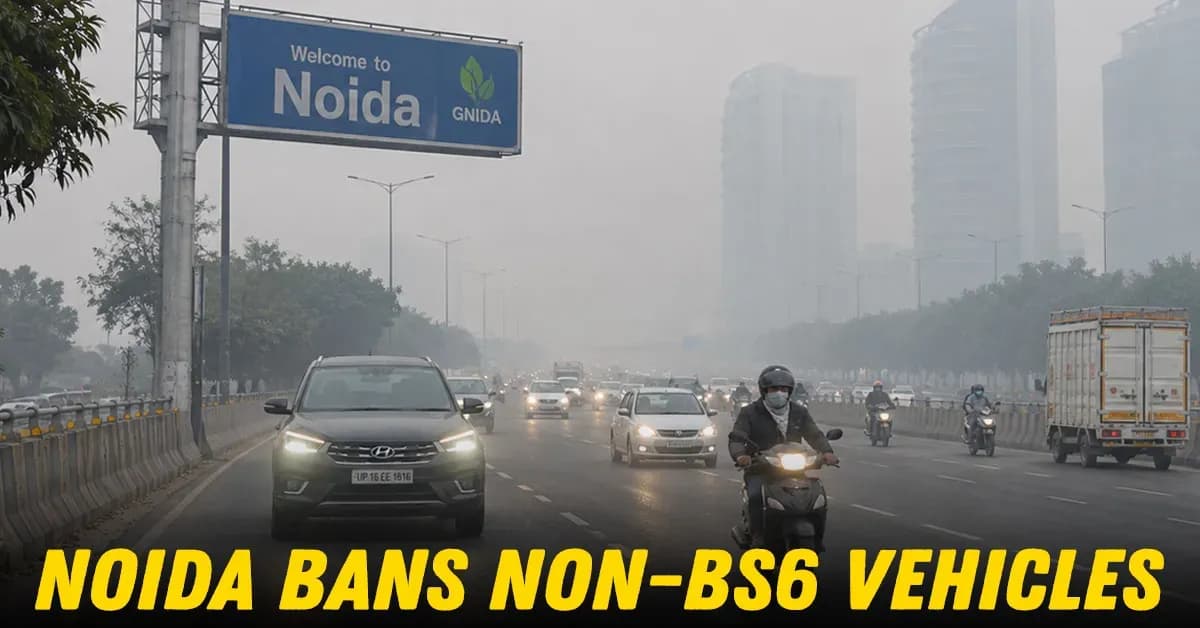
Yaar, the air quality in the National Capital Region (NCR) is playing hide and seek again, but mostly it's just playing dirty. As winter approaches, the smog has decided to show up early this year, making our lungs work overtime. We're talking about a serious dip in the Air Quality Index (AQI) across Noida and surrounding areas, which isn't just bad for health, it's also bad news for your older cars.
The authorities aren't just sitting around, though. They've pulled out the big guns: GRAP-III (Graded Response Action Plan Stage III) has kicked in, and the biggest, most direct impact for us drivers is this — if your car isn't BS6 compliant, you might not be able to drive it in Noida for a while. Yep, that means a lot of BS4 and older petrol and diesel vehicles are now under restriction. It’s a tough pill to swallow, especially if your daily commute depends on your trusty old ride.
The GRAP-III Hammer: Who's Affected and How?
So, what exactly does this GRAP-III hammer mean for you? Simply put, if you own a petrol car that’s not BS6 compliant, or any diesel car that doesn’t meet BS6 norms, you can’t operate it on Noida’s roads. This isn't some advisory, bhai, it's a full-blown restriction. The goal is to drastically cut down vehicular emissions, which are a huge contributor to the NCR's infamous winter haze. Imagine the shock if you're pulled over and fined just because your car is a few years older.
This directive targets a significant chunk of the vehicle parc. Many middle-class families in India, who bought their cars even five or six years ago, would likely own a BS4 model. These vehicles, while perfectly legal until now, are suddenly sidelined. Enforcement is expected to be stringent, with police and transport department officials on the lookout. Fines for non-compliance can be hefty, often running into thousands of rupees, which for the price of a mid-spec Swift, is a substantial amount to fork out repeatedly. And honestly, it shows the desperation of the authorities to bring down pollution levels.
It's not just personal cars. Commercial vehicles are also under scrutiny, though the primary focus for most commuters is their daily ride. The duration of these restrictions usually depends on the AQI levels. Once the air quality improves consistently, these measures might be relaxed, but with winter just setting in, we're likely in for a long haul. It's a wake-up call for everyone who thought pollution was just a 'Delhi problem'.
Your Options & The Road Ahead
Alright, so your beloved non-BS6 ride is temporarily grounded in Noida. What are your options then? For starters, public transport becomes your best friend. Noida has a decent metro network, and bus services are also available, though they might not cover every nook and cranny. Carpooling with colleagues or neighbours who own a BS6 vehicle or an EV is another smart move. It saves fuel and helps you navigate these restrictions without buying a new car.
Here's the thing — this situation also puts a spotlight on the financial strain on car owners. Not everyone can afford to upgrade to a BS6 vehicle or an electric car at a moment's notice. For many, their car is a livelihood, not just a luxury. These restrictions, while necessary for the environment, often hit the common man hardest. It’s also going to impact the used car market; demand for BS6 certified pre-owned vehicles is likely to see a spike, while older models might struggle to find buyers, depreciating their value even further (yes, really).
Looking ahead, these kinds of environmental regulations are only going to get stricter. It’s a clear signal that the era of older, higher-emission vehicles is slowly but surely coming to an end, at least in major metropolitan areas. It forces us to think about sustainable mobility and perhaps nudges us towards cleaner options like EVs or more fuel-efficient BS6 petrol cars. It's about time we started taking air quality this seriously, but the transition needs to be smoother for everyone.
Specs At A Glance
Since we're talking about regulations and not a new car, here’s a quick rundown of what's allowed and what's not under GRAP-III in Noida:
Vehicle Category | Status in Noida (GRAP-III) | Notes |
|---|---|---|
Non-BS6 Petrol Vehicles | Restricted | Not allowed to operate on Noida roads. |
Non-BS6 Diesel Vehicles | Restricted | Not allowed to operate on Noida roads. |
BS6 Petrol/Diesel Vehicles | Allowed | Can operate normally. |
Electric Vehicles (EVs) | Allowed | Exempt from restrictions, encouraged. |
CNG Vehicles | Allowed | Generally exempt due to lower emissions. |
How Does It Stack Up Against The Competition?
When we talk about 'competition' in the context of pollution rules, it's less about cars and more about how these measures compare across regions or different approaches to tackle smog. Historically, Delhi has had its 'Odd-Even' scheme, which was a blanket ban based on number plates. GRAP-III in Noida, however, specifically targets the emission standards, which is a more scientifically sound approach, in my opinion, as it directly addresses the pollutant sources.
Comparing the impact, an owner of a BS4 car in Noida is now in the same boat as someone in Delhi during a severe pollution event – their vehicle is restricted. Whereas a BS6 owner faces no such immediate hurdle, highlighting the clear advantage of having a newer, cleaner vehicle. This isn't just a Noida thing; other NCR regions like Ghaziabad and Gurugram also implement GRAP stages, often with similar restrictions. So, if you live in Noida but work in Ghaziabad, you're looking at consistent rules across the board. The 'competition' here is between cleaner air and individual mobility, and for now, cleaner air is winning the battle, pushing for a quicker transition to BS6 or electric.
The Good And The Not-So-Good
What We Like
- Immediate Impact on Air Quality: Restricting older, higher-emission vehicles directly helps reduce pollutants in the atmosphere.
- Push for Cleaner Technology: Accelerates the adoption of BS6 compliant vehicles and EVs, which is crucial for long-term environmental health.
- Serious Approach to Pollution: Shows that authorities are serious about tackling the severe air quality issues, especially before the peak winter smog.
- Public Health Priority: Ultimately aims to protect citizens from respiratory illnesses and other health problems caused by bad air.
What Could Be Better
- Inconvenience for Commuters: Many rely on their older vehicles for daily commutes; sudden restrictions cause significant disruption.
- Economic Burden: Forces vehicle owners to consider expensive upgrades or alternative transport, which isn't feasible for everyone.
- Lack of Public Transport Alternatives: While Noida has metro, the last-mile connectivity and overall reach of public transport could be better to support this kind of policy.
- Sudden Implementation: While pollution levels are dynamic, clearer, earlier communication or phased implementation could help citizens prepare better.
Impact on Vehicle Ownership Costs & Future Outlook
Let's be real, these restrictions aren't just about parking your car for a few days; they have a direct impact on your wallet. If your non-BS6 vehicle is caught, you're looking at a fine that can easily run into several thousand rupees. Repeated offenses mean repeated fines, which can quickly add up to the cost of a down payment for a new scooter! This essentially incentivises – or rather, forces – you to consider upgrading to a BS6 vehicle or an EV, which for many, is a significant financial commitment.
The long-term outlook for non-BS6 vehicles, especially in NCR, isn't looking great. Even when GRAP restrictions aren't active, the lifespan of these vehicles is increasingly under threat. Delhi already has age restrictions (10 years for diesel, 15 for petrol), and it's not far-fetched to imagine similar, or even stricter, rules propagating across the NCR. So, while these GRAP-III measures are seasonal, they are a strong indicator of the future of vehicle ownership in our metros. It's pushing us towards a cleaner fleet, but it's a costly transition for many.
Our Verdict
Look, nobody likes being told they can’t drive their own car, especially when you’ve saved up for years to buy it. These GRAP-III restrictions in Noida are going to cause a lot of headaches for a lot of people. Commutes will get complicated, and the financial pinch will be real. However, the grim reality of our air quality in NCR demands drastic action. We can't keep turning a blind eye to the toxic air we breathe.
Honestly, while these restrictions are tough on individual vehicle owners, they are a necessary evil right now. They force us to confront the environmental crisis head-on and push for a faster adoption of cleaner vehicles. It's a bitter pill, but if it means our kids can breathe a little easier, then perhaps it's a pill we all need to swallow. For now, plan your commutes smart, embrace public transport, and if you’re in the market for a new vehicle, make sure it’s BS6 or, even better, an EV. The future of driving in NCR depends on it.