What's The Big News?
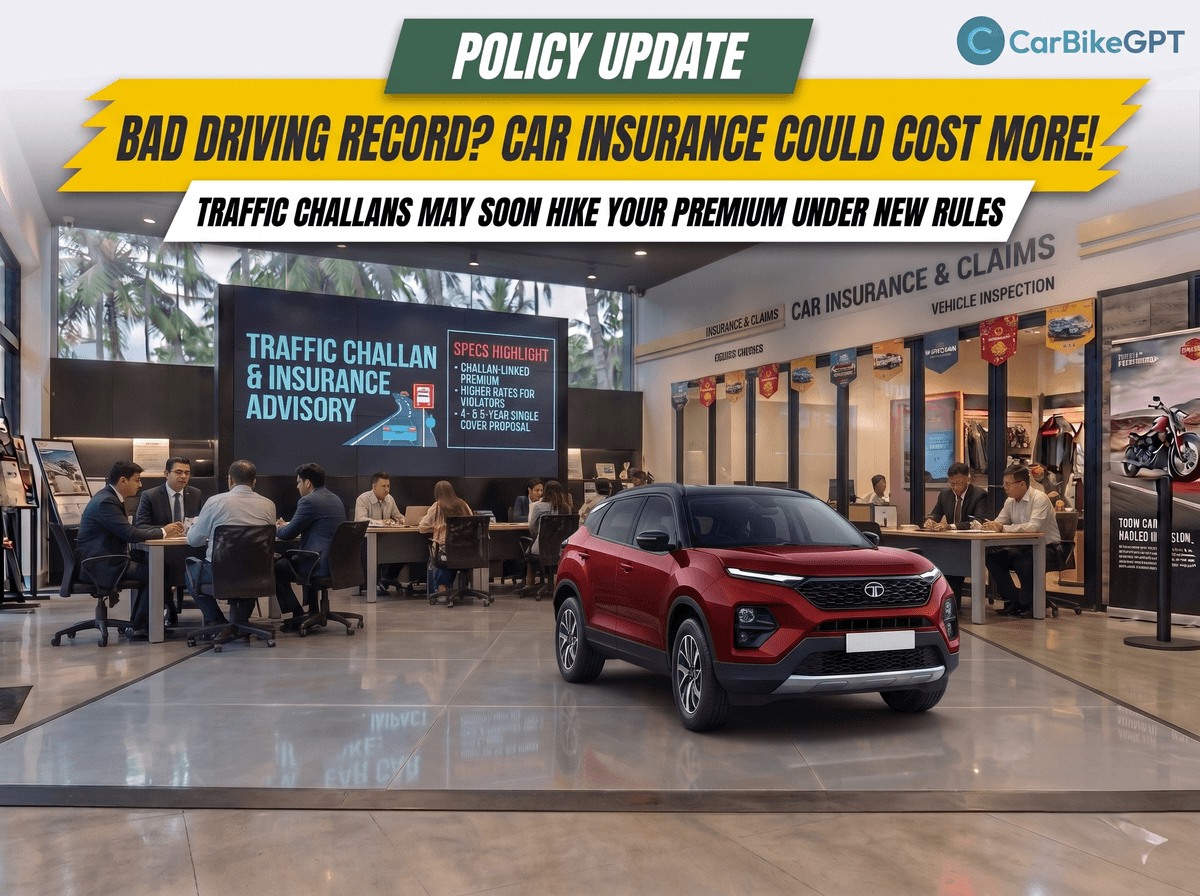
Alright folks, listen up! There's a big whisper making its rounds in the corridors of power, one that could fundamentally change how we pay for our vehicle insurance. Imagine this: your premium isn't just about your car's age or engine size anymore. Instead, it's directly tied to how well – or how badly – you drive. Yes, the Ministry of Road Transport and Highways (MoRTH) is seriously considering linking your motor insurance premiums to your traffic violations. This isn't some small tweak; it's a potential seismic shift for every single vehicle owner in India.
This move isn't just about making you cough up more money for that speeding ticket. Oh no, it's a much bigger play aimed at improving road safety and, crucially, getting more people to actually bother with insurance compliance. We all know that chap who drives around with expired papers, right? This new framework wants to ensure that being a responsible driver, both on the road and with your documents, actually pays off. It's a bold idea, and frankly, about time someone thought about rewarding good driving habits in a tangible way.
Your Driving Record: The New Premium Decider
So, how would this even work? Picture this: a national database where all your traffic violations – from minor parking infractions to serious speeding offences – are logged. When it's time to renew your insurance, this database talks to your insurer. If you've got a clean slate, or maybe just a couple of minor dings, you might actually see your premium drop. But if you're a repeat offender, someone who treats traffic rules like suggestions, then brace yourself. Your insurance premium could skyrocket, making that rash driving habit hit your wallet where it hurts.
This concept of 'risk-based pricing' isn't new globally, but it's a fresh approach for India. Currently, our premiums are largely determined by factors like the vehicle's IDV (Insured Declared Value), age, location, and engine capacity. Your driving behaviour, however, doesn't really factor in beyond a basic No-Claim Bonus. This proposed system would add a crucial layer of accountability. Honestly, it's a direct challenge to those who think they can get away with reckless driving without consequences beyond a challan.
The idea is to create a powerful incentive for safer driving. If you know that every time you jump a signal or overspeed, it could cost you more than just a fine – it could make your annual insurance bill significantly heavier – you'd probably think twice, wouldn't you? It's about turning a passive payment into an active reward system for being a responsible road user. This could finally nudge those drivers who see fines as just a minor inconvenience to actually change their behaviour.
Impact on the Average Indian Driver
Let's talk about how this impacts you, the everyday Indian driver. For the careful commuter, the family man who sticks to the speed limit and follows all the rules, this could be fantastic news. Imagine getting a discount on your insurance just because you're a good driver! It's better than what Maruti gives you at this price point sometimes – a tangible benefit for safe conduct. For them, it’s a welcome pat on the back, a relief from the often-rising cost of vehicle ownership.
On the flip side, consider the youngsters who've just got their licenses and have a penchant for pushing the limits, or even seasoned drivers who've racked up a few challans over the years. This new system could come as a rude awakening. That joyride might end up costing them a lot more than just petrol money. It’s expected to enforce discipline by directly affecting their annual expenditure. There are also concerns about the accuracy and accessibility of such a database. What if there's a wrongly issued challan? The system needs robust mechanisms for dispute resolution to ensure fairness for everyone.
It’s also crucial to ensure this doesn't disproportionately burden commercial drivers, who often operate under immense pressure and tight schedules, leading to minor infringements. The government would need to define what types of violations impact premiums, and to what extent, to make it a fair and effective system. Otherwise, it risks becoming just another layer of financial stress for already struggling segments.
Advertisement
Key Policy Proposals at a Glance
Aspect | Details of the Proposal |
|---|---|
Core Idea | Linking motor insurance premiums directly to traffic violation records. |
Primary Objective | Enhance overall road safety and improve insurance compliance among vehicle owners. |
Mechanism | Utilisation of a centralised database containing individual driving records and traffic violations. |
Benefit for Safe Drivers | Potential for reduced insurance premiums and financial incentives for responsible driving. |
Consequence for Violators | Expected increase in insurance premiums for repeat traffic offenders. |
Expected Outcome | Greater accountability among drivers, fostering more disciplined and safer road behaviour. |
How Does This Stack Up Globally & Locally?
Currently, our Indian motor insurance system is pretty straightforward, mostly relying on vehicle specifics for premium calculation. While there's a No-Claim Bonus (NCB) that rewards you for not making a claim, it doesn't directly factor in traffic violations. This proposed change would be a massive leap forward, bringing us closer to global best practices.
Many developed nations, especially in Europe and North America, have insurance models that integrate driving history, sometimes even using telematics (devices that monitor your driving behaviour in real-time) to offer 'pay-as-you-drive' or 'usage-based' insurance. This new Indian proposal leans into that philosophy by making your actual driving habits a crucial determinant of your premium. It's an intelligent way to incentivise responsible behaviour, moving beyond just fines as a deterrent. Rather than just relying on increased police presence or better road infrastructure – though those are still vital – this policy leverages the financial aspect to encourage self-regulation among drivers. It’s a smart 'carrot and stick' approach, offering benefits to the good guys while making life tougher for the rule-breakers.
The Good And The Not-So-Good
What We Like
- Promotes Safer Driving: A direct financial incentive could genuinely change driver behaviour.
- Fairer Premiums: Good drivers finally get rewarded, instead of subsidising bad ones.
- Increased Compliance: Might push more people to get and maintain valid insurance.
- Accountability: Each driver becomes directly responsible for their road conduct.
- Reduced Accident Rates: Potentially leads to fewer accidents and fatalities on our roads (yes, really!).
What Could Be Better
- Implementation Challenges: Creating and maintaining an accurate, fraud-proof national database is a massive undertaking.
- Data Privacy Concerns: How will personal driving data be stored and protected?
- Dispute Resolution: Clear, quick mechanisms needed for drivers to challenge wrongful violations.
- Potential for Abuse: Ensuring the system isn't misused or becomes another source of harassment.
- Exclusion Risk: Could potentially make insurance unaffordable for certain segments of drivers with genuine difficulties.
When Can We Expect This Big Change?
Look, this is still in the 'consideration' phase, which means it's not going to happen overnight. Policy changes of this magnitude involve extensive discussions, legislative amendments, and setting up the necessary technological infrastructure. We're talking about linking multiple government departments – police, transport, insurance – to share data seamlessly. So, don't expect it to roll out next month or even next year. It's likely a multi-year project, with official timelines and frameworks still being worked out.
As for the 'price' impact, well, that's the whole point, isn't it? Your personal 'price' will depend entirely on your driving record. Safe drivers could see their premiums drop, potentially by a significant margin. Conversely, those with a history of violations could face considerably higher costs – think of it as a surcharge for risky behaviour. The exact percentages and slabs for premium adjustments will be announced only once the policy framework is finalised and closer to its potential implementation. For now, consider it a strong signal to drive responsibly.
Our Verdict
Here's the thing — this proposal from MoRTH is a much-needed jolt to our motor insurance landscape. For too long, reckless driving has largely had consequences limited to fines, without truly impacting the wider financial burden that it places on the system. By linking premiums directly to violations, the government is introducing a powerful, self-correcting mechanism. It pushes accountability onto the individual, forcing us all to think twice before breaking traffic rules.
In my opinion, while the implementation will undoubtedly face hurdles, the core intent is sound. It rewards the good guys, penalises the bad ones, and has the potential to make our roads significantly safer. It's a progressive step that could transform our driving culture from one of leniency to one of genuine responsibility. Let's hope they get the execution right, because a well-implemented system like this could truly be a game-changer for road safety and insurance in India.