What's The Big News?
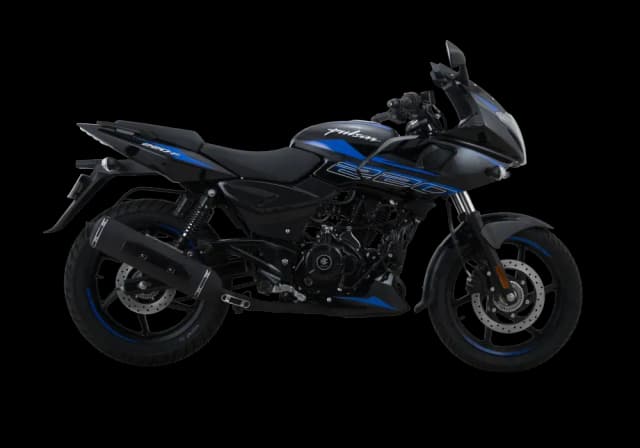
Alright folks, grab your chai because we've got some big news straight from the Bajaj Auto stable. The legendary Pulsar 220, a bike that’s been part of countless Indian riders’ journeys, is officially getting a full-blown new generation upgrade. Yes, you heard that right – not just a sticker job or a minor tweak, but a proper next-gen avatar.
This isn't just a small announcement; it’s a huge deal for anyone who grew up dreaming of owning a Pulsar 220. For years, we've seen competitors bring in fresher designs and more advanced tech, while the 220 remained largely unchanged, clinging to its classic charm. Now, Bajaj is finally ready to push it into the future. But hold on, there's a catch: the Classic Pulsar 180 and the newer Pulsar F250? They won't be getting any updates for now.
A New Era for the Pulsar 220: What to Expect
Look, the Pulsar 220 has always been about accessible performance and a distinctive look. When it first came out, it was the "fastest Indian" for many. Over time, while the engine remained a reliable workhorse, the rest of the bike started showing its age, especially compared to the sharp, aggressive designs we see today.
With a "new generation" tag, we're talking about a complete overhaul. Expect a much sharper, more contemporary design – one that probably borrows cues from the newer Pulsar N-series bikes but retains that unmistakable 220 DNA. We're talking LED lighting all around, a fully digital instrument cluster with maybe even Bluetooth connectivity (about time, Bajaj!), and ergonomic improvements that make it more comfortable for both city commutes and those weekend highway dashes.
Underneath, while Bajaj hasn't confirmed anything specific, a new-gen typically means a revised engine or at least significant updates to the existing one. We could see a more refined 220cc (or slightly larger) unit, potentially liquid-cooled for better heat management and smoother power delivery, especially for those long hauls across the country. Plus, we're hoping for modern riding aids like dual-channel ABS as standard and maybe even riding modes, something rivals already offer. A new frame for better handling and dynamics is also highly probable, making it more agile and stable at speed. This isn't just about power; it's about the overall riding experience becoming more premium.
The Curious Case of the P180 and F250's Stagnation
Now, here's the interesting bit. While the 220 gets a facelift and probably a lot more, its stablemates, the Pulsar 180 and F250, are being left untouched. This is a bit puzzling, especially for the F250, which is a relatively newer model designed to carry the Pulsar legacy forward in a more modern form. The P180, well, it’s a bit of a classic in its own right, but it certainly could do with some modernization to stay relevant against fierce competition.
Why would Bajaj do this? One theory is market segmentation. Maybe Bajaj sees the 220 as having a unique emotional connect with the Indian buyer – it's that stepping stone, that bike many aspired to. By focusing resources on completely rejuvenating the 220, they might be aiming to create a stronger, more distinct offering in its specific segment, without cannibalizing sales of their N-series or the F250, which is positioned slightly differently. Or perhaps, they're clearing the decks for even bigger plans for the 250s down the line, and this is just a strategic pause. Honestly, it's a bold move, and we'll have to wait and see how it plays out in the showrooms.
Specs At A Glance
Since this is a new generation model, most specifications are expected to see significant upgrades. Here's a look at what the current model offers, with expectations for the new gen.
Feature | Current Pulsar 220F | New Generation Pulsar 220 (Expected) |
|---|---|---|
Engine Type | 220cc, Oil-cooled, DTS-i, 4-stroke | Revised 220cc (or slightly larger), potentially Liquid-cooled, Fuel-injected |
Max Power | 19.7 bhp (approx) | Higher output, official figures TBA |
Max Torque | 18.5 Nm (approx) | Increased, official figures TBA |
Transmission | 5-speed | 5-speed or 6-speed |
Front Brake | Disc, Single-channel ABS | Disc, Dual-channel ABS (expected) |
Rear Brake | Disc | Disc |
Headlight | Projector Halogen | Full LED setup |
Instrument Cluster | Semi-digital | Full Digital, Bluetooth Connectivity (expected) |
Design | Semi-faired, Classic | Modern, Aggressive, Sharper lines |
How Does It Stack Up Against The Competition?
The original Pulsar 220F has always faced stiff competition, and the new gen will land in an even more crowded market. Its primary rivals will likely be bikes like the TVS Apache RTR 200 4V, which offers fantastic features like riding modes, GTT, and smart connectivity. Then there's the Hero Xtreme 200S, which brings a full fairing and decent features at a competitive price.
If Bajaj prices the new 220 aggressively, it could even pull buyers away from the premium 160cc segment, like the TVS Apache RTR 160 4V or the Yamaha FZ-S V3, offering more power for a marginal extra cost. The key will be how much of a leap Bajaj takes in terms of features, refinement, and overall build quality. If it offers a genuinely premium experience for the price of, say, a top-spec 160cc bike, it'll be a game-changer. Otherwise, it might struggle to justify its spot against established, feature-rich 200cc offerings.
The Good And The Not-So-Good
What We Like
- Rejuvenation of an Icon: The Pulsar 220 getting a new lease of life is fantastic news for fans.
- Expected Modern Features: LED lighting, digital console, better ergonomics are all welcome changes.
- Potential for Improved Dynamics: A new frame and refined engine could significantly enhance the riding experience.
- Bajaj's Value Proposition: Historically, Pulsars offer a lot for their price, and we expect this to continue.
What Could Be Better
- Lack of Updates for P180/F250: Leaves some models feeling a bit left behind.
- No Concrete Details Yet: We're still speculating on exact specs and features, which can be frustrating.
- High Expectations: Bajaj has to deliver a truly impressive package to meet the legacy of the 220.
Price & When You Can Buy It
Official pricing for the new generation Pulsar 220 is, as expected, under wraps for now. Given the significant upgrades, we anticipate it will be priced higher than the outgoing model. The current Pulsar 220F retails for around ₹1.4 lakh (ex-showroom). We expect the new-gen model to slot into the ₹1.5 lakh to ₹1.7 lakh (ex-showroom) range, placing it squarely against its 200cc rivals.
As for availability, Bajaj hasn't released any official launch dates. However, with the confirmation of a new generation, we wouldn't be surprised to see it hit showrooms in the coming months, perhaps closer to the festive season. Keep an eye out for official announcements – we'll bring you the news as soon as it drops!
Our Verdict
Honestly, this new generation Pulsar 220 is a make-or-break moment for Bajaj in that crucial 200-250cc segment. The 220 has an emotional connection with Indian riders that few other bikes possess. It's not just a motorcycle; for many, it's a symbol of speed and accessibility. Bajaj has a golden opportunity here to revive that magic with modern engineering and design, making it relevant for today's discerning buyer without losing its soul. If they manage to strike that balance – offering a refined engine, sharper looks, and all the modern bells and whistles without inflating the price tag too much – then the 'Fastest Indian' could truly reclaim its crown, albeit in a much more sophisticated avatar. We feel this is the update that could truly put the Pulsar 220 back on every enthusiast's wishlist.