What's The Big News?
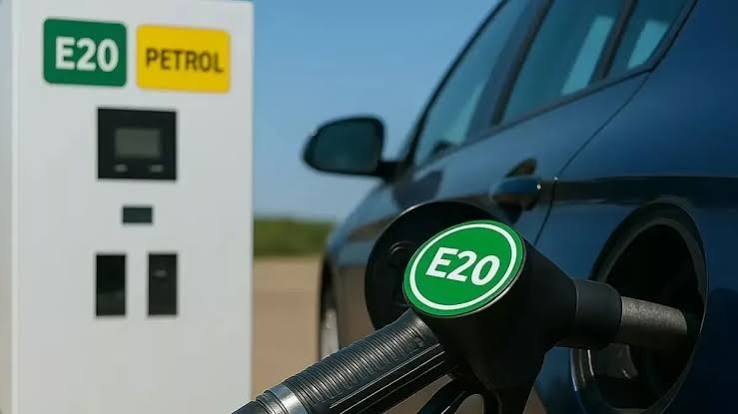
If you've spent any time on automotive forums lately, you'll know that E20 petrol has become the ultimate villain in our daily tea stall chats. Car owners are venting, bikers are complaining about sluggish performance, and mileage figures are dropping faster than a stone. Now, the actual guys who fill your tanks every single day have joined the fight. Yes, the Petrol Dealers Association has officially stepped in, urging the government to hit the brakes and reconsider this aggressive E20 fuel rollout.
This massive move comes right after major car manufacturers tried to defend the ethanol blend, claiming everything is perfectly fine. But the fuel pump owners see a very different picture on the ground. They are dealing with angry customers daily who blame the fuel for choked injectors and rusted fuel tanks (yes, really). It's a classic case of ground-level reality clashing with high-level policy, and we're caught right in the middle.
The Real Trouble With 20% Ethanol Blending
To understand why everyone is sweating, we need to talk about what ethanol actually is. It's an alcohol derived from sugarcane, which sounds great for our farmers and reduces our heavy oil import bills. But there's a nasty catch that nobody at the ministry wants to highlight. Ethanol is highly hygroscopic. In plain English, that means it loves to absorb moisture from the air.
When water mixes with ethanol inside your fuel tank, it separates from the petrol and settles at the bottom. This process is called phase separation, and it's absolute poison for your engine. If you own an older BS4 car or a bike built before 2023, your fuel lines, rubber seals, and aluminum parts aren't designed to handle this corrosive mixture. Even if you drive a brand-new BS6 Phase 2 vehicle that's technically E20-compliant, you aren't completely safe from the side effects.
The Mileage Drop: Who Pays For The Premium?
Automakers have been quick to jump to the defense of E20 fuel because they have to align with government directives. They claim that modern engines have coated fuel lines and robust injectors that can handle the chemical attack. But here is what they won't tell you in their glossy brochures. Ethanol has roughly 30% less energy density than pure gasoline. When you mix 20% of it into your petrol, your car has to burn more fuel to cover the same distance.
Let's talk about the real-world math that hits your wallet every single month. If you were getting a decent 15 km/l on your daily office commute, E20 can easily drag that down to 13 km/l. You're paying the exact same price per litre—which is already hovering around the three-figure mark in most Indian cities—but you're getting fewer kilometers for your hard-earned money. It feels like buying a mid-spec Swift but getting the fuel economy of a heavy SUV, and frankly, it's not fair to the consumer.
Specs At A Glance
Parameter | Pure Petrol (E0) | Standard Petrol (E10) | Blended Petrol (E20) |
|---|---|---|---|
Ethanol Content | 0% | 10% | 20% |
Engine Compatibility | All legacy engines | Most vehicles post-2012 | BS6 Phase 2 compliant only |
Energy Density | 100% (Base) | Approx. 97% | Approx. 93% |
Corrosion Risk | Very Low | Low to Moderate | High (especially for older cars) |
Moisture Absorption | None | Minimal | High |
How Does It Stack Up Against The Competition?
When you look at the choices available at the pump today, the options are frustratingly limited. You have standard E10 petrol which is slowly disappearing, the new E20 blend which is taking over most nozzles, and premium high-octane fuels. Some premium fuels still maintain a lower ethanol blend, but they come at a steep price premium that makes no sense for a regular commuter.
Compared to standard E10, the newer E20 fuel shows a noticeable drop in throttle response. If you ride a budget commuter motorcycle, you'll feel the engine running slightly hotter and straining under heavy load. Pure petrol (E0) is now a luxury of the past, leaving enthusiasts with no choice but to feed their prized machines a diet that could slowly degrade their fuel pumps over time.
The Good And The Not-So-Good
What We Like
- Reduces India's reliance on expensive crude oil imports.
- Helps boost the domestic agricultural economy through sugarcane farming.
- Slightly lower tailpipe emissions under ideal combustion conditions.
What Could Be Better
- Significant drop in overall fuel efficiency for all vehicle types.
- High risk of damage to fuel systems in older, pre-2023 cars and bikes.
- No price benefit passed down to the consumer despite cheaper ethanol blending.
Price & When You Can Buy It
We don't have a clear price distinction between E10 and E20 fuel at the moment. The government has kept the retail price identical, which is a major sticking point for the Petrol Dealers Association. They argue that if consumers are getting lower fuel efficiency, they should at least pay less per litre. For now, E20 is already active across thousands of fuel stations nationwide, with the target of 100% coverage fast approaching.
Our Verdict
Here's the thing — we cannot rush a green transition by putting the financial burden of ruined fuel systems on the average Indian who saves up for years to buy their dream vehicle. While reducing emissions is a noble goal, the infrastructure and the vehicle fleet on our roads aren't fully ready for a rapid E20 takeover. Until we have dedicated pumps for older vehicles or a price cut for blended fuel, this rollout will continue to face heavy resistance from both dealers and drivers alike.