What's The Big News?
So, you know how everyone's been talking about driverless cars, autonomous vehicles zipping around seamlessly? Well, Maharashtra's Chief Minister just threw a bucket of cold water on that idea for India. He's come right out and said that self-driving cars should be the absolute last priority for our country. That's a pretty strong statement, isn't it?
It's not just a casual remark; it reflects a grounded understanding of what India truly needs right now. We're talking about a significant pushback against the global tech narrative, putting our unique road conditions and societal needs front and center. For enthusiasts like us who navigate India's chaotic, yet charming, roads every day, this isn't just political talk; it's a reflection of our lived experience.
Why Autonomous Tech Isn't Our First Stop
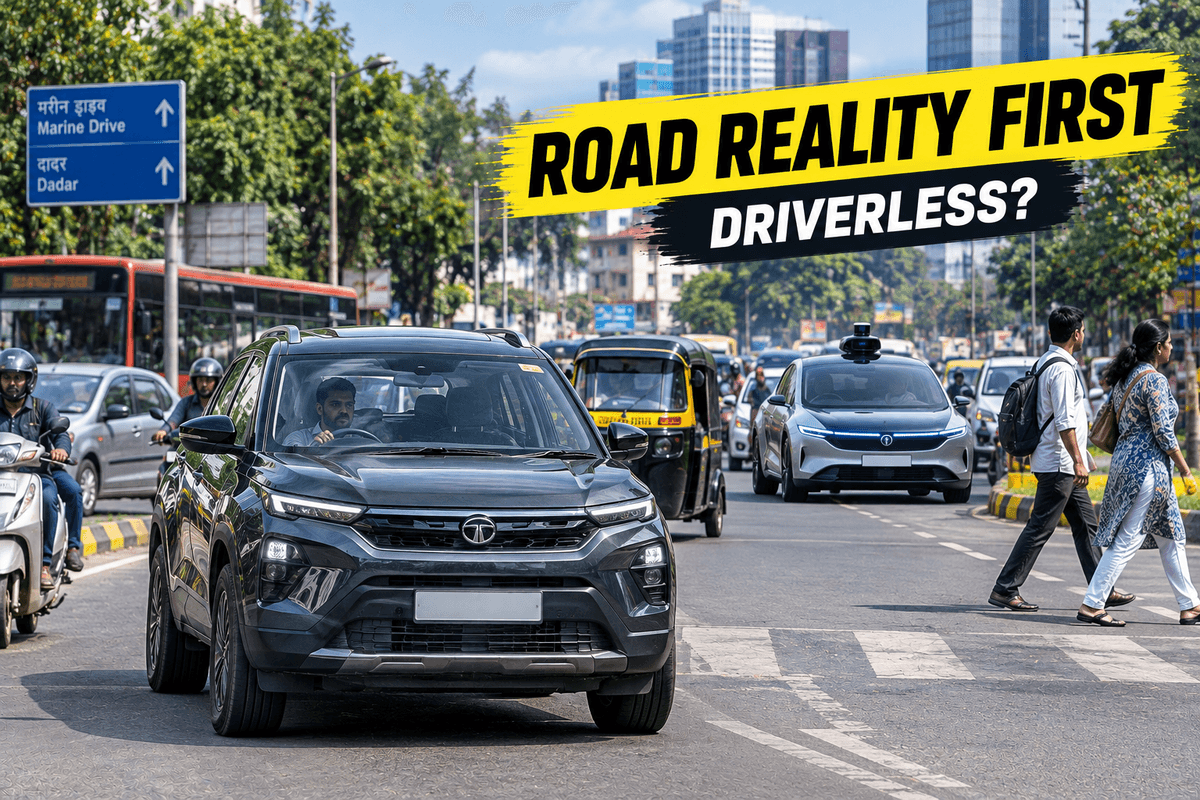
Honestly, the CM's perspective makes a lot of sense for our country right now. Think about it: our roads are a universe unto themselves. You've got everything from trucks, buses, cars, and bikes to cycles, autorickshaws, pedestrians, and even the occasional cow, all sharing the same stretch of tarmac. Lane discipline? What's that? Traffic lights are often mere suggestions, and sudden lane changes are more common than turn signals.
In such an environment, the sophisticated sensors and algorithms of a driverless car would be overwhelmed. They're designed for predictable, well-marked, structured environments, not the beautiful chaos we thrive in. Before we even think about robots taking the wheel, we need fundamental improvements in road infrastructure, signage, and, let's be honest, driver education. We've got bigger fish to fry, like ensuring basic road safety and unclogging our urban arteries. Trying to implement Level 5 autonomy on a typical Mumbai or Delhi street is like asking a supercomputer to run on dial-up internet.
The Global Race vs. India's Reality
Globally, countries like the US, Germany, and China are pouring billions into autonomous vehicle research and deployment. They're testing robotaxis in cities and planning for fully self-driving freight. It's an exciting frontier, no doubt, and it promises efficiency and safety benefits in their controlled environments. But India's reality is starkly different.
We're still battling with basic issues like proper road markings, pothole-ridden stretches, and the sheer unpredictability of our traffic. While the West is imagining a future of cars communicating with each other and smart city infrastructure, we're still figuring out how to get everyone to stick to their lanes. It's not about being backward; it's about being practical. We can't just copy-paste solutions from developed nations without adapting them to our ground realities. Our priorities need to align with solving immediate, pressing challenges for millions of commuters, not just a futuristic vision that's decades away from being viable here.
Key Challenges for Autonomous Driving in India
Challenge Type | Description |
|---|---|
Infrastructure | Unmarked roads, poor lane discipline, lack of proper signage, frequent construction, varying road surfaces. |
Traffic Chaos | Mix of vehicles (cars, bikes, cycles, animals, pedestrians), unpredictable movements, frequent honking, sudden stops. |
Socio-Economic | Job displacement concerns for millions of drivers, high cost of technology, accessibility for the masses. |
Regulatory Framework | Lack of clear laws, complex liability issues in accidents, ethical considerations in unforeseen scenarios. |
Environmental | Dust, heavy rains, fog, extreme temperatures can significantly hinder sensor performance and visibility. |
What This Means for Other Automotive Priorities
The CM's statement subtly redirects focus towards what India genuinely needs. This means continued emphasis on improving road quality, ensuring safer vehicles with better crash ratings (about time, Maruti!), and pushing for electrification. Electric vehicles (EVs) are a much more tangible and immediate solution to our urban pollution woes and energy security than driverless tech. We're already seeing great strides there, with new models hitting the market almost every month.
Also, let's not forget public transport. Investing in robust, efficient, and clean public transportation systems — better buses, metro lines, suburban trains — would arguably have a far greater positive impact on daily life for millions than a few driverless cars. It's about optimizing what we have and making it better for everyone, not just a select few with access to bleeding-edge tech.
The Good And The Not-So-Good
What We Like
- Pragmatic Approach: It's a realistic view of India's current infrastructure and traffic conditions, prioritizing practical solutions.
- Focus on Core Issues: Encourages investment in basic road safety, infrastructure development, and public transport.
- Job Security: Addresses concerns about potential job displacement for millions of drivers in a country with high unemployment.
- Resource Allocation: Ensures resources aren't diverted to highly complex, distant technologies when immediate needs are pressing.
What Could Be Better
- Innovation Delay: India might fall behind in developing and integrating cutting-edge autonomous technologies, missing out on potential long-term benefits.
- Limited Exposure: Our local auto industry might get less exposure to advanced R&D in this field, impacting future competitiveness.
- Missed Efficiency: Autonomous tech, if implemented correctly in specific use cases (like controlled freight corridors), could offer significant efficiency gains.
What This Means for India's Auto Industry and You
For the average Indian car buyer and the auto industry, this means a continued focus on conventional vehicles, electric mobility, and advanced safety features that assist, rather than replace, the driver. Think ADAS features like lane-keeping assist and adaptive cruise control, which are becoming more common even in mid-range cars, but not full Level 5 autonomy anytime soon.
Don't expect to see driverless taxis on Indian streets within the next decade, or even two, based on this stance. The industry will keep innovating, but the direction will be towards making human driving safer, more efficient, and greener, rather than eliminating the driver entirely. You'll still be holding the wheel, navigating the usual Indian traffic drama, for a long, long time.
Our Verdict
Look, while the idea of a car driving itself sounds cool on paper, especially for those long, tiring commutes, the Maharashtra CM's statement hits home. It's a dose of much-needed reality in a world obsessed with tech for tech's sake. We feel that for a country like India, with its unique challenges and priorities, investing in robust infrastructure, improving road safety, and accelerating electric mobility makes far more sense than chasing the distant dream of fully autonomous vehicles. Honestly, it's the responsible call, putting people and practical problems first.