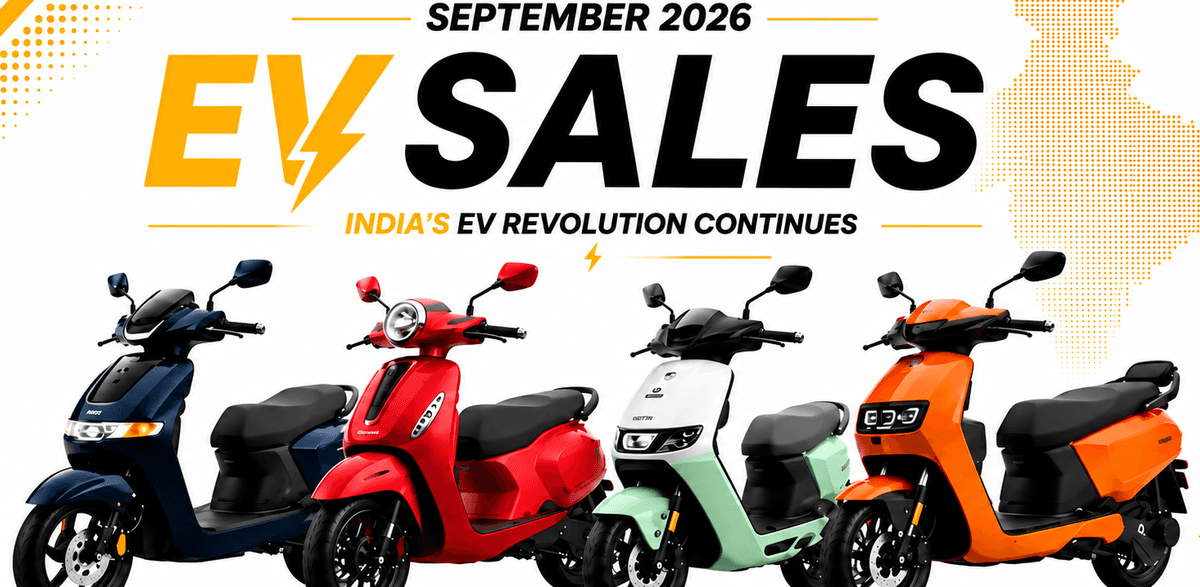
What's The Big News?
Alright, folks, Arman here with the September 2026 two-wheeler sales report, and let me tell you, it's a real eye-opener. The Indian market just wrapped up a solid month, with the top ten selling models together clocking an impressive 16.14 lakh units. That's a healthy 12 percent jump year-on-year, showing that despite all the talk, India's love affair with two wheels isn't slowing down one bit.
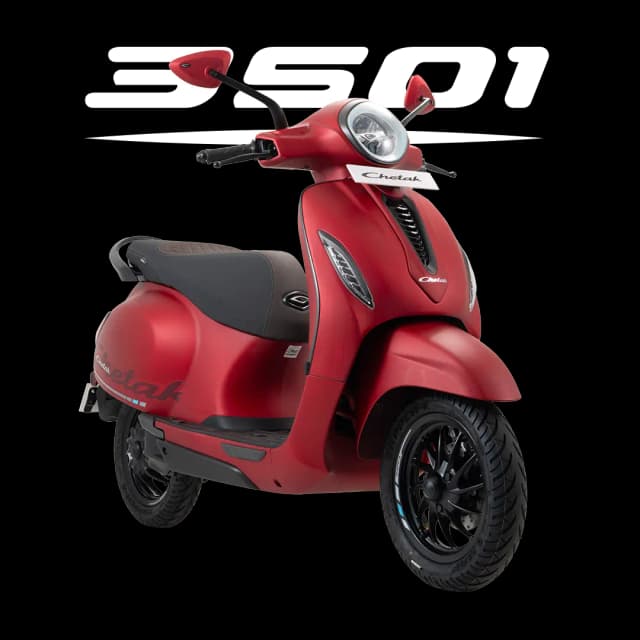
But here's the kicker, the one detail that's got everyone buzzing in the industry: neither TVS's iQube nor Bajaj's Chetak, both popular electric scooters, managed to crack the top ten list. Not a single EV in sight among the best sellers (yes, really!). It really makes you wonder, doesn't it, what's truly happening on the ground when it comes to electric mobility adoption?
ICE Dominance: Why Traditional Bikes Still Rule the Roost
So, what gives? Why are our traditional petrol-powered workhorses still dominating the sales charts, even with all the government push and manufacturer investment into EVs? Look, it's not rocket science. For the average Indian buyer, especially those saving up for years, reliability and range anxiety are huge factors. You can fill up a Splendor almost anywhere, any time, in minutes. Try doing that with an EV charger in a remote village, and you'll quickly understand the challenge.
These bikes and scooters — think your everyday commuters like the ones we've seen on the roads for decades — they're proven machines. They're built tough, parts are readily available, and every mechanic from Kashmir to Kanyakumari knows how to fix them. Plus, the upfront cost, even for the price of a mid-spec Swift, is still a major hurdle for many when you compare it to a basic commuter motorcycle. This strong performance shows a deep-seated trust in what's familiar and dependable, a trust that EVs are still struggling to build at scale.
The EV Challenge: Breaking Into the Top Tier
The absence of models like the iQube and Chetak from the top ten isn't a reflection of their quality; both are genuinely good products, offering a smooth, silent ride. But the fact remains, they aren't translating into massive sales volumes yet. Part of it is the charging infrastructure, which, despite progress, isn't as ubiquitous or as reliable as petrol pumps. Then there's the initial purchase price, which is often higher than comparable ICE models, even with subsidies.
Also, let's be honest, the 'range anxiety' is real. While city commutes are usually fine, the idea of a long-distance trip or even an unplanned detour can make potential buyers hesitant. Until EVs can truly match the convenience and cost-effectiveness of their petrol counterparts for the masses, especially in the crucial commuter segment, we're likely to see them hovering below the top spots. It's a marathon, not a sprint, for electric two-wheelers in India, and honestly, it shows in these numbers.
Specs At A Glance
Given that the official list of the exact top 10 models for September 2026 hasn't been fully detailed beyond examples of common best-sellers, providing a precise "Specs At A Glance" table for individual models isn't possible based on the context. However, the models that typically dominate this list are commuter-focused two-wheelers. Here's a generic representation of what you'd generally find in this segment:
Feature | Typical Commuter Two-Wheeler | Specific Models (e.g., Splendor, Activa) |
|---|---|---|
Engine Type | Single-Cylinder, Air-Cooled | TBA |
Displacement | 100cc - 160cc | TBA |
Fuel Type | Petrol | TBA |
Transmission | Manual (Bikes) / Automatic (Scooters) | TBA |
Mileage (ARAI est.) | 50-70 kmpl | TBA |
Brakes | Drum / Disc (front option) | TBA |
Key Features | Basic instrumentation, kick/electric start, comfortable seating | TBA |
How Does It Stack Up Against The Competition?
When we talk about 'competition' in this context, it's less about direct model-to-model comparisons and more about the bigger battle: traditional internal combustion engine (ICE) two-wheelers versus electric vehicles (EVs). These September sales figures clearly show that ICE models are still winning the volume game by a huge margin. They stack up well on initial purchase price, fuel availability, and perceived long-term reliability for the mass market.
EVs, while offering lower running costs and a quieter ride, are currently competing on a different playing field. They're still seen as a niche product by many, especially outside tier-1 cities. The infrastructure isn't there yet, and the resale value market for EVs is still evolving, which makes buyers cautious. Until these fundamental challenges are addressed more comprehensively, the established petrol players will continue to lead the pack, making it a tough fight for EVs to break into the top 10 rankings.
The Good And The Not-So-Good
What We Like
- Robust Market Growth: A 12% YoY growth is fantastic for the industry, showing strong demand and economic activity.
- Proven Reliability: The continued dominance of ICE models highlights their rock-solid reliability and low maintenance, which are crucial for Indian buyers.
- Widespread Availability & Service: Petrol bikes/scooters benefit from an unbeatable ecosystem of fuel stations, spare parts, and mechanics across the country.
- Affordable Entry Point: Many of these best-sellers offer excellent value for money, making two-wheeler ownership accessible to millions.
What Could Be Better
- Slower EV Adoption: The glaring absence of EVs in the top 10 is a concern for India's green mobility goals. We need to see them break through.
- Infrastructure Gaps: A major reason for slow EV uptake is the inadequate charging network, especially outside metro areas.
- EV Price Premium: While running costs are lower, the initial higher purchase price of EVs is still a significant deterrent for many budget-conscious buyers.
- Environmental Impact: Continued reliance on ICE means we're still contributing significantly to air pollution, something we need to actively work to reduce.
Price & When You Can Buy It
Since this report focuses on existing models dominating the market, we aren't talking about specific launch dates here. These are the two-wheelers you can walk into a showroom and buy today, or very soon. As for pricing, the models consistently featuring in the top-selling charts typically range from around ₹70,000 to ₹1.2 lakh (ex-showroom). They cater to the mass market, offering a blend of affordability, efficiency, and practicality that's hard to beat.
Electric scooters like the iQube and Chetak, while not in the top 10, usually fall in the ₹1.1 lakh to ₹1.5 lakh range (ex-showroom, including FAME-II subsidies), which is still a premium for many buyers compared to a traditional 100-125cc petrol scooter or bike.
Our Verdict
Honestly, these September 2026 sales numbers are a stark reminder of where the Indian two-wheeler market truly stands. While the buzz around electric vehicles is undeniable and growth is happening, the heart of the market still beats strong for reliable, affordable, and practical petrol-powered machines. It's a segment driven by daily needs, established trust, and an ecosystem that's been perfected over decades.
We feel the journey for EVs to truly go mainstream and challenge the dominance of the Splendors and Activas is going to be longer than many expect. It'll require not just better products, but significantly better infrastructure and a more aggressive pricing strategy to win over the millions of Indian buyers who are still prioritising tried-and-tested reliability above all else. The road to electrification is on, but it's a gradual climb, not a sudden surge.