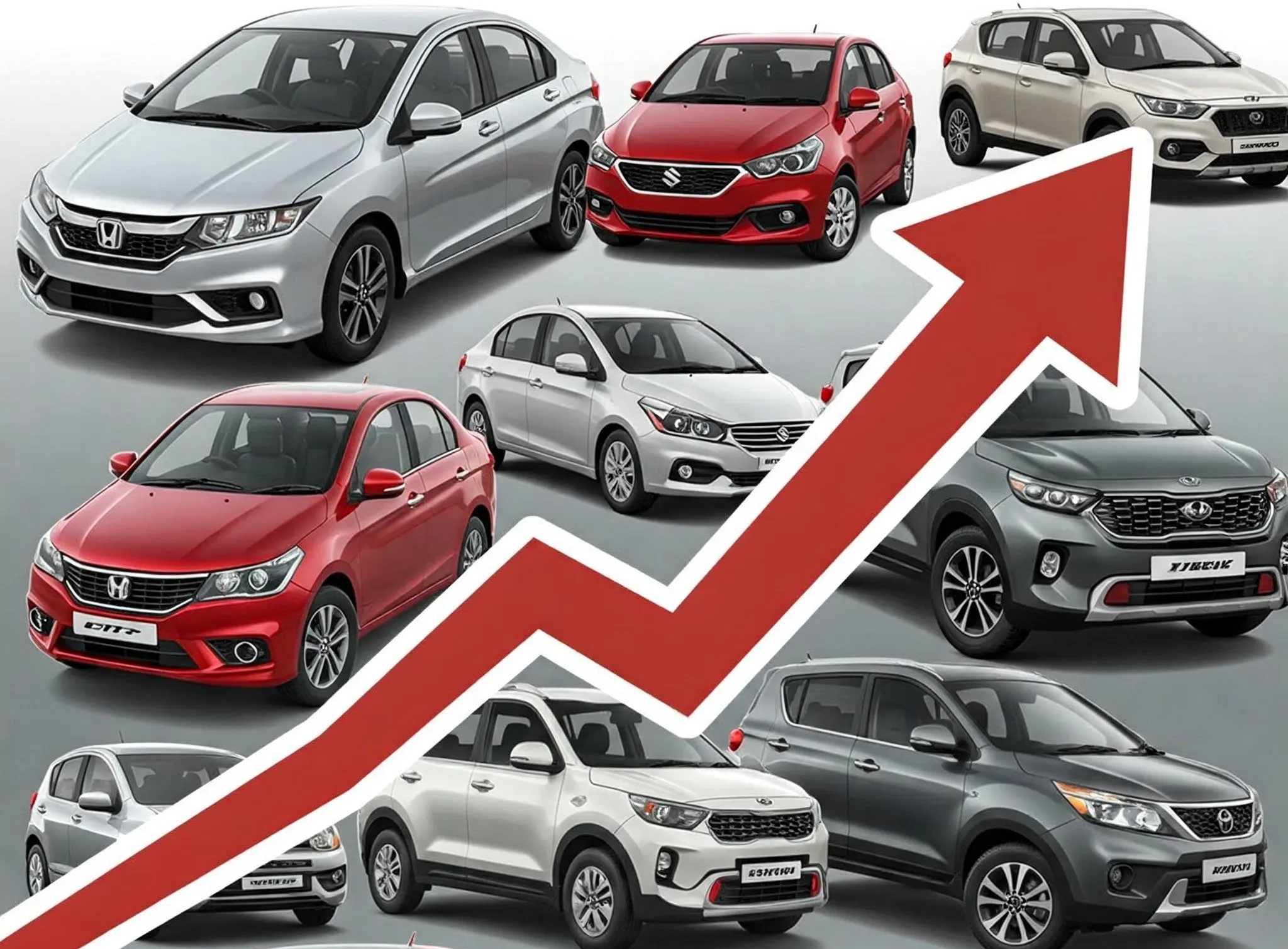
What's The Big News?
Remember when ₹10 lakh bought you a top-spec sedan or a spacious mid-size SUV? Those days are well and truly behind us. Walk into any dealership across India today, and you'll quickly realize that entry-level family cars are pushing hard into price territory once reserved for luxury vehicles. Buying a clean, solid commuter car without breaking the bank feels harder than ever.
Indian carmakers have quietly rewritten their pricing playbook over the last few years. They're systematically phasing out bare-bones base variants, stuffing middle trims with fancy screens and panoramic sunroofs, and nudging us all up the price ladder. But can this aggressive upward march continue indefinitely, or are budget-conscious Indian buyers finally reaching their breaking point?
The Premiumisation Trap: How Features Drive Up the Price Tag
Building cars in India has certainly gotten more expensive. Stricter safety regulations requiring standard six airbags, mandatory electronic stability control, and tighter BS6 Phase 2 emission standards have undeniably pushed up baseline manufacturing costs. Raw materials like steel and precious metals haven't gotten any cheaper either. However, hardware compliance is only half the story behind your inflated invoice.
Carmakers realized that instead of selling a low-margin ₹5 lakh hatchback, they can slap on plastic body cladding, install a 10-inch touchscreen, and sell it as a ₹10 lakh "micro-SUV" (yes, really). They call this strategy premiumisation. By bundling safety updates with high-end convenience tech like ventilated seats, wireless charging pads, and ambient lighting, manufacturers justify charging premium money for mainstream vehicles. The cheap base model isn't just unpopular anymore — it's actively being phased out by brands who would rather sell you higher-margin variants.
Where Did The Truly Affordable Budget Car Go?
For decades, the Indian auto market was anchored by small, frugal hatchbacks. First-time buyers saved up for years to buy a basic family ride. Now, that foundational entry-level segment is shrinking at an alarming rate. Suzuki, once the undisputed king of cheap entry-level motoring, has aggressively shifted its focus toward higher-value utility vehicles. Other manufacturers have quietly dropped their budget hatchbacks altogether rather than spending money to upgrade them to current safety and emission standards.
Middle-class families who have saved up for years now face a tough choice. For the price of a mid-spec Swift today, you used to be able to buy a much larger car just five years ago. To get a vehicle with modern safety kit and decent interior space, buyers are forced to take out longer loan tenures. Car loans that used to wrap up in five years are routinely stretching to seven years just to keep monthly EMIs manageable for average household budgets.
Specs At A Glance
Here is how pricing ranges and standard equipment across core segments have shifted in the Indian market over recent years.
Vehicle Segment | Typical Price Range (5 Years Ago) | Typical Price Range (Today) | Key Features Added Standard |
|---|---|---|---|
Budget Hatchback | ₹4.0 Lakh - ₹6.5 Lakh | ₹6.5 Lakh - ₹9.5 Lakh | Dual Airbags, ABS, Touchscreen |
Compact SUV (Sub-4m) | ₹7.5 Lakh - ₹11.0 Lakh | ₹10.5 Lakh - ₹16.0 Lakh | 6 Airbags, Sunroof, Connected Tech |
Mid-Size SUV | ₹10.5 Lakh - ₹16.0 Lakh | ₹15.5 Lakh - ₹24.0 Lakh | ADAS, Digital Cluster, Ventilated Seats |
Family MPV | ₹9.5 Lakh - ₹14.0 Lakh | ₹14.0 Lakh - ₹23.0 Lakh | Automatic Gearboxes, Captain Chairs |
How Does It Stack Up Against The Competition?
Every major brand in India is playing this premium game, but their approaches differ slightly depending on their target audience.
Maruti Suzuki has slowly migrated its buyers from basic Arena showrooms to upscale NEXA outlets. Products like the Fronx and Brezza cost significantly more than the hatchbacks of yesteryear, but they offer far better design and safety features than what Maruti gave you at this price point a few years back. Still, the brand's low-end entry options are fewer than ever.
Tata Motors took a different route by leveraging crash test ratings. They built a reputation for solid build quality with cars like the Punch and Nexon, allowing them to charge top rupee. Indian buyers have shown they're willing to pay a premium for a 5-star safety rating, and Tata has capitalized on that trust brilliantly.
Hyundai and Kia mastered the feature-first strategy. They pioneered bringing high-end luxury equipment down into the ₹12-18 lakh bracket. By making features like dual-zone climate control, panoramic glass roofs, and digital cockpits feel non-negotiable, they set a high bar that forced the rest of the market to match their specs — and their prices.
The Good And The Not-So-Good
What We Like
- Cars are dramatically safer today, with six airbags and stability control becoming standard across most brands.
- In-cabin technology, user interfaces, and smartphone connectivity have improved leaps and bounds.
- Refined automatic transmissions are widely available even in sub-4 meter compact cars.
What Could Be Better
- Affordable base models under ₹6 lakh are practically extinct for first-time buyers.
- Desirable safety and convenience features remain locked inside expensive top-tier variants.
- Vehicle ownership costs combined with high financing interest rates place a heavy burden on middle-class buyers.
Price & When You Can Buy It
If you're waiting for car prices to come crashing back down to pre-pandemic levels, we've got bad news: it isn't going to happen. Input costs, future safety mandates, and hybrid/electric transitions mean vehicle prices will continue on an upward trajectory. Manufacturers typically announce routine price hikes of 1% to 3% at the start of every calendar year and quarter.
If you're planning to buy a car in the current market, waiting rarely saves you money unless you catch clearance discounts on outgoing stock during the festive season. The smartest move today is buying a car that fits your immediate needs rather than overextending for features you won't use every day.
Our Verdict
Here's the thing — carmakers will keep raising prices as long as we keep walking into showrooms and demanding top-spec variants. We've turned into feature-obsessed buyers who won't sign on the dotted line unless a car has a sunroof, push-button start, and a giant screen. If you're saving up your hard-earned money for a dream family vehicle, don't get blinded by shiny marketing gimmicks. Skip the top-end trim with features you'll only use twice a year, pick a mid-spec variant that covers core safety and mechanical reliability, and keep your hard-earned savings intact.