What's The Big News?
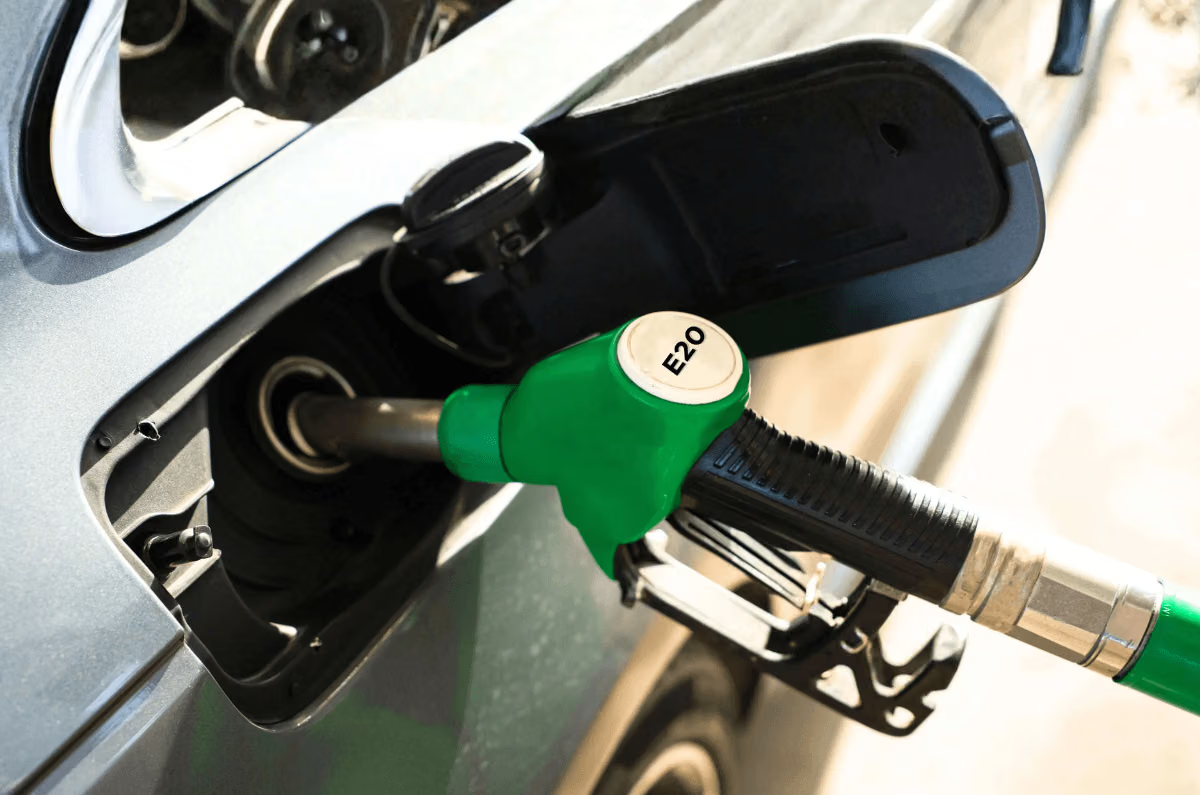
You've probably seen those bright green E20 stickers popping up at your local fuel pump over the past year. While the government pushes aggressively to hit 20 percent ethanol blending to slash foreign oil bills, India's top auto manufacturers are quietly hitting the panic button behind closed doors. (and honestly, it shows)
Recent reports reveal that major car manufacturers across the country have privately raised severe alarms with ministry officials regarding fuel contamination, water absorption, and accelerated engine wear. If you've felt your car's engine stuttering on morning starts or noticed your fuel efficiency dropping lately, you aren't just imagining things. Millions of vehicle owners are caught right in the middle of this transition.
The Ethanol Dilemma: Why Carmakers Are Freaking Out
Here is the core problem that has engine engineers losing sleep. Ethanol is hygroscopic. That is just a fancy technical way of saying it absorbs moisture directly out of thin air like a dry sponge. In a humid country like India during the monsoon, ethanol-blended petrol inside your vehicle's fuel tank draws in atmospheric water. Over time, this water settles at the bottom of the tank in a process called phase separation.
When that happens, your high-tech fuel pump sucks up a nasty brew of water and concentrated ethanol instead of pure fuel. Carmakers are seeing an unprecedented surge in rusted fuel lines, corroded fuel injectors, degraded rubber gaskets, and gunked-up spark plugs. For the price of a mid-spec Swift, nobody wants to deal with an out-of-warranty engine teardown after just three years of normal driving.
Warranty Nightmares And The Indian Car Owner
What happens when something breaks down? That is where things get really messy for everyday buyers. Vehicles manufactured before April 2023 were primarily calibrated to run on E10 petrol (10 percent ethanol blend). Feeding E20 fuel into these older engines regularly can cause long-term harm to fuel systems that weren't designed to resist ethanol's corrosive nature.
When a customer turns up at a dealership service center with a ruined fuel pump, the dealer often blames bad fuel quality at the pump. The fuel bunk operator blames the refinery, and the customer ends up holding a hefty repair bill. The manufacturers want strict quality controls at fuel stations and clearer guidelines because their service centers can't keep absorbing customer frustration for an issue born at the fuel pump.
Specs At A Glance
Fuel Parameter / Spec | Standard Petrol / E10 | E20 Fuel Blend |
|---|---|---|
Ethanol Concentration | 10% Maximum | 20% Target Blend |
Water Absorption Risk | Low | High (Phase Separation Risk) |
Fuel Economy Impact | Baseline Standard | 3% to 6% Drop in Efficiency |
Vehicle Compatibility | BS4 & Early BS6 Cars | BS6 Stage-2 (Post-April 2023) |
Corrosion Prevention Requirements | Standard Fuel Lines | Ethanol-Resistant Coatings & Rubber |
How Does It Stack Up Against The Competition?
If you are shopping for a new vehicle today, how you power your car dictates your long-term peace of mind regarding fuel quality issues.
Older Petrol Vehicles (Pre-2023): These cars suffer the most. Since they lack ethanol-resistant rubbers and fuel system coatings, long-term exposure to E20 fuel leads to clogged injectors and rough idling. Owners need to be extra vigilant about where they refuel.
New BS6 Stage-2 Petrol Cars: Modern cars sold after April 2023 come factory-compliant with E20 fuel. Their fuel lines, seals, and engine mapping handle the higher ethanol blend much better than older cars, though fuel economy still takes a slight hit due to lower energy density.
Strong Hybrids & EVs: Drivers who switched to electric vehicles or strong hybrids like the Grand Vitara or city-hybrid">City Hybrid don't have to worry about cold-start stutters caused by contaminated petrol. For many urban buyers, fuel quality hassles are becoming a strong reason to ditch pure petrol altogether.
The Good And The Not-So-Good
What We Like
- Lowers national crude oil import bills and supports domestic sugarcane farmers.
- Newer 2023+ vehicles are fully engineered and tested to run on E20 fuel without hardware failure.
- Pushes carmakers to develop more efficient flex-fuel engine technology for the future.
What Could Be Better
- Lack of clear option for pure petrol or E10 at fuel bunks for older car owners.
- Risk of water accumulation and fuel phase separation during heavy Indian monsoons.
- Noticeable drop in real-world mileage compared to older pure petrol fuel.
Price & When You Can Buy It
E20 petrol is already being rolled out rapidly across thousands of fuel stations nationwide. You don't pay extra per liter at the pump for E20 compared to regular petrol, but the true cost lies in slightly reduced mileage. Because ethanol carries roughly 30 percent less energy than pure gasoline, an E20 blend reduces overall fuel efficiency by roughly 3 to 6 percent. That means you'll be visiting the fuel bunk a bit more often every month.
Our Verdict
Here's the thing — blending ethanol to cut oil imports is a noble goal on paper, but rushing fuel transition without offering protected choices for older vehicle owners puts millions of drivers at risk. If you drive a newer E20-compliant vehicle, keep your tank relatively full during rainy weather to prevent moist air accumulation. If you drive an older car, stick to trusted, high-volume fuel stations that regularly clean their underground storage tanks. We hope car manufacturers and the government land on a clear solution before repair bills start piling up for everyday motorists.