What's The Big News?
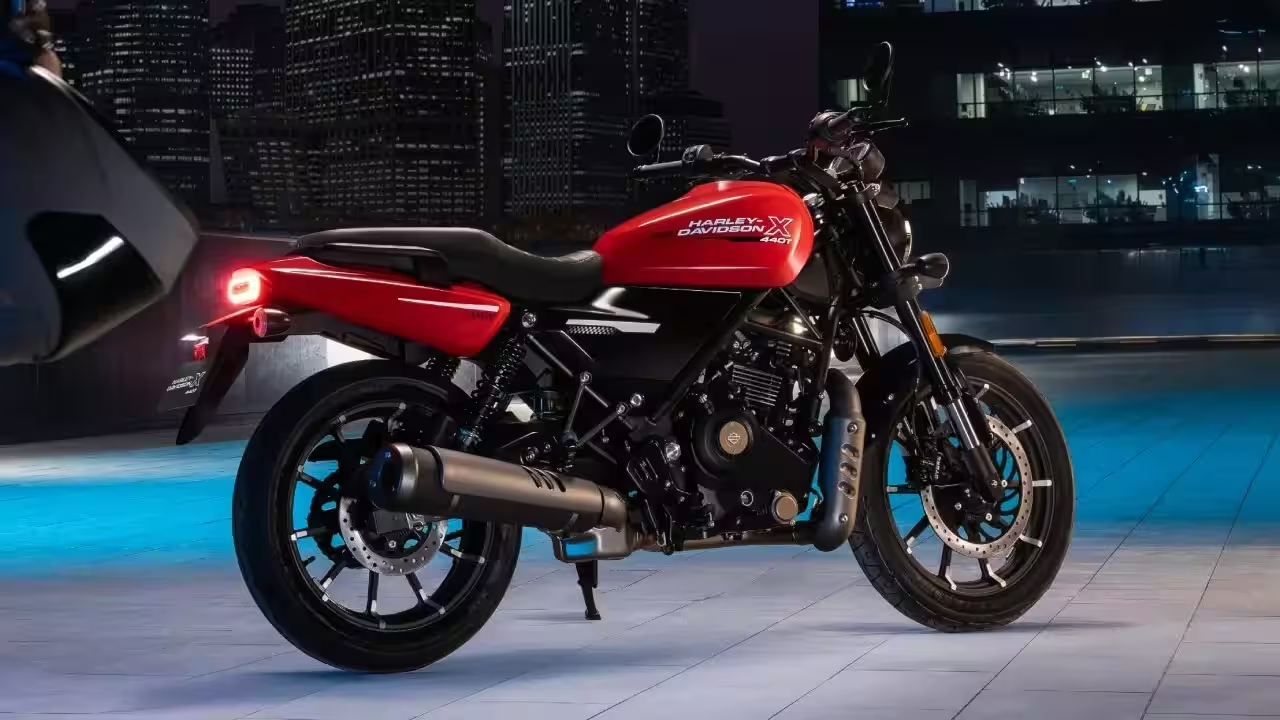
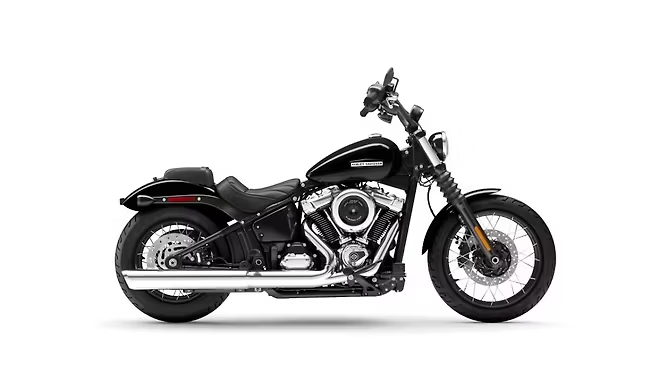
Remember the absolute shock when the Harley-Davidson X440 rolled out? It was a bold statement. Hero and Harley-Davidson had teamed up, shook hands, and decided to take a massive swing at Royal Enfield's absolute monopoly in the Indian cruiser market. Now, we've got solid wind of what's happening next in their boardroom, and it's going to shake up the budget motorcycle segment in India like nothing else.
Word on the street is that the Hero-Harley partnership isn't just stopping at the 440cc platform. They're actually expanding downwards into the highly competitive 150cc to 350cc sweet spot. We're talking about brand new nameplates, smaller capacities, and price tags that will probably make your local Bullet dealer sweat.
The 150cc to 350cc Segment: The Ultimate Battleground
Let's be realistic for a second. While a 400cc-plus bike sounds incredible on paper, the average Indian buyer still hesitates when the price tag crosses the two-lakh mark. By targeting the 150cc-350cc bracket, Hero and Harley are aiming directly at the heart of the Indian commuter who wants a taste of premium lifestyle biking without breaking their fixed deposit. Imagine getting that iconic bar-and-shield logo on your fuel tank for the price of a high-end commuter (yes, really).
This isn't just about sticking a logo on a smaller bike. Hero's engineering muscle combined with Harley's styling heritage means we could see some seriously cool machines. Think of a baby cruiser with a 250cc motor, or a rugged 200cc scrambler that doesn't feel like a compromise. Hero has already mastered the budget premium space with the Karizma XMR and the XPulse 200 4V, so they know exactly how to extract performance from smaller single-cylinder engines.
The Strategy Behind New Nameplates and Hero's Scale
Cruising down this path won't be a walk in the park. Building a 150cc bike with a Harley badge is a double-edged sword. If you make it too cheap, you risk diluting a legendary American brand that people associate with heavy, roaring V-twins. But if you price it too high, buyers will simply walk next door to a Royal Enfield or KTM showroom.
That's why new nameplates are crucial here. We expect they won't just copy-paste the 'X' nomenclature. Instead, they might revive some classic heritage names or invent something entirely fresh to give these smaller bikes their own unique identity. With Hero's massive manufacturing capacity and retail footprint, distribution won't be an issue. You'll likely be able to service your entry-level Harley at select premium Hero Premia dealerships across the country, which is a massive relief for riders in tier-2 and tier-3 cities.
Specs At A Glance
Feature / Specification | Expected Details |
|---|---|
Engine Displacement Range | 150cc to 350cc |
Engine Type | Single-cylinder, liquid/air-cooled |
Power & Torque | TBA (Will vary by displacement) |
Gearbox | 5-speed or 6-speed |
Service Network | Hero Premia / Select Hero Dealerships |
Key Features | LED lighting, digital console, Bluetooth connectivity (expected) |
How Does It Stack Up Against The Competition?
If these smaller displacement Harleys hit the road, they'll land right in a nest of hornets. At the upper end of this spectrum, around 300cc-350cc, they'll have to duke it out with the Royal Enfield Hunter 350 and the Honda H'ness CB350. The Hunter has been a runaway success because it's light, flickable, and incredibly easy on the pocket. Harley will need to match that effortless urban character while offering a bit more premium flare.
At the lower end, around 150cc-200cc, they'll face off against stylish lifestyle offerings like the Yamaha FZ-X or even the TVS Ronin. The Ronin is already a fantastic everyday cruiser-scrambler hybrid, packed with features that make it a superb city companion. For Hero-Harley to win here, their new bikes need to offer more than just a fancy badge; they need to offer punchy low-end torque and a riding posture that makes you feel like you own the road.
The Good And The Not-So-Good
What We Like
- Access to the iconic Harley brand at a highly accessible price point.
- Hero's reliable service network ensures peace of mind even in remote areas.
- Potential for excellent fuel efficiency compared to larger 400cc+ cruisers.
- Perfect stepping stone for young riders entering the premium motorcycle space.
What Could Be Better
- Purists might complain that a 150cc single-cylinder bike dilutes the Harley-Davidson legacy.
- Refinement at high revs has historically been a challenge for smaller performance singles.
- Strict cost-cutting might lead to some ordinary-looking cycle parts.
Price & When You Can Buy It
Since nothing has been officially launched yet, we have to talk in terms of realistic expectations. We expect the upcoming smaller-capacity range to start around ₹1.5 lakh for the entry-level 150cc-200cc models, stretching up to ₹2.2 lakh for the 300cc-350cc offerings.
As for the launch timeline, the official dates are still under wraps. However, industry insiders suggest we might see the first glimpse or a concept reveal sometime late next year, with production-ready models hitting the showrooms shortly after.
Our Verdict
Here's the thing — this move is a masterstroke for volume, but it's a massive gamble for brand equity. If Hero and Harley can deliver a motorcycle that feels premium, sounds decent, and doesn't vibrate like a mixer-grinder at 80 km/h, they have a goldmine on their hands. It gives the middle-class Indian enthusiast a chance to park a Harley in their driveway without having to sell a kidney. Honestly, we can't wait to see how Royal Enfield responds to this looming threat.