
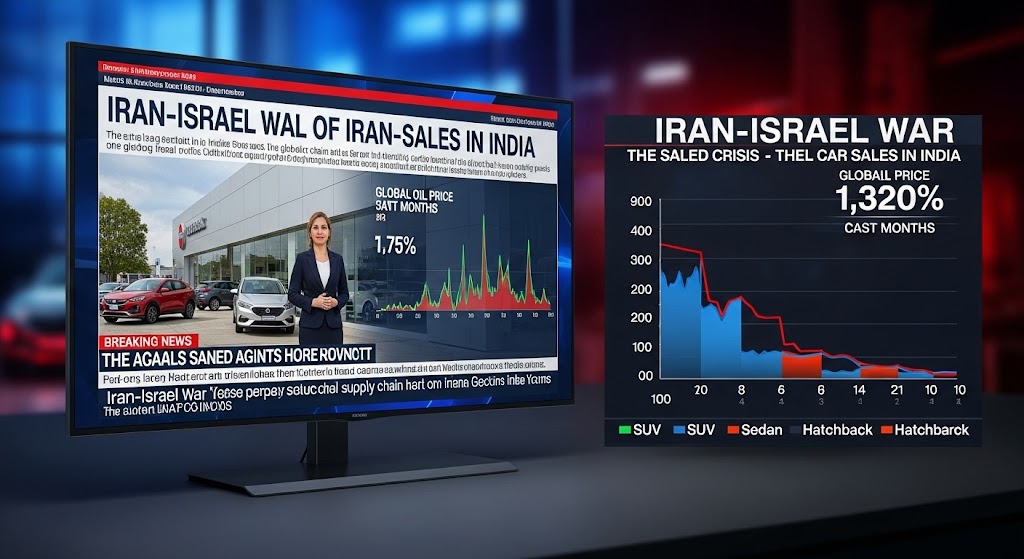
The ongoing Israel-Iran conflict, which has escalated into full-scale hostilities, is causing ripples across the global economy. While the direct impact on the Indian automotive sector may not be immediately evident, the ramifications of this geopolitical tension are gradually being felt, with car sales in India showing signs of being affected. Experts believe that the war between these two nations, both of whom play significant roles in global oil production, could create a complex ripple effect on India’s car industry.
Q: How is the Israel-Iran conflict affecting fuel prices in India?
A:
The Israel-Iran conflict has the potential to disrupt global oil supply chains, especially considering that Iran is one of the world’s major oil exporters. India, which relies heavily on imported oil, could see a rise in fuel prices due to the instability in the Middle East. Higher fuel prices, in turn, can dampen consumer demand for fuel-intensive vehicles, particularly in price-sensitive markets like India.
Q: Will rising fuel costs impact car sales in India?
A:
Yes, higher fuel prices are likely to lead to a decrease in demand for cars, particularly among middle-class and lower-income consumers. In India, where affordability is a significant factor in vehicle purchasing decisions, any increase in the cost of fuel can make car ownership more expensive. As a result, consumers may delay or reconsider purchasing cars, particularly those with higher fuel consumption.
Q: How will the Israel-Iran conflict accelerate the shift towards Electric Vehicles (EVs)?
A:
As fuel prices rise, consumers may seek alternatives to traditional fuel-powered cars. Electric vehicles (EVs) are already gaining traction in India due to their lower operating costs. The war’s impact on global fuel prices could push more consumers toward EVs, which are seen as a more sustainable and cost-effective solution. This shift could further boost demand for electric cars, especially as Indian automakers like Tata Motors and Mahindra & Mahindra continue to expand their EV portfolios.
Q: Could the conflict worsen the global supply chain issues affecting Indian car manufacturers?
A:
Absolutely. The Israel-Iran conflict is likely to exacerbate the existing supply chain disruptions caused by the pandemic. The automotive industry relies on a wide range of global components, such as semiconductor chips and electronic parts, many of which are sourced from regions affected by the conflict. If the war disrupts international trade or shipping routes, Indian car manufacturers may face delays in production, and this could lead to higher prices for vehicles.
Q: Will there be an increase in vehicle prices due to the conflict?
A:
The potential disruption of supply chains, coupled with rising raw material costs due to geopolitical instability, could result in higher production costs for automakers. These additional costs might be passed on to consumers in the form of higher vehicle prices. Moreover, the chip shortage crisis, which has already been a significant challenge for the automotive industry, could worsen, leading to further price hikes.
Q: How will the rural car market in India be affected by the Israel-Iran conflict?
A:
The rural car market in India is especially vulnerable to rising fuel costs. Rural consumers, who often purchase budget cars, are more sensitive to price increases, including the cost of fuel. Higher fuel prices could force many rural buyers to hold off on purchasing a car, affecting sales of entry-level models. The conflict could also contribute to economic uncertainty in rural areas, further dampening consumer sentiment.
Q: Can India’s car exports be impacted by the Israel-Iran conflict?
A:
Yes, there is a possibility that India’s car exports could be affected by the ongoing conflict. The Israel-Iran war might lead to disruptions in shipping routes, delays in international trade, and the imposition of new tariffs or trade restrictions. This could make it more difficult for Indian automakers to access global markets, particularly in the Middle East and Europe. Export-heavy automakers may find their profitability impacted by these challenges.
Q: Will the Indian government take any measures to mitigate the effects on car sales?
A:
In response to rising fuel prices and economic challenges, the Indian government could take measures such as offering subsidies or incentives for electric vehicles, encouraging consumers to switch to greener alternatives. Additionally, the government may consider reducing excise duties or taxes on vehicles to make them more affordable. However, whether these measures will be effective in mitigating the full impact of the Israel-Iran conflict remains uncertain.
Q: How might the Israel-Iran conflict affect the launch of new car models in India?
A:
Automakers may delay the launch of new car models or make adjustments to their production schedules due to the uncertainty caused by the ongoing conflict. With supply chains already under strain and rising production costs, manufacturers might opt for a more conservative approach to new model introductions. As the cost of production rises and demand fluctuates, automakers could focus more on cost-effective models and less on premium offerings.
Q: Could the conflict impact consumer sentiment toward purchasing cars?
A:
Yes, consumer sentiment could shift towards caution in times of geopolitical instability. As people face rising fuel costs, economic uncertainty, and potential job insecurity, many may delay or scale back their big-ticket purchases, including cars. This shift in consumer behavior, particularly in the short term, could lead to a slowdown in car sales. Additionally, consumers may opt for more affordable or fuel-efficient models rather than luxury or high-performance vehicles.
Q: Is there any potential for a long-term impact on the Indian automotive market?
A:
While the immediate effects of the Israel-Iran conflict may be felt in the short term, the long-term impact will depend on how global fuel prices stabilize, how the supply chain issues evolve, and whether the conflict leads to a broader economic slowdown. If the war results in prolonged instability, it could hinder the recovery of the Indian automotive sector, particularly if global oil prices remain high and the economic outlook becomes more uncertain.
However, the ongoing push for electrification in India and the rise of homegrown EV solutions could help buffer the sector from some of the volatility caused by global events like the Israel-Iran conflict.
Conclusion: Navigating the Uncertainty
While the Israel-Iran conflict is a distant concern for India’s automotive industry, its effects on fuel prices, supply chains, and consumer sentiment are already beginning to be felt. The situation calls for Indian automakers and consumers to adapt to rising fuel costs, shifting market dynamics, and evolving global trade challenges. The growing adoption of electric vehicles could offer some respite, but the road ahead will require careful navigation as the full impact of this geopolitical turmoil unfolds.
