What's The Big News?
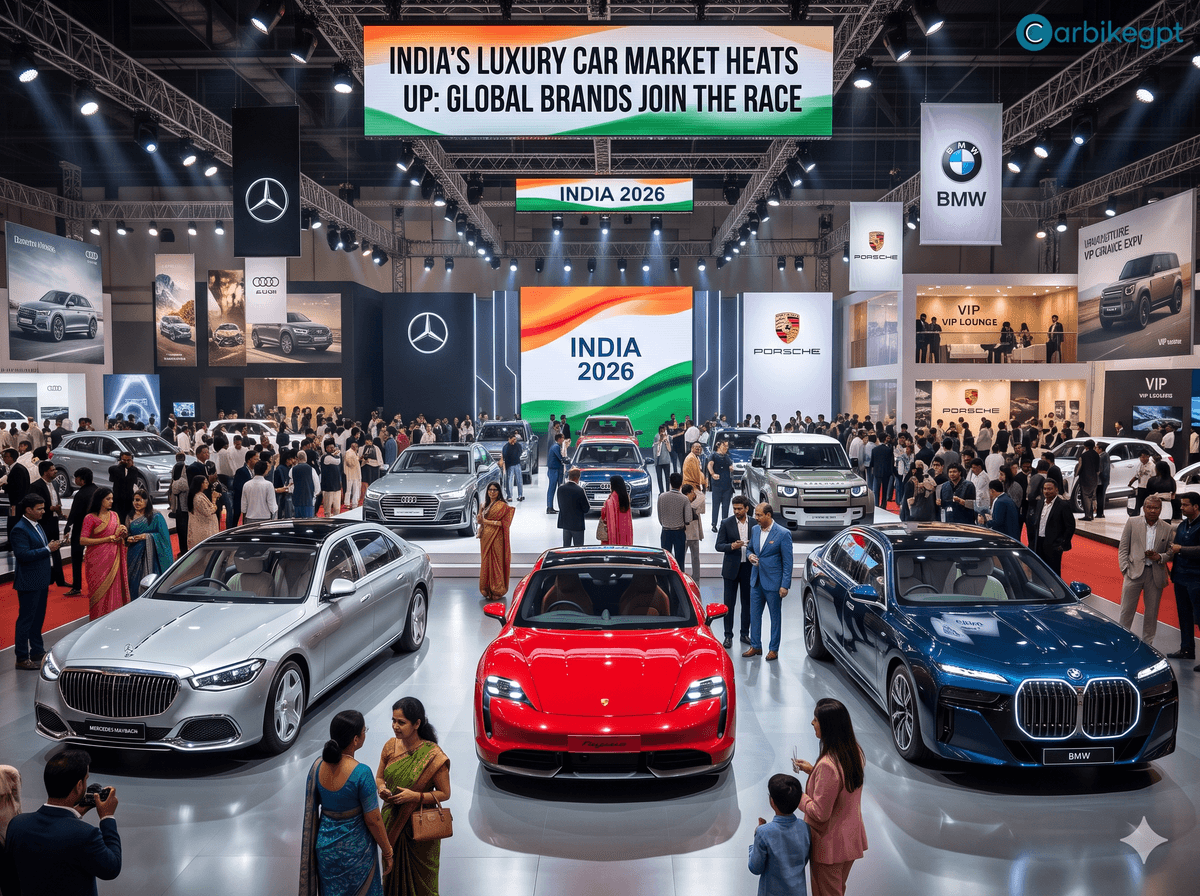
Alright folks, listen up! Something big's brewing in the Indian automotive scene, and if you’ve been keeping an eye on the roads, you’ve probably already noticed it. The luxury car segment here in India? It’s absolutely exploding. We're not talking about a small bump; we're talking about a proper boom, a surge that's got global automakers, from the established German giants to the hungry new players from China, all sitting up and taking serious notice.
For years, luxury cars were a niche, a distant dream for many. But things are changing, and fast. Discerning Indian buyers are increasingly looking beyond just practicality, and they're ready to put their hard-earned money into something that offers a premium experience, cutting-edge tech, and that undeniable badge value. And trust me, the big brands know it. They're making a beeline for our market, eager to grab a bigger slice of this rapidly expanding pie.
India's New Love Affair with Premium Wheels
So, what’s driving this sudden frenzy? Honestly, it’s a confluence of factors that have been simmering for a while. Firstly, you've got a growing middle and upper-middle class with more disposable income than ever before. People are working hard, earning well, and they want to reward themselves. It’s no longer just about getting from point A to B; it’s about how you get there. They're seeking status, comfort, and advanced features that a regular car just can't offer.
Then there's the aspirational value. In India, a car isn't just transport; it’s often a statement. And a luxury car? That's a huge statement. Younger buyers, who are more exposed to global trends and aren't afraid to spend, are now entering the market. They're not waiting until retirement; they want their dream car now. This demographic shift, coupled with easier financing options, means the demand isn't just from the traditional wealthy elite, but from a much broader base of successful professionals and entrepreneurs. And honestly, it shows – you see a lot more Mercedes and BMWs on the road these days, even in tier-2 cities.
The Global Scramble: Germans Double Down, Chinese Eyeing Entry
Now, let's talk about the players. The usual suspects – Mercedes-Benz, BMW, Audi, Volvo, Land Rover – they’ve been here, they know the drill. And they're not resting on their laurels. They're bringing in more models, locally assembling more vehicles to keep prices competitive, and investing heavily in their retail and service networks. They understand that while the market is growing, loyalty is still earned through experience.
But here's the really interesting part: the Chinese automakers are now eyeing this space seriously. Brands like BYD, who've already made a mark in the EV segment with their Atto 3, are looking to expand their premium offerings. MG (though British by origin, now owned by SAIC, a Chinese state-owned company) has already shown with cars like the ZS EV and Hector that they can offer good value and features. We're talking about brands with significant technological prowess, especially in the EV space, who can offer cutting-edge luxury at a potentially more accessible price point compared to their European counterparts. It's a new frontier, and it could seriously shake things up for the established players.
Market Trends At A Glance
Aspect | Detail |
|---|---|
Market Growth Rate | Significant year-on-year increase (double-digit growth expected) |
Key Drivers | Rising disposable incomes, younger aspirational buyers, robust economic sentiment |
Preferred Segments | Premium SUVs, luxury sedans, and a rapidly growing EV luxury segment |
Geographic Spread | Demand expanding beyond metros to Tier 2 and Tier 3 cities |
New Entrants | Increased interest and potential entry from Chinese luxury automotive brands |
Advertisement
How Does It Stack Up Against The Competition?
When we talk about competition in this context, it's less about a direct car-to-car battle and more about a strategic market play. The established German trio – Mercedes-Benz, BMW, and Audi – have a massive advantage: brand legacy and deep-rooted trust. They've spent decades building their image, and that 'three-pointed star' or 'four rings' still holds immense prestige for Indian buyers. They're focusing on local assembly to manage costs, expanding their EV portfolios, and enhancing customer experiences.
Volvo and Land Rover (under Tata Motors) carve out their own niches with strong emphasis on safety and rugged luxury respectively. They've got their loyal clientele. Now, bringing in the new wave of Chinese luxury players presents a different kind of challenge. These brands can offer feature-packed cars, often with advanced EV tech, at a price point that might undercut the Germans. They don't have the same brand heritage, sure, but they can compensate with aggressive pricing, longer feature lists, and potentially faster adoption of new technologies. The competition isn't just about who makes a better car, but who can best understand and cater to the evolving Indian luxury buyer's psyche.
The Good And The Not-So-Good
What We Like
- More Choice for Buyers: A crowded market means more options, better features, and competitive pricing for you, the consumer.
- Advanced Technology: New entrants, especially in the EV space, are pushing the boundaries with cutting-edge tech and features.
- Improved Service Networks: With more players, existing brands are forced to up their game in terms of sales and after-sales service.
- Aspirational Dreams within Reach: Increased competition might lead to more accessible entry-level luxury models.
What Could Be Better
- Charging Infrastructure: For luxury EVs to truly take off, especially from new players, the public charging infrastructure needs a massive boost.
- After-sales Support for New Entrants: While new brands bring excitement, their service network's reach and reliability are still unproven in the long run compared to established players.
- Pricing Remains Premium: Despite competition, import duties and taxes still keep luxury cars firmly in the 'premium' bracket for most.
- Road Conditions: Owning a luxury sedan with low ground clearance can still be a headache on many Indian roads, though SUVs mitigate this.
Price & When You Can Buy It
Given this isn't about a specific launch, I can't give you exact figures, but here's the gist. The entry-level luxury segment, currently dominated by cars like the Mercedes A-Class Limousine or BMW 2 Series Gran Coupe, is expected to see more action. We might see new models and variants launched more frequently, with pricing strategies aimed at attracting first-time luxury buyers.
For high-end premium vehicles, expect a continuous stream of new models from the German big three, often with a strong focus on electrification. As for the Chinese players, their pricing will likely be their biggest weapon – offering more bang for your buck compared to their European rivals. While specific launch timelines for new brands and models are always under wraps until official announcements, you can expect a steady influx of exciting new luxury cars hitting Indian showrooms over the next two to five years. It’s an exciting time to be in the market if you’ve got your eye on a premium set of wheels.
Our Verdict
Look, the Indian luxury car market is no longer a footnote; it's a headline. The shift we're seeing, with global manufacturers scrambling to get a foothold, is a testament to India's economic growth and the changing aspirations of its people. For us enthusiasts, it means a wider array of choices, more advanced technology, and ultimately, a more dynamic and competitive landscape.
It’s not just about German marques anymore; the entry of capable Chinese players is set to redefine what 'luxury' means in India, potentially making it more accessible and technologically forward. In my opinion, this boom signals a maturation of our auto market, moving beyond just basic mobility to embracing sophisticated, premium experiences. Get ready, folks, because the future of luxury motoring in India looks absolutely thrilling!