What's The Big News?
Alright, listen up, folks! If you're like me, constantly scouting for that sweet spot between fuel efficiency and practicality, the past couple of years have been a goldmine. Especially with CNG prices making petrol look like a luxury, the demand for factory-fitted CNG cars has just exploded. But here's the kicker: we're not just talking about hatchbacks anymore. The micro-SUV segment, a real darling for Indian families, is now getting serious about CNG, and it's bringing some clever engineering to the table.
We're seeing a full-blown battle brewing among the heavyweights for 2026 – the Tata Punch iCNG, Hyundai Exter Hy-CNG Duo, and the Maruti Suzuki Fronx S-CNG. These aren't just cars; they're statements. People are looking for that SUV stance, decent ground clearance, and the kind of running costs that make your wallet happy. The big question, though, always boils down to one thing: boot space. How much luggage can you really stuff in these CNG-powered mini-beasts? Let's dive in and see who's winning this crucial fight.
The Rise of the CNG Micro-SUV: More Than Just Mileage
Remember when buying a CNG car meant kissing goodbye to your boot entirely? You'd have a massive cylinder hogging all the space, making family road trips a logistical nightmare. Well, those days are slowly fading, thankfully. Automakers, finally listening to what Indian buyers actually want, are innovating big time.
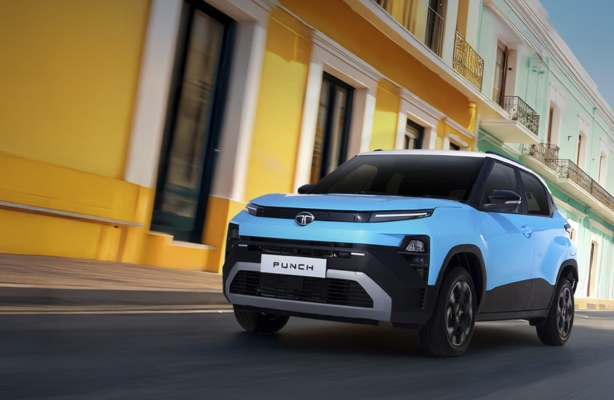
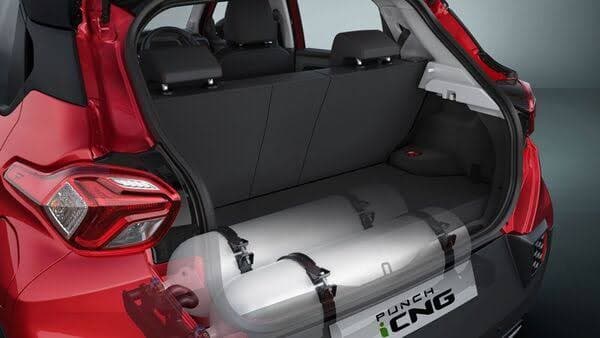
Take Tata, for instance, with their Punch iCNG. They pioneered the twin-cylinder technology, splitting the CNG tank into two smaller units. This brilliant move frees up a surprising amount of usable boot space that was simply unheard of for a factory-fitted CNG car just a few years ago (yes, really). It's a game-changer because suddenly, you don't have to choose between affordability and practicality for your weekend getaways.
Hyundai's Exter Hy-CNG Duo follows a similar philosophy, though with its own unique twist on packaging. Both these models understand that a micro-SUV isn't just about looking tough; it's about being versatile enough for city commutes and the occasional highway run with a full complement of passengers and their stuff. Maruti's Fronx S-CNG, while more of a crossover, also jumps into this segment, offering Maruti's famed reliability and widespread service network, but it faces the same challenge of cleverly integrating the CNG system without compromising its sleek profile or everyday usability.
Boot Space & Beyond: Who Offers More For Your Buck?
Let's get down to the brass tacks: boot space. For a CNG car, this is often the make-or-break factor. The Tata Punch iCNG, with its dual-cylinder setup, clearly leads the pack here. You get a genuinely usable boot that can comfortably take a couple of medium-sized suitcases or a week's worth of groceries without a fuss. It's a significant advantage and something potential buyers absolutely notice.
The Hyundai Exter Hy-CNG Duo also put a lot of thought into its packaging. While perhaps not as generous as the Punch, its boot is surprisingly practical for a CNG micro-SUV. You can definitely manage your daily errands and even a short family trip if you pack smart. It's a testament to Hyundai's engineering that they've managed to integrate the CNG tank so well into an already compact footprint, ensuring it doesn't feel like an afterthought.
Then there's the Maruti Fronx S-CNG. As a crossover, it aims for a slightly more premium feel and design. While it offers the trusted Maruti powertrain and excellent fuel economy, its boot space, post-CNG conversion, is more along the lines of traditional single-cylinder CNG cars. It's functional, sure, but you'll certainly be more conscious of the tank's presence and have to plan your luggage accordingly. It's a compromise you make for Maruti's peace of mind, but it's a compromise nonetheless.
Beyond the boot, all three offer decent cabin space for four adults, though the fifth passenger might feel a squeeze on longer journeys, typical for this segment. Features like touchscreen infotainment, connected car tech, and varying levels of safety kit are present across the board, making them well-rounded packages.
Specs At A Glance
Feature | Tata Punch iCNG | Hyundai Exter Hy-CNG Duo | Maruti Fronx S-CNG |
|---|---|---|---|
Engine | 1.2L Revotron Petrol (CNG Compatible) | 1.2L Kappa Petrol (CNG Compatible) | 1.2L K12N DualJet Petrol (CNG Compatible) |
Transmission | 5-speed Manual | 5-speed Manual | 5-speed Manual |
CNG Tank Setup | Twin-cylinder (30L each, total 60L water capacity) | Twin-cylinder (specific capacity TBA, but similar concept) | Single-cylinder (specific capacity TBA) |
Boot Space (CNG) | Segment-leading usable space | Good usable space | Compromised, but functional |
Safety Features | Dual Airbags, ABS with EBD, Brake Sway Control | 6 Airbags, ABS with EBD, ESC, Hill Assist | Dual Airbags, ABS with EBD, Reverse Parking Sensors |
Key Features | Voice-assisted sunroof, Automatic headlamps, Front fog lamps with cornering function, Auto AC | Electric sunroof, Dashcam with dual cameras, Projector headlamps, Auto AC | 9-inch SmartPlay Pro+ Infotainment, Head-up Display, 360-degree camera |
How Does It Stack Up Against The Competition?
Let's be blunt: each of these cars has its own distinct flavour and target audience. The Tata Punch iCNG feels like the most robust of the lot. Its build quality inspires confidence, and that twin-cylinder setup in the boot is its biggest trump card. If safety perception and decent road presence are high on your list, and you absolutely need that extra boot space in a CNG car, the Punch is a very strong contender.
The Hyundai Exter Hy-CNG Duo, on the other hand, is the feature king. That electric sunroof and a dashcam, for the price of a mid-spec Swift, are hard to ignore. It's got a fresh, quirky design and Hyundai's typical refinement. It feels a bit more premium on the inside than the Punch, and the overall driving experience is smooth and easy for city use. The boot, while smaller than Punch's, is still surprisingly well-managed.
Then there's the Maruti Fronx S-CNG. This one plays a different game. It's got that premium, coupe-SUV styling, especially with the Nexa badging. The K-series engine is known for its refinement and excellent fuel efficiency, even in CNG mode. Maruti's widespread service network and the promise of bulletproof reliability are huge draws. However, its boot space is its Achilles' heel compared to the innovative solutions from Tata and Hyundai. You're buying into the Maruti ecosystem and a stylish package, knowing you'll have to adjust your luggage habits a bit.
The Good And The Not-So-Good
What We Like
- Running Costs: All three offer phenomenal fuel efficiency in CNG mode, making daily commutes incredibly affordable.
- SUV Stance: They give you that desirable high seating position and ground clearance, perfect for navigating India's diverse roads.
- Innovative CNG Tech: Tata and Hyundai's twin-cylinder approach is a game-changer for practicality.
- Feature Richness: Modern interiors, touchscreens, and convenience features make these cars pleasant to drive and own.
- Maruti's Reliability: For the Fronx, the peace of mind that comes with a Maruti is unmatched.
What Could Be Better
- Power Dip: In CNG mode, there's a noticeable drop in power and torque, especially during overtakes on highways.
- Initial Cost: CNG variants are always more expensive than their petrol counterparts, pushing them into a slightly higher budget bracket.
- Boot Space (Fronx): While the Punch and Exter have improved, the Fronx still suffers from significant boot space compromise.
- Refuelling Network: While improving, CNG station availability can still be a concern in some regions compared to petrol.
- Limited Transmission Options: All CNG variants are currently manual-only, which isn't ideal for heavy city traffic.
Price & When You Can Buy It
As for pricing, expect these CNG micro-SUVs to continue hovering in the ₹7.5 lakh to ₹10 lakh (ex-showroom) bracket, depending on the variant and brand. The CNG versions typically command a premium of about ₹90,000 to ₹1.2 lakh over their equivalent petrol models. Specific 2026 model year updates and their corresponding pricing will be announced closer to their respective launches for that year, but don't expect any drastic shifts in the overall strategy.
These models – the Tata Punch iCNG, Hyundai Exter Hy-CNG Duo, and Maruti Fronx S-CNG – are already well-established in the market and will continue to be key players in the micro-SUV segment through 2026. You can walk into a showroom today and drive one home, knowing you're investing in a practical, fuel-efficient machine.
Our Verdict
So, which one should you put your hard-earned money on? Here's the thing — it really boils down to your priorities. If maximum usable boot space in a CNG micro-SUV is your absolute non-negotiable, the Tata Punch iCNG, with its clever twin-cylinder setup, is probably your best bet. It feels solid, looks good, and gives you that much-needed practicality.
If you're after a feature-packed car with a fresh design, a smooth city drive, and don't mind a slightly smaller, though still very usable, boot, the Hyundai Exter Hy-CNG Duo makes a compelling case. It’s got that modern appeal that Hyundai is known for.
And if you prioritize Maruti's legendary reliability, a premium-looking crossover, and its wide service network, the Maruti Fronx S-CNG is still a great choice, provided you're willing to make peace with the boot space situation. Honestly, for the typical Indian family looking for a city car that can do the occasional highway run without burning a hole in their pocket, these CNG micro-SUVs are a game-changer. They offer a blend of style, economy, and evolving practicality that makes them incredibly relevant for the Indian market in 2026 and beyond.