What's The Big News?
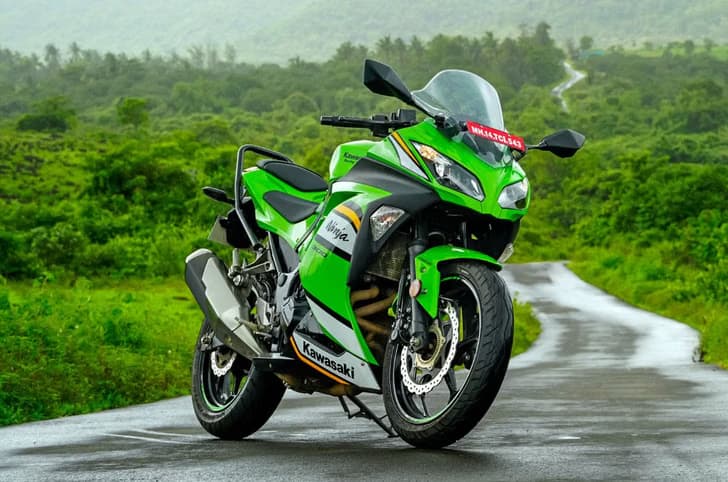
Kawasaki has officially brought back its longest-running warrior in India, releasing the MY27 Ninja 300 at an ex-showroom price of ₹3.34 lakh. If you feel like you've seen this exact movie before, you're not entirely wrong. This evergreen entry-level twin-cylinder sportbike simply refuses to step down, continuing a legendary run in our market that has outlasted multiple generations of aggressive competitors.
Don't go expecting a ground-up redesign, a flashy color TFT instrument console, or fancy electronic rider aids like traction control. The MY27 update keeps things straightforward, focusing primarily on revised tyres while carrying forward the features and mechanical setup from the previous model. Official deliveries are getting underway as we speak, so if you've had your eye on Team Green's entry point, your waiting period is practically over.
Old Wine, New Rubber: What Changes On The MY27 Ninja 300?
Mechanically, Kawasaki hasn't messed with the core recipe. Nestled inside that familiar diamond frame is the iconic 296cc liquid-cooled parallel-twin engine. It continues to deliver that signature buttery-smooth power distribution that Indian riders have fallen in love with over the last decade. It loves to rev, pulling cleanly all the way up to its high redline without the harsh vibrations that usually accompany single-cylinder engines in this price bracket. You still get the assist and slipper clutch as standard, making those frustrating bumper-to-bumper city commutes much easier on your left wrist.
So where exactly is the update coming into play? The major operational change comes in the form of revised tyres. Kawasaki has equipped this iteration with updated rubber designed to offer superior grip levels on wet surfaces and better stability during lean angles. Given how unpredictable Indian tarmac can be — jumping from silky smooth highways to gravel-filled potholes in the blink of an eye — upgraded rubber is a genuine real-world improvement (and honestly, it was overdue).
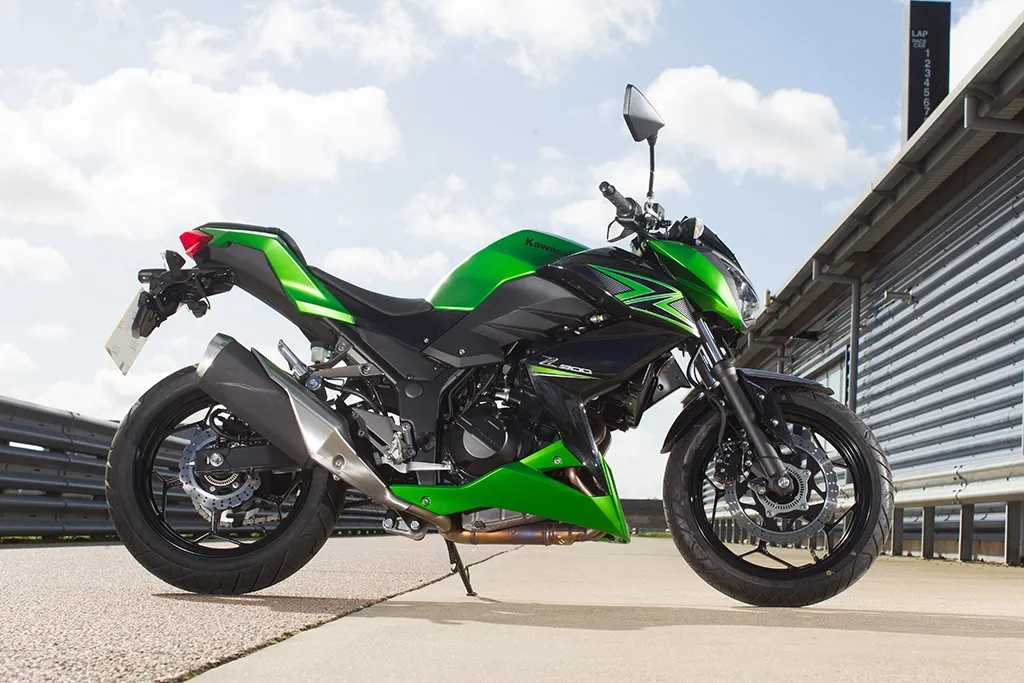
Visually and functionally, everything else carries forward unchanged. You get the classic twin halogen headlamp setup up front, the analog-digital instrument cluster with a large central tachometer, and that aggressive, upswept rear tail section. It might lack modern LED projectors or Bluetooth smartphone connectivity, but there is an undeniable old-school charm to watching an analog needle sweep across the tacho as you twist the cable-operated throttle.
Why The Ninja 300 Just Won't Give Up The Throne
Let's talk market reality for a second. When the Ninja 300 first landed on Indian shores, it was viewed as an ultra-premium, almost unobtainable dream machine for the average enthusiast. Flash forward to today, and while ₹3.34 lakh isn't small money — for the price of this motorcycle, you could easily put down a massive downpayment on a mid-spec Swift — it now sits in a very unique sweet spot. It remains one of the most accessible twin-cylinder supersport motorcycles available in India today.
Newer single-cylinder supersports like the KTM RC 390 might mop the floor with the Ninja when it comes to outright tech, electronic features, and aggressive track lap times. However, single-cylinders simply cannot replicate the relaxed, vibe-free cruising character of a parallel-twin on long highway stints. You can sit at triple-digit speeds on the highway all day long on the Ninja 300 without your hands going numb, making it a surprisingly practical sport tourer for Indian conditions.
Add to that the fact that Kawasaki localized a massive chunk of components years ago. That localization drastically brought down spare parts prices and routine maintenance costs compared to the early CBU days. It's a reliable, low-stress machine that any decently skilled local mechanic can service, backed by a massive community of owners who have logged lakhs of kilometers on this exact platform.
Specs At A Glance
Feature / Spec | Specification |
|---|---|
Engine Type | 296cc, Liquid-cooled, Parallel-Twin |
Price (Ex-Showroom) | ₹3.34 Lakh |
Gearbox | 6-speed with Assist & Slipper Clutch |
Tyres | Revised Compound (Front & Rear) |
Headlight | Twin Halogen Setup |
Deliveries | Commencing Immediately |
How Does It Stack Up Against The Competition?
Stepping into a showroom today with around ₹3.5 to ₹4 lakh in your bank account gives you some fascinating choices. On one end, you have the Aprilia RS 457, which represents the absolute modern pinnacle of the sub-500cc twin-cylinder class. The Aprilia brings sharp modern styling, class-leading power, ride-by-wire, and a gorgeous TFT screen, but it also commands a higher price tag and carries a newer, less proven service network in India.
Then there's the KTM RC 390. If track days and canyon carving are your sole priorities, the KTM gives you adjustable suspension, lean-sensitive traction control, and raw acceleration. But its committed, wrist-heavy riding position and buzzy single-cylinder nature make it a tough pill to swallow for daily commuting or effortless long-distance touring.
Yamaha's R3 is another direct parallel-twin rival, but sporadic availability and high pricing have historically made it a tougher sell. The Ninja 300 sits comfortably between these worlds: less aggressive than the KTM, less expensive than the Aprilia, and backed by a decade-long reputation for bulletproof Japanese reliability.
The Good And The Not-So-Good
What We Like
- Unmatched parallel-twin smoothness at this price point
- Relaxed ergonomics that don't destroy your back on long highway rides
- Localized spare parts mean lower long-term maintenance costs
- Revised tyres bring better cornering confidence and wet grip
- Effortless slip-and-assist clutch for easy city commuting
What Could Be Better
- Outdated halogen lighting setup in an era of LED illuminators
- Semi-digital instrument cluster feels ancient compared to modern TFT displays
- Lacks modern electronic aids like traction control or riding modes
- Design is iconic but has remained virtually unchanged for years
Price & When You Can Buy It
Kawasaki has launched the MY27 Ninja 300 at ₹3.34 lakh (ex-showroom). Depending on your state taxes and insurance options, expect the on-road price to land somewhere between ₹3.85 lakh and ₹4.10 lakh in major metros like Mumbai, Delhi, Bengaluru, and Chennai.
Deliveries for the updated motorcycle are commencing immediately across all authorized Kawasaki dealerships nationwide. Since this is a locally assembled model, waiting periods are expected to be minimal compared to CBU imports, though high demand for specific colorways might add a couple of weeks to your delivery timeline.
Our Verdict
Here's the thing — the Kawasaki Ninja 300 might feel like a motorcycle from a decade ago because, mechanically speaking, it essentially is. Critics will point out the halogen lights, the lack of modern electronic nannies, and the aging instrument cluster (and honestly, those criticisms are valid).
But for a massive chunk of Indian enthusiasts who dream of owning a smooth, reliable, multi-cylinder sportbike without breaking the bank or dealing with high maintenance headaches, this green machine continues to make immense sense. It's a forgiving beginner track bike, a comfortable highway cruiser, and an iconic badge that still commands respect wherever you park it. If simple mechanical purity and twin-cylinder refinement are high on your priority list, the MY27 Ninja 300 remains a very tempting proposition.