
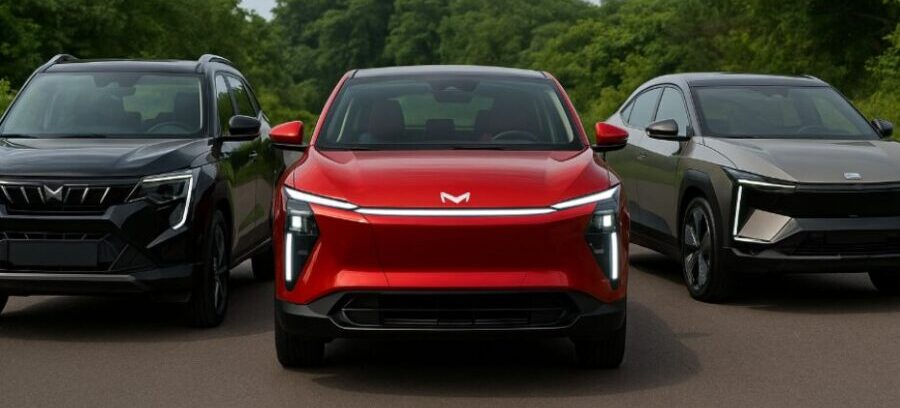
In a strategic shift, Mahindra & Mahindra is now developing hybrid powertrains to complement both its internal combustion engine (ICE) SUVs and upcoming electric vehicles (EVs). The initiative spans strong hybrids, range extenders, and more — reflecting Mahindra’s flexible approach to evolving market demands.
What’s Under Development
- XUV 3XO Strong Hybrid (Project S226): Based on a 1.2 L turbo-petrol engine, this system combines combustion and electric motors, with a possible launch by 2026.
- INGLO-platform Range Extenders: EVs like the BE 6 and XEV 9e could soon include gasoline motors that serve solely as generators — extending electric-only driving capability.
Why Hybrids Matter for Mahindra
- Bridge to EVs: As per MD & CEO Anish Shah, hybrids are viewed as a transitional technology rather than long-term solutions, helping navigate current charging infrastructure challenges.
- Portfolio Balance: Despite significant BEV investments, Mahindra will continue strengthening its ICE lineup in the short to medium term. Recent capital allocations include ₹14,000 cr for ICE development vs. ₹12,000 cr for EVs in FY25–27.
Market Strategy & Timeline
- Hybrid Launch Timeline: The XUV 3XO strong-hybrid is expected by 2026, while EV-based models might feature range extenders within 18–24 months depending on market response.
- Investment Support: Mahindra is part of a broader ₹37,000 cr commitment to launch new ICE, EV, and LCV models by 2030 — with hybrids positioned to target a market niche in between.
Implications for Customers & Industry
- Consumer Choice: Buyers can expect hybrid variants of the XUV 3XO, Scorpio, XUV700, and EVs — offering flexibility amid evolving fuel and charging infra.
- Market Relevance: With sales of hybrids rising (~2.1–2.5% of PV sales), Mahindra’s strategy taps into growing consumer interest, without deviating from its EV roadmap.
Bottom Line
Mahindra’s multi-pronged hybrid strategy — spanning strong hybrids and range-extender EVs — bolsters its adaptability in a fast-transforming auto landscape. By balancing continued ICE dominance with future-forward EV expansion, hybrids offer pragmatic transition vehicles while the industry prepares for deeper electrification.
