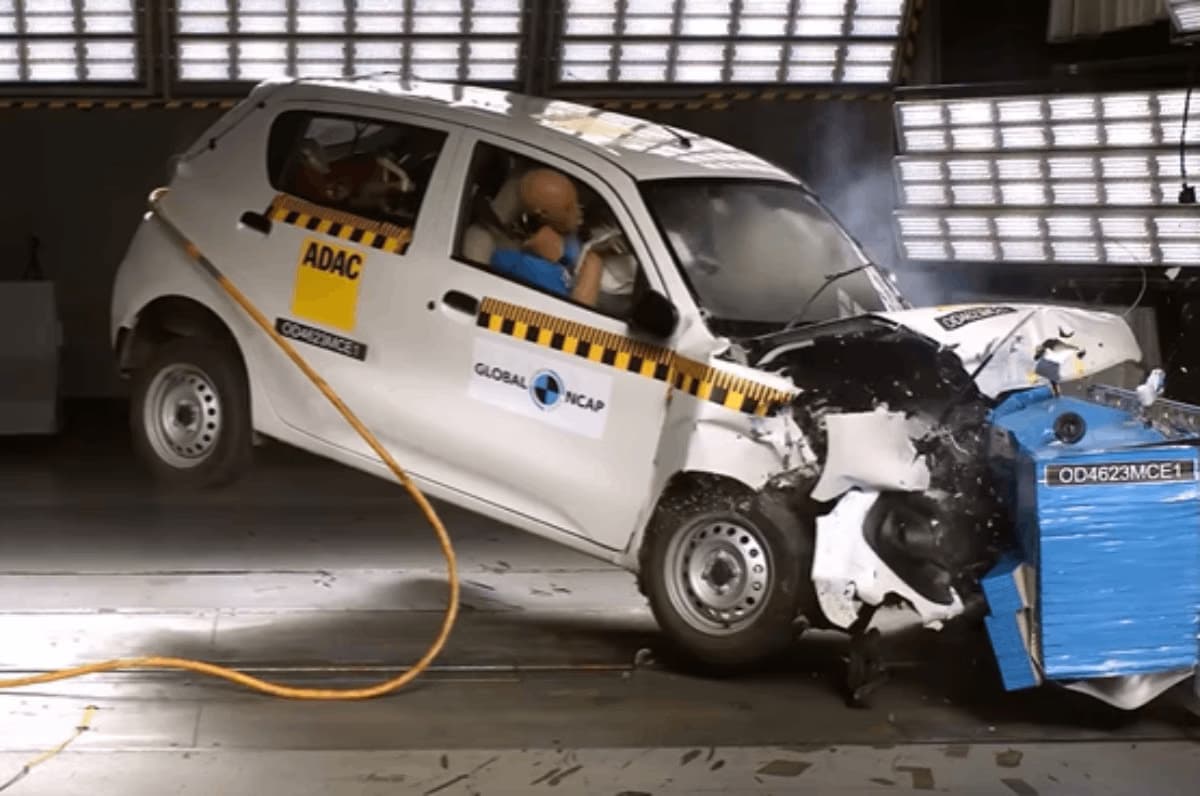
The Maruti Suzuki Celerio has been evaluated by Global NCAP, earning a 3-star rating for adult occupant protection (AOP) and a 2-star rating for child occupant protection (COP). The results are based on tests conducted on the latest safety-updated version sold in India.
In terms of points, the Celerio scored 18.04 out of 34 for adult protection and 18.57 out of 49 for child protection.
What Helped the Celerio Improve Its Score?
Global NCAP also tested an earlier 2-airbag version of the Celerio, which managed only 2 stars for adults and 1 star for children. The improvement in the latest test is largely due to the addition of six airbags and ESC as standard, highlighting how extra safety equipment can positively influence crash-test outcomes.
Standard Safety Equipment on the Tested Celerio
The India-spec Maruti Suzuki Celerio tested by Global NCAP comes equipped with:
6 airbags
Electronic Stability Control (ESC)
3-point seatbelts with reminders for all seats
ISOFIX child-seat mounts (rear outboard seats)
Seatbelt pretensioners and load limiters for the front seats
ABS with EBD and rear parking sensors
Compliance with UN R127 pedestrian protection norms
The test car was manufactured in India for the domestic market.
Adult Occupant Protection: Where the Celerio Stands
With 18.04/34 points, the Celerio achieved a 3-star adult safety rating.
Frontal crash test highlights:
Driver head protection: adequate
Front passenger head protection: good
Neck protection: good for both occupants
Chest protection: weak for the driver, adequate for the passenger
Knee protection: marginal due to possible contact with dashboard structures
However, both the bodyshell and footwell area were rated unstable, meaning they are not capable of withstanding further crash loads.
Side impact performance:
Head & chest: marginal protection
Abdomen: adequate
Pelvis: good
In the side pole test, head and pelvis protection was rated good, while chest and abdomen protection remained marginal. ESC performance met Global NCAP’s requirements.
Child Occupant Protection: Key Weaknesses
The Celerio’s 2-star child occupant protection rating comes from limitations in child-seat performance and vehicle compatibility.
Frontal test:
Forward-facing seat for the 3-year-old allowed head exposure, with poor neck and chest protection
Rearward-facing seat for the 18-month-old also showed head exposure and poor chest protection
Side impact test:
The 18-month-old dummy received full protection
The 3-year-old dummy’s seat could not fully contain the head
While the Celerio provides 3-point seatbelts for all seats and displays the required airbag warning, the front passenger airbag cannot be switched off, and child seats are approved only for the rear outboard positions—not the front or rear centre seat. These factors significantly reduced the overall child safety score.
Global NCAP’s Verdict
Global NCAP noted that although the Celerio benefits from improved standard safety equipment, its unstable bodyshell, marginal protection in key crash areas, and limitations in child restraint compatibility prevented it from achieving higher ratings. The organisation added that structural improvements and better child-seat integration would be necessary for improved results in future tests.
Price Context in India
The Maruti Suzuki Celerio is currently priced between ₹5.25 lakh and ₹7.66 lakh (on-road, depending on city and variant). It continues to be positioned as an affordable, fuel-efficient hatchback, though buyers prioritising maximum crash safety may want to compare it with alternatives that have achieved higher NCAP ratings.
FAQs: Maruti Suzuki Celerio Global NCAP Rating
Q. How many stars did the Maruti Suzuki Celerio score in Global NCAP?
It scored 3 stars for adult occupant protection and 2 stars for child occupant protection.
Q. Did six airbags help improve the Celerio’s rating?
Yes. The earlier 2-airbag version scored lower, and the addition of six airbags and ESC improved the overall result.
Q. Is the Celerio’s bodyshell stable?
No. Global NCAP rated the bodyshell and footwell as unstable, limiting its adult protection score.
Q. Why is the child safety score lower?
Issues with child-seat performance, lack of airbag deactivation for the front passenger seat, and limited CRS compatibility reduced the score.