
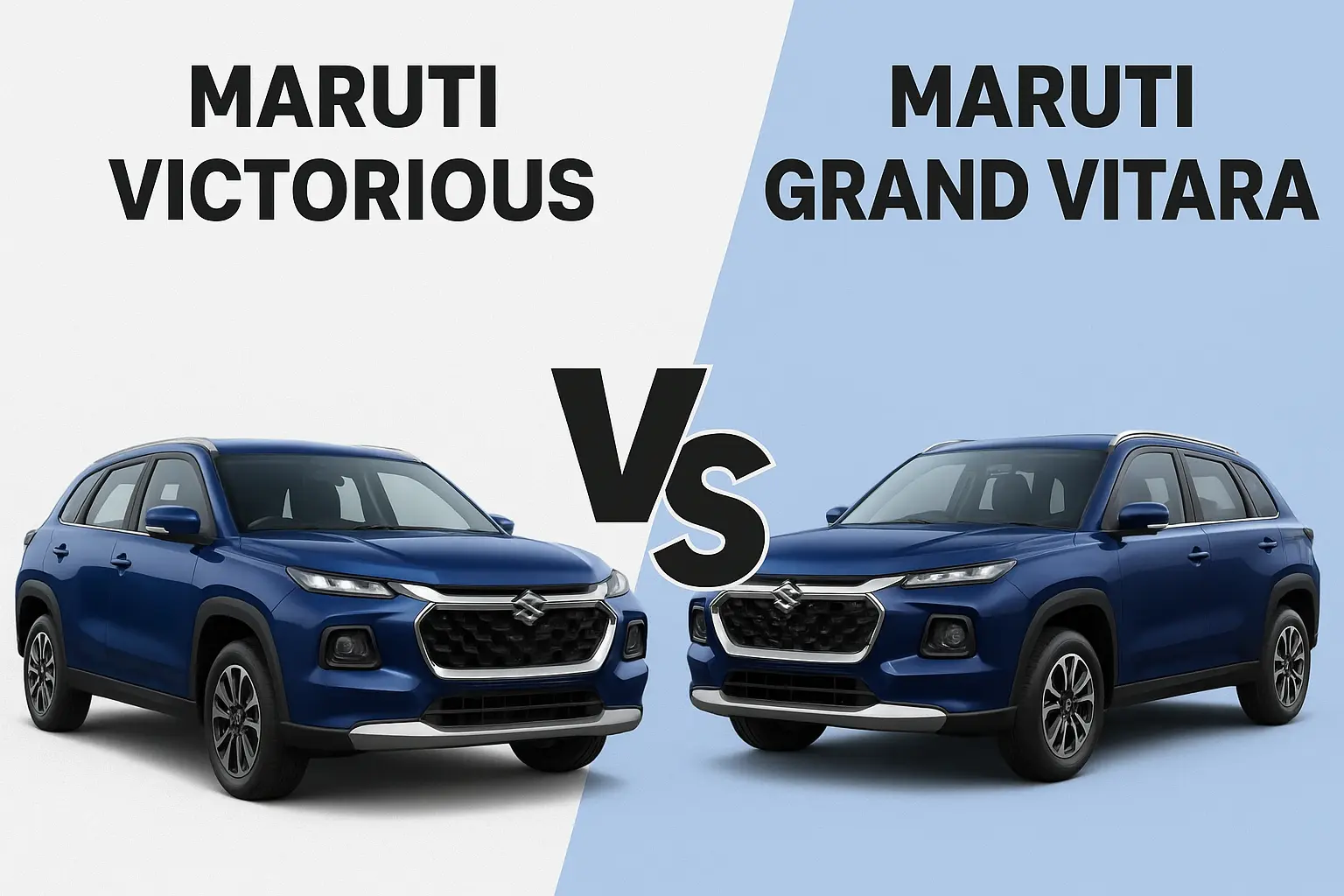
If your daily drive is mostly city roads, traffic jams, snarls, occasional highway stretches, and fuel or efficiency matters — here’s how Victoris and Grand Vitara stack up.
What We Know So Far
| Feature | Maruti Victoris | Maruti Grand Vitara |
|---|---|---|
| Powertrain Options | 1.5-litre petrol mild-hybrid, strong-hybrid, and also a CNG-MT option. | 1.5-litre petrol mild-hybrid, strong-hybrid, and petrol + CNG option. AWD option with mild hybrid MT on some variants. |
| Fuel Efficiency / Mileage (claimed) | Mild hybrid ~ 19-21 kmpl; strong hybrid ~ 28.65 kmpl; CNG ~ 27.02 km/kg. | Strong-hybrid ~ 27.97 kmpl; mild-hybrid ~ 21.11 kmpl; plus good fuel numbers with petrol/CNG in other variants. |
| Drive Layout / Transmission Choices | FWD, option of AWD (for some petrol + auto variants), manual / auto / e-CVT depending on model. | Similar: 5-speed MT, 6-speed AT, mild-hybrid / strong-hybrid, AWD available. |
| Features / Comfort | Strong feature list including ventilated seats, powered driver seat, panoramic sunroof, gesture tailgate in certain trims, good safety rating (5-star GNCAP). | Grand Vitara is very well equipped as well: panoramic sunroof, HUD, 360-degree camera, wireless charging, ventilated seats, etc. |
| Size / Handling / Practicality | Likely slightly more compact (or lighter) depending on variant; good boot space; with the benefit of newer variant tech. (Full detailed numbers not fully clear for all trims yet.) | Grand Vitara is larger, well suited for comfort, good road presence, but may have more bulk in traffic; turning radius etc also matter. Boot space in mild-hybrid vs hybrid differs. |
| Price / Cost of Ownership | As a newer model, pricing might be competitive but depends on trim; hybrid strong-hybrid will be costlier. Running & maintenance especially for hybrid / AWD likely higher. | Grand Vitara has been launched in various trims; the strong-hybrid costs more; fuel savings in hybrid can offset some cost; maintenance/training/parts availability for hybrid might matter. |
What Matters for City Commute
When choosing a car for city driving, some of the most important factors are:
- Fuel/energy efficiency in stop-and-go traffic
- Ease of maneuvering (size, turning radius)
- Comfort: visibility, ride quality over potholes, AC performance, ventilated seats etc.
- Features that aid in city: rear parking sensors or camera, 360-degree view, driver assistance in low speed, connectivity, safety tech.
- Cost of maintenance, reliability, resale value.
Pros & Cons: Victoris vs Grand Vitara for City Use
Here’s a side-by-side of strengths & trade-offs specifically for city driving:
| Aspect | Victoris – Pros | Victoris – Cons |
|---|---|---|
| Fuel / Running Costs | Exceptional mileage in strongest hybrid variant; good CNG option gives savings; mild hybrid better than pure ICE. | Hybrid / AWD trims will demand higher upfront cost; servicing hybrid systems may cost more; premium trims may have higher insurance etc. |
| Features & Comfort | Newer features in top trims, maybe more tech per rupee; gesture tailgate, ventilated seats etc add comfort. | Top trims cost more; lower trims may omit features; underbody CNG tank may affect ground clearance in some cases (if not designed well). |
| Size / City Manoeuvrability | If lighter / smaller or optimized for city, better agility in tight traffic; likely easier parking. | AWD / heavier trims may be bulkier; more moving parts = more potential for maintenance. |
| Aspect | Grand Vitara – Pros | Grand Vitara – Cons |
|---|---|---|
| Fuel Efficiency | Strong-hybrid gives excellent fuel economy; good for long city-drives or mixed driving. | Mild-hybrid or petrol+AT combos may have lower fuel saving; in heavy bumper-to-bumper traffic even strong hybrid advantage reduces. |
| Comfort & Equipment | Very feature loaded; well insulated cabin; good ride quality; premium feel. | More expensive in higher trims; hybrid tech might add cost of maintenance; parking and urban manoeuvring can be less nimble due to size/heft. |
| Resale & Reliability | Maruti/Suzuki has good service network; hybrid tech becoming more common; strong brand acceptance; more safety features. | Hybrid battery maintenance long term; things like AWD in city see less use (if you never use AWD, paying for it may not make sense). |
Verdict: What to Choose, Based on Your Priorities
Here are some recommendation scenarios. Pick based on what matters more to you.
| If You Prioritize… | Go For | Because… |
|---|---|---|
| Maximum fuel savings, especially in city traffic & frequent stop/starts | Victoris (strong hybrid variant) | Slight edge in claimed mileage; newer hybrid tech; possibly better efficiency especially in mostly urban settings. |
| Feature-rich cabin, comfort, safety, long drives too | Grand Vitara | Very well balanced; strong hybrid; features are solid; more proven in market now; more resale comfort. |
| Lower upfront cost, cheaper trims | Victoris (lower trims) | Likely offers more bang for buck in lower / mid trims if you don’t need AWD or top-features. |
| Need for AWD, occasional off ramps / bad roads | Check trims carefully; Grand Vitara offers AWD in certain variants; Victoris may also offer AWD/auto combos in some trims. If AWD is essential, compare specific trims and their cost. | |
| Keeping resale & reliability in mind, over ~5-10 years | Grand Vitara slightly safer bet for brand & familiarity; but Victoris (if built well) could be strong too. |
Final Thoughts
If I were you, and my daily commute was mostly city, unpredictable traffic, occasional highway stretch, here’s what I’d lean toward:
- I’d pick the Victoris strong-hybrid (if budget allows) because of the better fuel economy, modern features, and it likely feeling lighter and more nimble in traffic.
- But if comfort, long term resale, and a proven network are high priorities — Grand Vitara (hybrid) is a very safe, solid choice.
