What's The Big News?
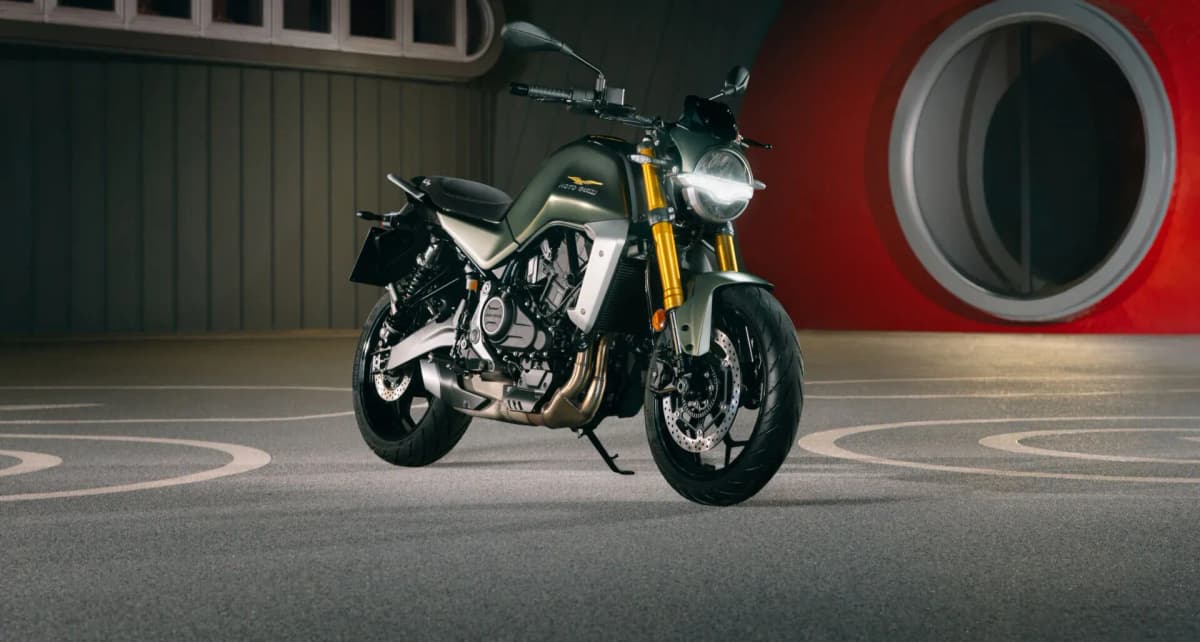
This is a seismic shift, folks, not just for Moto Guzzi, but for the entire Indian premium motorcycle scene. Imagine this: the iconic Italian marque, famous worldwide for its quirky yet lovable longitudinal 90-degree V-twin engines, has just unveiled something truly radical – their first-ever production bike with a parallel-twin engine. Yes, really! It's called the Moto Guzzi Trip 500, and it’s a big deal.
But wait, there's an even bigger twist in this Italian tale that hits closer to home. This brand-new Moto Guzzi Trip 500 isn't just a global debut; it's going to be manufactured right here in India, at Aprilia's plant in Baramati. This isn't just about a new bike; it’s about a new strategy, a new commitment, and potentially, a new benchmark for premium middleweight motorcycles for us Indian riders.
The Parallel-Twin Departure: A Bold New Heart for Guzzi
For decades, when you thought Moto Guzzi, you immediately pictured that distinctive V-twin poking out the sides, a design as much a part of its identity as the eagle badge. It's a hallmark that's both loved and, let's be honest, sometimes seen as a bit niche for mainstream appeal. Well, Guzzi's just thrown that playbook out the window with the Trip 500.
This new 500cc (give or take, considering the name) parallel-twin engine is a massive pivot. What does this mean for us? For starters, a parallel-twin typically allows for a more compact design, potentially lighter weight, and often a more accessible power delivery, especially at lower RPMs. It’s a configuration that’s hugely popular globally and has proven its mettle in everything from city commuters to adventure tourers. This isn't just a technical change; it's a strategic one, aiming to widen Guzzi's appeal beyond its traditional fan base. We're talking about a bike that could be easier to ride in our notorious city traffic, more nimble, and perhaps, a lot more approachable for riders looking to step into the premium segment without wrestling a big, torquey V-twin. It's a sign that Guzzi is serious about expanding its horizons, and honestly, it shows.
Made In India: The Game-Changing Local Connect
Now, let's talk about the real game-changer for us, the Indian consumer. The news that the Moto Guzzi Trip 500 will be made by Aprilia at their Baramati plant is absolutely massive. Think about it: an Italian premium brand, known for its heritage and exclusivity, getting locally manufactured. This isn't just good news; it's great news.
Why does local manufacturing matter so much? It's simple economics, really. When a bike isn't imported as a CBU (Completely Built Unit) but assembled or produced here, it drastically brings down costs. That means the final price tag for you and me could be significantly lower than what we'd expect from a fully imported Moto Guzzi. We're talking potentially a price point that puts it in direct competition with some established players, maybe even for the price of a mid-spec Royal Enfield 650, rather than a full-blown premium European machine. Beyond the price, local production usually translates to better availability of spare parts, quicker service turnaround times, and a deeper commitment from the company to build a robust sales and service network. It shows Piaggio (Guzzi's parent company) isn't just dipping its toes; they're diving headfirst into the Indian market.
Specs At A Glance
Feature | Detail |
|---|---|
Engine Type | Parallel-twin |
Displacement | Approx. 500cc (implied by "Trip 500") |
Manufacturing | Baramati, India (by Aprilia) |
Power Output | Official figures awaited |
Torque Output | Official figures awaited |
Cooling | Liquid-cooled (expected for modern parallel-twin) |
Transmission | Multi-speed (expected) |
How Does It Stack Up Against The Competition?
With a 500cc parallel-twin and local production, the Moto Guzzi Trip 500 is stepping into a fiercely contested segment. It's not going to have an easy ride, but it does bring a unique flavour.
Consider the Royal Enfield Interceptor 650 or the Continental GT 650. They've set the benchmark for accessible middleweight parallel-twins, offering a classic charm and robust engine at an unbeatable price. The Guzzi will likely be more premium, both in terms of components and brand perception, but it'll need to justify a potentially higher price point with superior performance, technology, and fit-and-finish. The RE twins are simpler, more old-school. The Trip 500, being a modern parallel-twin, should offer a different riding experience, perhaps more refined and less vibey at speed.
Then there's the Kawasaki Eliminator 450 or perhaps the Benelli Leoncino 500. The Eliminator, while a cruiser, uses a very modern parallel-twin and could be a cross-shopped option for someone looking for a smooth, characterful engine. The Benelli Leoncino 500 is a direct displacement rival, a scrambler-style bike with a parallel-twin that's already localized to some extent. The Guzzi will need to leverage its Italian heritage and the novelty of its new engine type to stand out. It's not just about specs; it's about the riding experience and the emotional connection. If it comes across as a more sophisticated, better-built alternative, it could carve its niche quite nicely.
The Good And The Not-So-Good
What We Like
- The Made-In-India Advantage: This is huge. Expect competitive pricing, better spare parts availability, and stronger service support.
- A Modern Parallel-Twin: A big step for Guzzi, potentially offering a more accessible, refined, and versatile riding experience for the Indian market.
- Premium Italian Brand: Moto Guzzi brings a certain prestige and legacy that few other brands can match in this segment. It's not just a bike; it's a statement.
- New Market Segment: This move signals Guzzi's intent to capture a wider audience, moving beyond its traditional, niche V-twin fan base.
What Could Be Better
- Specifics Are Still Scarce: We're still waiting on concrete power figures, design details, and confirmed features. It’s hard to judge fully without them.
- Service Network Depth: While Made-in-India helps, Guzzi/Aprilia's service network isn't as widespread as, say, Royal Enfield's. This will be critical for customer confidence.
- Brand Recognition: While premium, Moto Guzzi isn't a household name like some other European brands in India. Building that trust and awareness will take time.
- Competition is Fierce: The 500-650cc segment is packed with established players offering great value. The Trip 500 needs to truly stand out.
Price & When You Can Buy It
Alright, the million-dollar question: what will it cost and when can you get your hands on it? As of now, official pricing and launch dates are still under wraps. Given the 'Made in India' tag, we're cautiously optimistic about the pricing. While we can't throw out exact numbers, it's reasonable to expect it to be positioned competitively, perhaps in the ₹5-6.5 lakh (ex-showroom) range, depending on the final specs and positioning. That would put it squarely against some serious contenders.
As for availability, we anticipate Moto Guzzi will announce the official launch and booking details in the coming months. Don't expect it to be next week, but it's likely something we'll see roll out before the end of the year or early next year. Keep an eye on CarBikeGPT.com; you know we'll bring you the first ride impressions when it happens!
Our Verdict
Honestly, the Moto Guzzi Trip 500 is more than just another new motorcycle; it’s a clear statement of intent. For a brand steeped in tradition to embrace a parallel-twin engine and commit to local manufacturing in India, that's a monumental shift. It tells us they're serious about our market, and they're willing to adapt to reach a wider audience. This bike has the potential to be a true game-changer, making premium Italian motorcycling accessible to a whole new generation of Indian riders who might've found the V-twins a bit too niche or the CBUs too expensive. If Moto Guzzi can deliver on quality, performance, and a strong service network, the Trip 500 could very well be the spark that ignites a new chapter for the brand in India. We feel this is exactly what the premium middleweight segment needed: a fresh, exciting Italian entry with local backing.