What's The Big News?
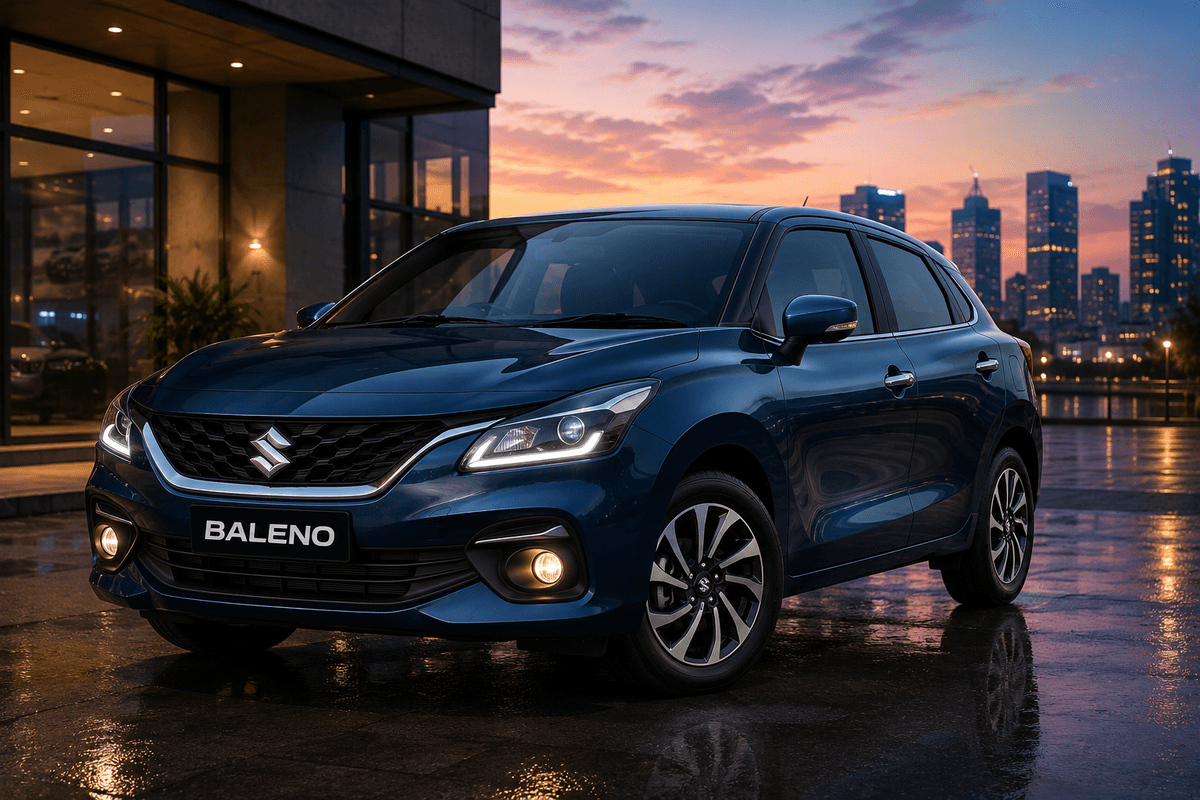
Drop everything if you've been standing in queue for a family hatchback. Maruti Suzuki is pulling the wraps off the updated Baleno tomorrow, and by all indications, this isn't just a lazy bumper tweak with fresh stickers. We're looking at a substantial overhaul for a car that practically prints money for India's largest carmaker.
Competition in the premium hatchback space has never been fiercer. Between the tech-heavy Hyundai i20 and the rock-solid Tata Altroz, buyers aren't easily convinced by just high mileage anymore. Maruti knows it can't coast on brand reputation alone, which is why tomorrow's launch is easily one of the most critical automotive events of the year.
Sharper Looks And A Much-Needed Cabin Revolution
Walk past any Nexa showroom today and the existing Baleno still looks familiar, perhaps a little too familiar. The upcoming revision brings a wider front grille, sleeker projector headlamp units with new LED daytime running signatures, and reprofiled tail lamps that stretch slightly into the tailgate. It's meant to look wider, more planted, and distinctly more mature than before.
Step inside, though, and that's where the real transformation lives. Maruti's old dashboard layout was genuinely feeling long in the tooth compared to what Koreans are delivering at this price point. We're expecting a thoroughly redesigned dual-tone dashboard housing a larger, free-standing touchscreen infotainment unit running an all-new interface. Rumours also point toward segment-first features like a heads-up display and a 360-degree parking camera on the top-end trims (about time, Maruti). If you spend two hours daily crawling through peak Bengaluru or Mumbai traffic, those cabin upgrades will make an enormous difference to your sanity.
Under The Hood: Efficiency Remains King
Pop the bonnet, and you're likely looking at the refined 1.2-litre, four-cylinder DualJet K-Series petrol engine equipped with idle start-stop technology. Maruti has mastered the art of extracting maximum kilometres from every drop of fuel, and this setup prioritises city tractability and pocket-friendly running costs over outright tire-shredding performance.
Transmission duties will be handled by a standard 5-speed manual gearbox, while the automatic variant is expected to switch over to an automated manual transmission (AMT) to keep showroom prices palatable. While purists might miss a silky-smooth CVT or a quick-shifting torque converter, the Indian buyer counting pennies per kilometre will appreciate the lower maintenance and higher fuel economy that Maruti's tuned AMT setups usually deliver.
Safety has also become a massive talking point across dinner tables in India. Maruti is expected to step up its game with reinforced structural steel, up to six airbags on top variants, electronic stability program (ESP), and hill-hold assist. How it fares in actual crash tests remains to be seen, but the intent to offer more protection right out of the factory gate is definitely there.
Specs At A Glance
Parameter | Expected Specification |
|---|---|
Engine Type | 1.2-litre K-Series DualJet Petrol |
Cylinders | 4-Cylinder |
Maximum Power | Around 90 PS (Official TBA) |
Peak Torque | Around 113 Nm (Official TBA) |
Transmission Options | 5-Speed Manual / 5-Speed AMT |
Fuel Efficiency | Expected 21+ kmpl (ARAI certified TBA) |
Seating Capacity | 5 Seater |
Retail Channel | Nexa Dealerships |
How Does It Stack Up Against The Competition?
Pitted against the Hyundai i20, the new Baleno will need to prove its luxury credentials. The i20 feels almost European on the inside with its crisp digital clusters and Bose audio system, but it also carries a price tag that can make your eyes water once you cross into the higher variants. Maruti typically undercuts Hyundai on initial sticker price and beats it hollow when it comes to routine servicing costs.
Then you have the Tata Altroz, which continues to be the default choice for buyers obsessed with build quality and high-speed highway composure. The Altroz offers a planted ride and that reassuring heavy door thud, but its naturally aspirated petrol motor lacks the effortless refinement of Maruti's four-cylinder unit. If you do mostly city runs, the Baleno's buttery-smooth petrol engine will almost certainly remain the easier daily commuter.
The Good And The Not-So-Good
What We Like
- Fresh, aggressive exterior styling that brings it in line with modern Nexa design language.
- Substantial cabin overhaul with a modern infotainment system and premium tech features.
- Proven 1.2-litre K-Series petrol engine renowned for ultra-smooth refinement and class-leading mileage.
- Maruti's unbeatable service network spanning every corner of the country.
What Could Be Better
- Switching to an AMT instead of a sophisticated CVT or torque converter might put off driving enthusiasts.
- No diesel engine option on offer, leaving long-distance tourers looking at rivals.
- Maruti's historic safety ratings leave buyers waiting cautiously for official crash test verifications.
Price & When You Can Buy It
Official prices will be announced during the launch event tomorrow morning. Currently, industry estimates suggest the range will start around ₹6.50 lakh for the entry-level trim and climb to roughly ₹10.20 lakh (ex-showroom) for the fully kitted-out automatic variant. Bookings have unofficially opened at several Nexa dealerships across metro cities, with token amounts ranging between ₹11,000 and ₹21,000. Customer deliveries should kick off within a week or two following tomorrow's price reveal.
Our Verdict
Here's the thing — Maruti doesn't need to reinvent the wheel to sell a hundred thousand Balenos; they just need to listen to what buyers have been complaining about. By upgrading the tech package, modernising the cabin, and putting real emphasis on standard safety gear, this facelift addresses nearly every flaw of the outgoing generation. If Maruti prices it sensibly without getting greedy on the top-end trims, rival hatchbacks are going to have a very rough year ahead.