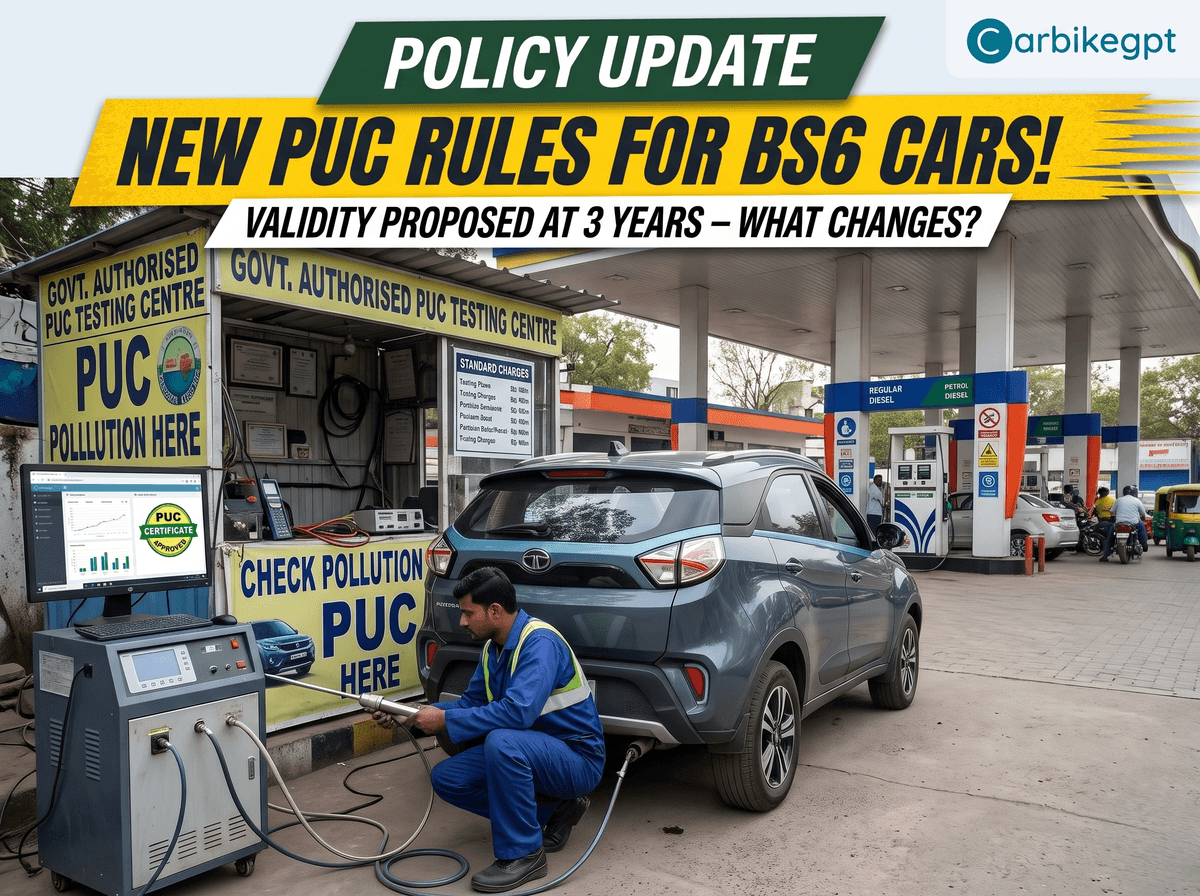
What's The Big News?
Alright folks, listen up! If you've bought a new BS6 compliant car or bike recently, or are planning to, I've got some genuinely good news for you. The government's just tweaked the PUC (Pollution Under Control) certificate rules, and it’s a massive sigh of relief, especially for us Indian consumers who often dread the yearly (or half-yearly!) scramble for this document.
Here's the gist: your shiny new BS6 vehicle now gets a significant reprieve from the immediate PUC hassle. It's a move that acknowledges the cleaner tech in our newer vehicles and, honestly, it's about time we saw some practical benefits for upgrading to less polluting rides. No more rushing for a PUC right after driving your brand new car off the showroom floor – a small but welcome change!
BS6 Vehicles: Why These New Rules Are a Game Changer
So, what exactly is happening? Previously, even with a brand-new vehicle, you’d often need a PUC certificate within the first year, and then renew it regularly. For BS6 vehicles, the updated norms mean you don't need a PUC for the initial one year from the date of registration. Think about it – a whole year without that extra chore. This isn't just about convenience; it's a nod to the fact that BS6 vehicles, by their very nature, are designed to emit significantly lower pollutants straight out of the factory.
The Bharat Stage VI (BS6) emission standards, rolled out in April 2020, brought in a huge leap in automotive technology. Engines became cleaner, exhaust systems more sophisticated, and overall emissions drastically reduced compared to their BS4 predecessors. It only makes sense that vehicles built to such stringent standards are given a bit of a grace period, right? This move simplifies things considerably for new owners and frankly, acknowledges the investment they've made in cleaner transport.
Beyond the First Year: What Changes For Regular PUCs?
Now, let's talk about what happens after that initial year. While the "no PUC for the first year" is the headline, the revised rules also streamline the process for subsequent certificates. For BS6 vehicles, the PUC certificate, once obtained after the first year, is now typically valid for one full year. This is a crucial difference from the older BS4 norms where, after the initial year, certificates often needed renewal every six months. That's a lot less running around to the test centres, and a lot less paperwork to keep track of! (Yes, really, a full year!).
This extended validity period is a clear win. It shows that the authorities are recognizing the inherent cleanliness of BS6 engines, reducing the bureaucratic burden without compromising on the overall goal of emission control. Plus, with digital integration, these certificates are increasingly linked to the Vahan portal, making verification easier and reducing the chances of fraudulent certificates floating around. It's a step towards a smarter, more efficient system.
New PUC Rule Details At A Glance
Rule Aspect | Old Rule (BS4 & below) | New Rule (BS6 Vehicles) |
|---|---|---|
Initial PUC Requirement | Required within first year, then periodic renewals | Exempt for the first 12 months from registration date |
Subsequent PUC Validity | Generally 6 months (after initial 1 year) | 1 year validity (after initial 1 year exemption) |
Vehicle Type Covered | All registered vehicles (petrol, diesel, CNG, LPG) | Specifically BS6 compliant vehicles (2-wheelers, 3-wheelers, 4-wheelers) |
Purpose | Ensure vehicles meet emission standards | Same purpose, but acknowledges advanced BS6 tech and reduced initial emissions |
Advertisement
What This Means Compared to Older Emission Norms
For years, getting a PUC has been a recurring chore for every vehicle owner. For owners of older BS3 or even BS4 vehicles, you know the drill: get your car tested, wait for the certificate, and then repeat the whole process every six months after the first year. It's not a huge expense, but it's another item on the checklist, another trip to a testing centre, another thing to remember.
With these new rules, BS6 owners are essentially getting a 'skip card' for the first year, and then a double-length validity period thereafter. It's a pragmatic approach that differentiates between older, more polluting tech and the newer, cleaner engines. It's not just about saving a few hundred rupees; it's about saving time and reducing the mental load of vehicle ownership. This kind of policy makes owning a newer, environmentally friendlier vehicle genuinely more appealing.
The Good And The Not-So-Good
What We Like
- Immediate Relief: No PUC needed for the first year of ownership for BS6 vehicles. That’s a big win!
- Extended Validity: Subsequent PUCs for BS6 vehicles will be valid for a full year, cutting down on repeat visits.
- Recognises Cleaner Tech: Finally, official acknowledgement that BS6 vehicles are inherently cleaner and deserve a lighter touch.
- Reduced Hassle: Less paperwork, fewer trips to testing centres, making vehicle ownership a bit smoother.
- Encourages Upgrades: A subtle incentive for people to choose newer, greener vehicles.
What Could Be Better
- Still Requires Physical Visit: While less frequent, a physical inspection is still required. An OBD-based digital system could be the next step.
- Awareness & Enforcement: Ensuring all testing centres and enforcement authorities are aware and consistently apply the new rules across states.
- Clarity on Older Vehicles: While BS6 benefits, clarity on potential streamlining for older vehicle categories would be welcome.
Impact on Your Wallet and Schedule
Let's talk brass tacks. While the cost of a PUC certificate isn't going to break the bank – it's typically under ₹100 for two-wheelers and ₹200-₹300 for cars – the real saving here is your time and mental energy. For the first year, you save that small fee and, more importantly, the time it takes to visit a centre, wait in line, and get the test done. After that, you're looking at half the frequency of visits compared to BS4 vehicles. Over the lifespan of your vehicle, these small savings add up, and the reduction in administrative burden is priceless.
This isn't just about individual savings; it's about the government refining its approach to pollution control. By trusting the cleaner technology of BS6 vehicles for a longer period, they're showing confidence in manufacturers and, ultimately, in the buyers who choose these advanced machines. It’s a smart move that benefits everyone.
Our Verdict
Look, we've seen a lot of policy changes over the years, and many come with their own set of complications. But this one? This feels like a genuine win for the Indian automotive consumer. It's a sensible, practical adjustment that directly benefits those who've invested in newer, more environmentally friendly BS6 vehicles.
Honestly, this move by the government is a breath of fresh air, literally and figuratively. It reduces the bureaucratic load, acknowledges technological advancements, and makes owning a BS6 car or bike just that little bit easier. It’s a step in the right direction, and we hope to see more such pragmatic policies that balance environmental concerns with user convenience. This is a definite thumbs up from us at CarBikeGPT!