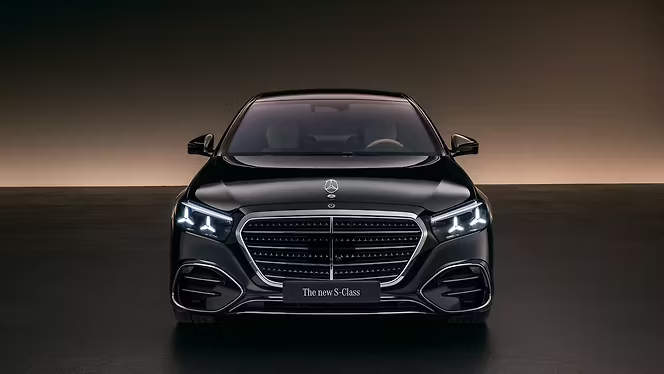
The latest update to the Mercedes-Benz S-Class shows that the brand is taking a measured approach to electrification, rather than rushing into an all-electric future for its flagship sedan. Instead of offering a single powertrain direction, Mercedes continues to provide a broad mix of petrol, diesel and plug-in hybrid options, keeping flexibility at the centre of its strategy.
All engines in the S-Class range now come with mild-hybrid technology. This system supports the engine during acceleration, allows energy recovery while braking, and enables engine-off coasting in certain driving conditions. While the efficiency gains are modest, they help reduce fuel consumption and emissions without changing the overall driving experience that long-time S-Class buyers expect.
The plug-in hybrid versions play a more significant role in reducing emissions on paper. Mercedes claims an electric-only driving range of close to 100 km under WLTP testing, which can cover most daily city commutes. For owners who charge regularly, this setup offers quieter driving and lower fuel use. However, in real-world conditions where charging is skipped or inconsistent, the petrol or diesel engine still does most of the work.
Interestingly, Mercedes has retained six- and eight-cylinder engines in the S-Class lineup. Despite efficiency improvements, this decision highlights the balance the brand is trying to maintain between tightening emission rules and the expectations of luxury car customers who value smoothness, power and refinement.
To meet upcoming emission standards, Mercedes has also added technical updates such as electrically heated catalytic converters for diesel engines. While these changes improve compliance, they also add complexity and cost to combustion-engine development.
As governments push for stricter emission norms and clearer electric vehicle targets, the S-Class raises an important question for the wider industry. How long can gradual electrification remain a practical solution before luxury sedans are forced to make a full transition to electric power?