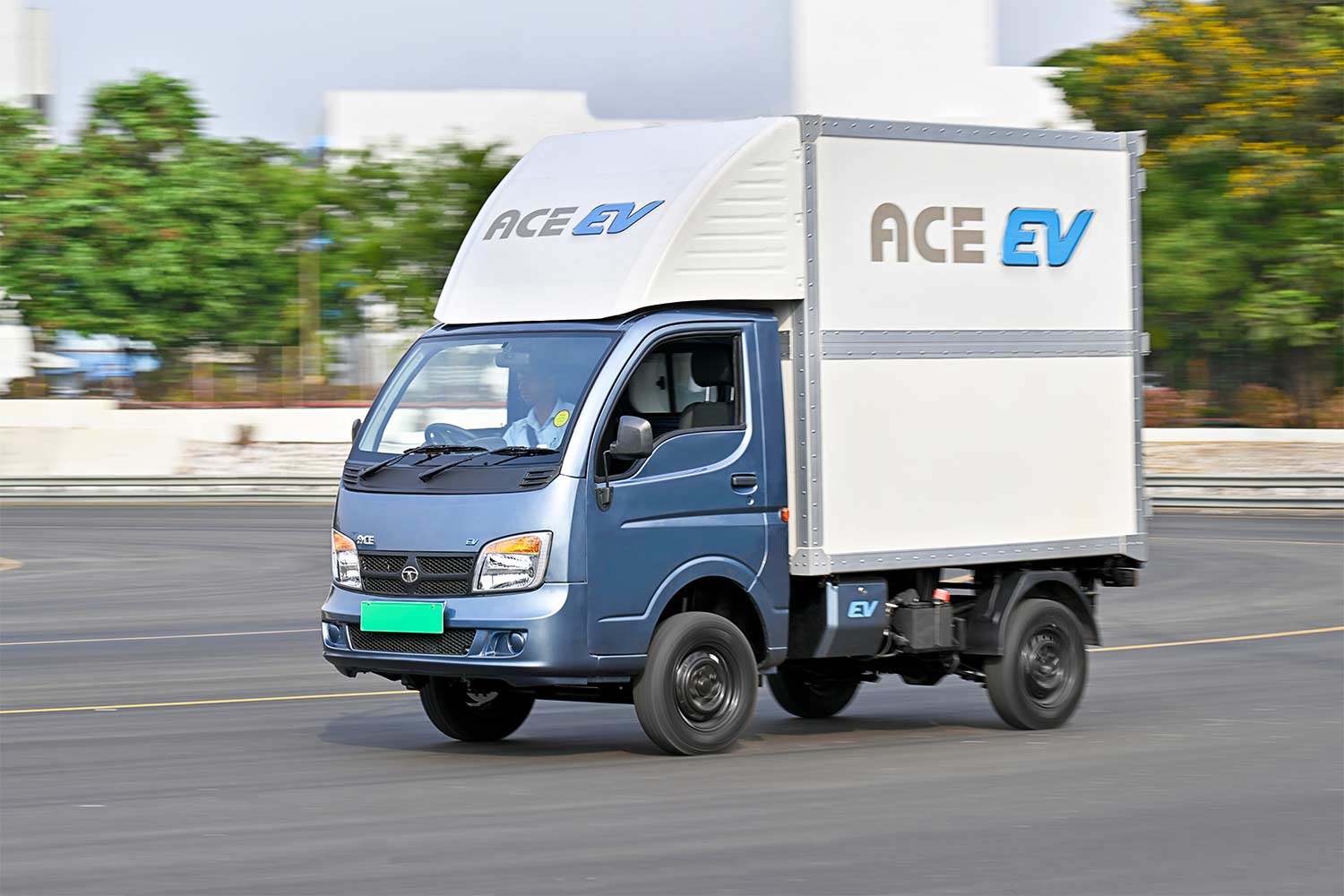
What's The Big News?
Remember the legendary Tata Ace? If you've spent even a single day navigating the chaotic roads of urban India, you've definitely seen this tiny workhorse dodging traffic, stuffed to the gills with everything from water cans to home appliances. It earned the affectionate nickname "Chota Hathi" for a very good reason. Now, Tata Motors is aiming to repeat that historical market dominance in the green era with the launch of the Tata Ace EV.
This isn't just another showcase vehicle designed to look pretty in corporate sustainability brochures. It's an aggressive, high-stakes gamble on the very backbone of India's intra-city logistics network. With e-commerce giants and delivery startups constantly looking to slash last-mile delivery costs, this electric truck might just be the quiet revolution our noisy city streets need.
The Transition from Diesel to Watts: Under the Cargo Bed
Let's talk about what actually moves this machine. Instead of the loud, vibrating diesel engine we've grown up hearing, this clean version gets a highly modern, liquid-cooled 21.3 kWh battery pack. It powers an electric motor generating 36 horsepower and 130 Nm of peak torque. That doesn't sound like supercar numbers on paper, but in the stop-and-go madness of Indian traffic, instant electric torque is a superpower. You don't have to constantly battle with a heavy clutch anymore (yes, really).
Tata's smart move here is the inclusion of their homegrown Evogen powertrain. It features an advanced battery management system that keeps things running cool even during sizzling Indian summers. We've seen how extreme heat absolutely destroys battery health, so having a robust liquid-cooled setup in a commercial workhorse is a massive relief. It charges via a regular 15A socket or a fast charger, though we expect most fleet operators will rely on overnight depot charging to keep running costs to a bare minimum.
Real-World Utility: Range, Payload, and Fleet Logistics
Let's address the elephant in the room—or should I say, the Chota Hathi in the room. How much can it actually carry? Tata claims a certified range of 154 kilometers on a single charge. In the real world, when you've loaded it up to its 600 kg payload capacity and navigated through typical flyovers and potholes, you should realistically expect around 110 to 120 kilometers of driving range. For intra-city deliveries where most drivers cover less than 80 kilometers a day, that's more than enough cushion.
Inside the cabin, things are bare-bones but highly functional. You get a digital instrument cluster that tells you exactly how much battery percentage you've got left, which is crucial because range anxiety in a commercial vehicle means losing actual business. The cargo container itself is built with lightweight, durable materials to ensure you aren't carrying unnecessary dead weight around. It is optimized for maximum volume, making it perfect for e-commerce parcels, grocery deliveries, and FMCG goods.
Specs At A Glance
Specification | Details |
|---|---|
Battery Capacity | 21.3 kWh (Liquid-Cooled) |
Peak Motor Power | 36 hp (27 kW) |
Max Torque | 130 Nm |
Certified Range | 154 km |
Expected Real-world Range | 110-120 km |
Payload Capacity | 600 kg |
Charging Support | Fast charging & 15A home socket |
How Does It Stack Up Against The Competition?
While Tata is a massive brand name in the commercial space, they aren't playing in an empty sandbox anymore. The Mahindra Zor Grand is a tough competitor that has already found favor with many fleet operators. Mahindra's contender offers a slightly different take on the electric cargo space, focusing heavily on three-wheeler configurations which are cheaper to buy but inherently less stable at high speeds.
Then there is the Euler HiLoad EV, a brilliant startup-led three-wheeler that boasts an incredibly high payload capacity for its class. However, the Tata Ace EV holds a massive structural advantage because of its traditional four-wheel layout. It offers superior road presence, better stability on broken state highways, and a cabin that actually feels like a proper truck rather than an overgrown auto-rickshaw.
The Good And The Not-So-Good
What We Like
- Smooth, clutchless driving experience that reduces driver fatigue significantly.
- Robust four-wheel stability that easily handles deep potholes and bad roads.
- Liquid-cooled battery pack built specifically for extreme Indian weather.
- Tata's extensive service network spanning the length and breadth of India.
What Could Be Better
- Initial acquisition cost is significantly higher than the standard diesel or CNG Ace.
- The 600 kg payload is slightly lower than what diesel variants can legally carry.
- Charging infrastructure for commercial vehicles in smaller towns is still very sparse.
Price & When You Can Buy It
Tata Motors is targeting fleet buyers and corporate logistics partners first, meaning individual retail buyers might have to wait a little longer. You're paying a premium over the diesel version—nearly touching what you'd pay for a mid-spec Swift—with prices expected to hover in the ₹6.5 lakh to ₹7.5 lakh range depending on state-specific EV subsidies. However, the operational savings over three years should easily write off that initial premium.
Our Verdict
Transitioning to electric isn't just a trend anymore; for commercial operators, it's a matter of financial survival against rising fuel costs. Here's the thing — the Tata Ace EV isn't just a green gimmick to please environmentalists. It's a genuinely well-engineered tool designed to save fleet owners serious money in the long run. If you can handle the high upfront cost and have a fixed daily delivery route, this electric Chota Hathi is an absolute no-brainer.