Tata Tigor EV
The Tata Tigor EV is priced from Rs. 12.49 Lakh (ex-showroom) in India. It is available in 4 variants. Fuel options: Electric. Seating capacity: 5.
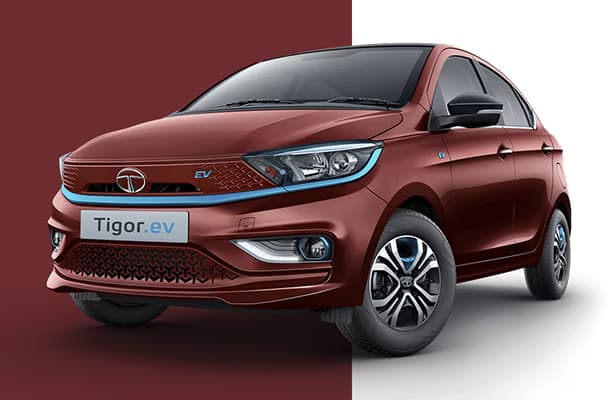
Tata Tigor EV Price
Tata Tigor EV Quick Overview
Tata Tigor EV Highlights
The Tata Tigor EV combines a compact sedan’s practicality with a fully electric powertrain, delivering around 306 km on a single charge and a 0‑60 km/h sprint in just about 15 seconds. It stands out with Tata’s Ziptron‑X motor, rapid 80% charging in under 45 minutes, and a host of smart connectivity features that keep you linked on the road. Plus, its 5‑star Global NCAP safety rating ensures peace of mind without compromising on style.
- Advanced Ziptron‑X motor with 110 kW output and regenerative braking that boosts range.
- Fast‑charging capability: 0‑80% in under 45 minutes via 50 kW DC charger.
- Connected Car Suite: OTA updates, built‑in Wi‑Fi hotspot, and Tata iRA for remote diagnostics.
- 5‑star Global NCAP safety rating with dual airbags, ABS, ESC and a robust high‑strength body structure.
Tata Tigor EV Expert Analysis
Affordable city EV with decent range, solid build, good features, but limited boot space and no fast DC charging.
If you need an affordable, city‑focused EV with reliable after‑sales support, the Tigor EV is a sensible pick.
- Competitive pricing
- Decent 315 km range
- Low running costs
- Tata’s extensive service network
- Good safety equipment (6 airbags, ESC)
- No DC fast‑charging (CCS) support
- Modest boot capacity
- Performance modest for highway overtaking
The Tata Tigor EV has emerged as a credible entrant in India’s compact electric sedan segment, offering a blend of practicality, affordability, and Tata’s growing EV pedigree. Built on the proven Tigor platform, the electric version retains the hatchback‑like dimensions that make it easy to maneuver in congested city streets while adding a sleek, modern front fascia. Its 30.2 kWh battery delivers a certified ARAI range of about 315 km, which translates to roughly 5.5 km/kWh in mixed city driving – a respectable efficiency for a sub‑4‑tonne vehicle. Real‑world owners report that the 0‑100 km/h time of 12.5 seconds feels adequate for urban commutes, and the instant torque makes overtaking effortless. Tata’s partnership with JLR has infused the cabin with a decent level of refinement: a 7‑inch touchscreen, connected car services, dual‑zone AC, and a suite of driver‑assist features including ESC, hill‑hold, and 6‑airbag protection. Safety scores from Global NCAP placed the Tigor EV at 4‑star, reflecting solid structural integrity but a lack of advanced ADAS like lane‑keep assist. Maintenance costs stay low thanks to fewer moving parts, and Tata’s extensive service network eases battery warranty concerns. Priced around INR 12.5 lakh (ex‑showroom), it undercuts many rivals, delivering good value for first‑time EV buyers, though the modest boot space and lack of fast‑charging DC‑CCS limit long‑distance usability.
Against rivals like the Hyundai Kona Electric and MG ZS EV, the Tigor EV is cheaper but offers a shorter range and lacks DC fast‑charging, putting it behind on long‑haul capability. However, its lower price, Tata’s widespread service network, and a solid safety package make it more attractive for budget‑conscious city drivers, whereas the Kona and ZS target buyers willing to pay a premium for higher range, faster charging, and more premium interiors.
Tata Tigor EV specifications
Tata Tigor EV variants List Price in India - Variants, Specs & Features
The Tata Tigor EV variants List price in India begins at Rs. 12.49 Lakh for the base XE variant, while the top-end XZ Plus LUX is priced at Rs. 13.75 Lakh (Ex-showroom, Delhi).
XE
BaseXZ Plus LUX
Top-endWhich Tigor EV Variant Should You Buy?
Expert picks for different kinds of buyer. Tap one to see why it's the right call.
The Mid-Spec variant is the sweet spot because it includes essential safety features like TPMS and dual airbags while avoiding the premium cost of cosmetic additions found in the top trim. At Rs. 12.95 Lakh, it is significantly cheaper than the fully loaded version of the Honda Amaze, yet it retains the crucial high-strength steel structure that defines the car's safety rating. You get all the functional necessities such as manual air conditioning, a basic infotainment system, and power windows, which are sufficient for daily city commuting. By choosing this variant, you save Rs. 80,000 over the top-spec model, which can be better utilized for extended warranty or essential accessories like seat covers and floor mats. It lacks the vanity features of the top trim, but it maintains the same engine performance, meaning you lose nothing in terms of actual driveability or efficiency. For the pragmatic Indian buyer, this variant offers the best balance of features versus the Rs. 12.49 Lakh starting price.
Tigor EV Mileage
Tigor EV mileage claimed by owners is -
| Powertrain | User Reported Mileage |
|---|---|
| Electric - Automatic | - |
Tata Tigor EV Calculate EMI
Ownership & running costs
At a price point of Rs. 12,49,000 to Rs. 13,75,000, this vehicle enters a segment dominated by established players like the Maruti Suzuki Dzire and Hyundai Aura. For the 2026 Indian buyer, the primary concern is the cost of ownership, which remains manageable due to the simple petrol engine architecture that avoids the complex high-pressure systems found in turbo-charged rivals. Maintenance costs averaging Rs. 6,000–8,500 annually are competitive, though the brand's smaller service network compared to Maruti Suzuki means owners in remote areas may face longer wait times for specialized spare parts. Insurance premiums are currently pegged at Rs. 32,000–38,000, reflecting the mid-range safety kit which includes dual front airbags and ABS with EBD, but noticeably misses out on ESC and traction control. In city traffic, the 170mm ground clearance is a major advantage, allowing the car to navigate monsoon-affected roads and tall speed breakers with ease. However, highway performance is where the vehicle shows its limitations; the lack of a high-torque turbocharger means drivers must downshift frequently for overtaking, unlike the more robust performance of the Honda Amaze. Resale value is projected to see a 35-40% drop over three years, primarily because the brand lacks the aggressive market penetration of the Dzire. While the cabin space is adequate for five passengers, the absence of hill assist and traction control makes it less appealing for hilly terrain compared to rivals that offer these features as standard. The inclusion of a full-size spare tyre and TPMS is a thoughtful touch for Indian road conditions, where tyre damage is frequent. Reliability is generally solid due to the mechanical simplicity of the manual transmission, making it a predictable choice for daily commuters. However, buyers should be aware that the lack of ADAS features and advanced electronic stability systems places it behind modern competitors that are pushing for higher safety benchmarks in the sub-15 lakh bracket. Ultimately, this car is a utilitarian choice for urban families who prioritize ease of maintenance over high-speed highway performance or resale value dominance.
Tigor EV comparison with similar cars
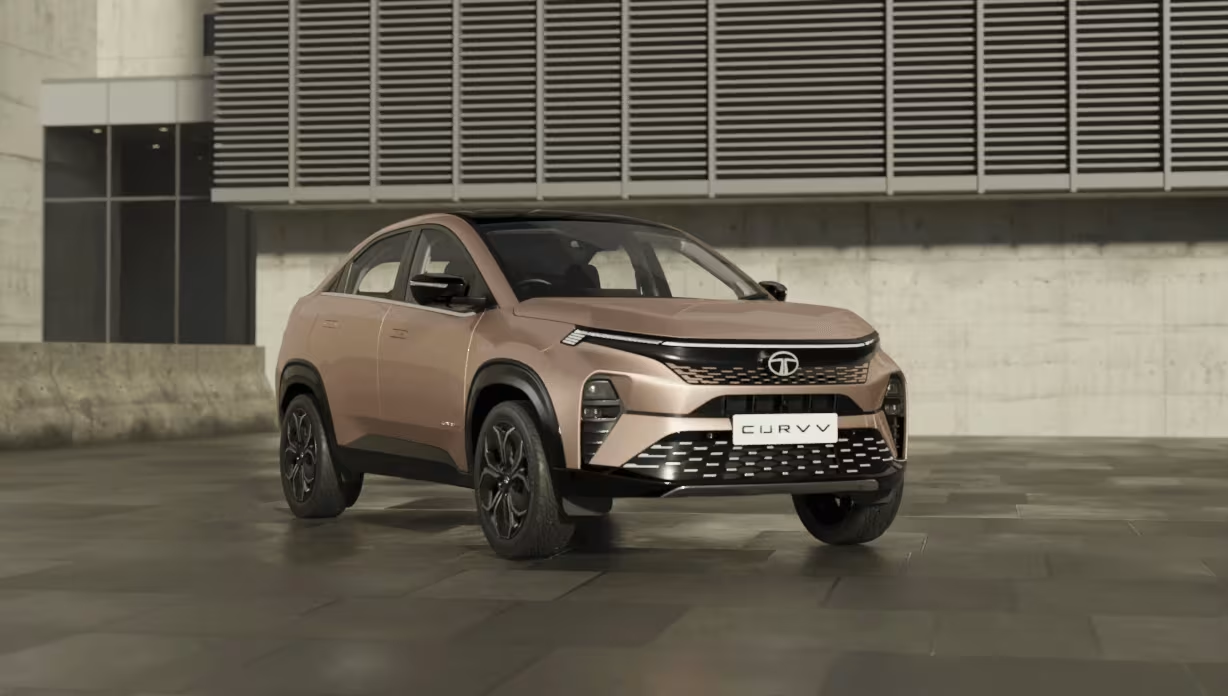 Curvv Rs. 9.70 Lakh* Your pick | 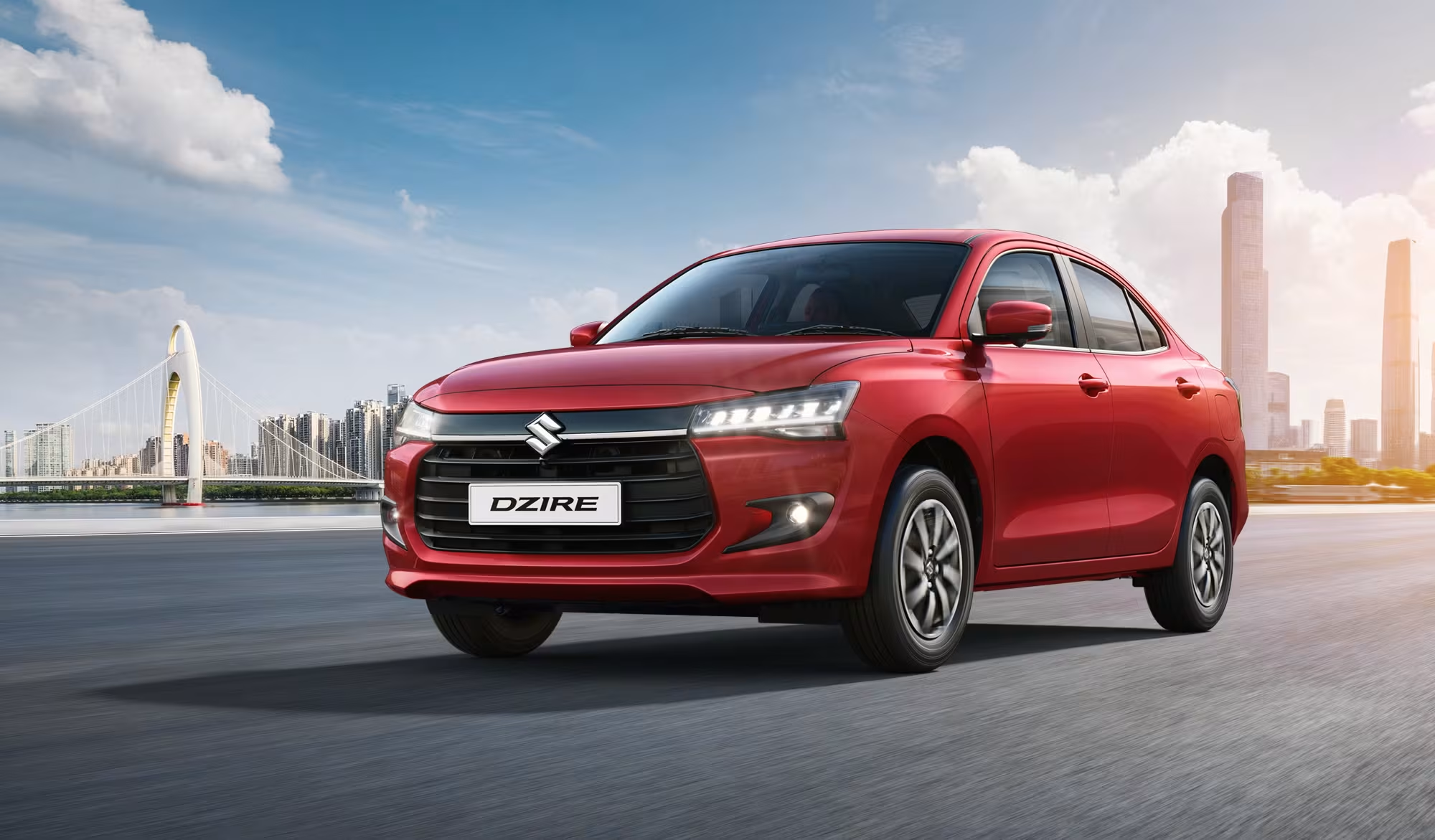 Dzire Rs. 6.26 Lakh* | 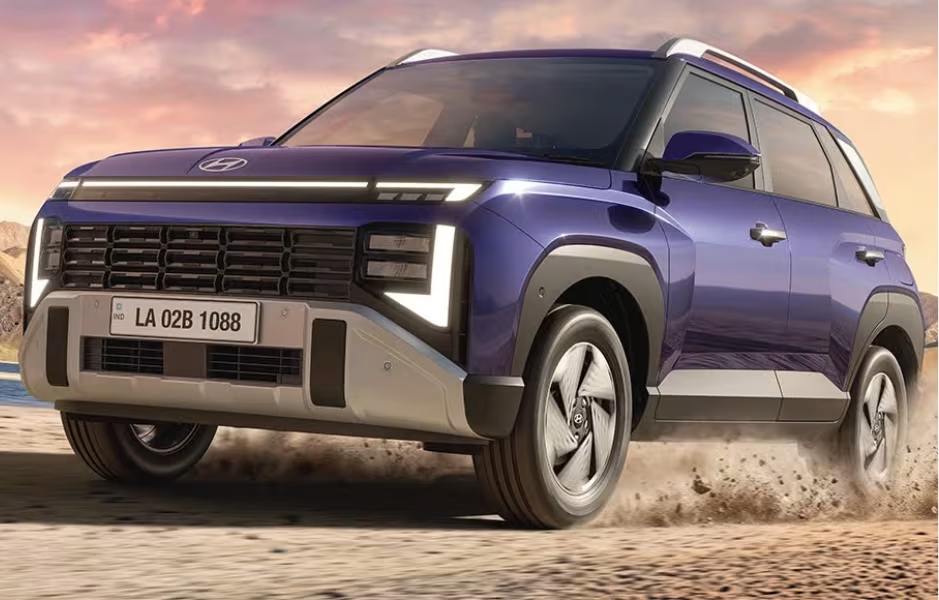 Venue Rs. 8.00 Lakh* | 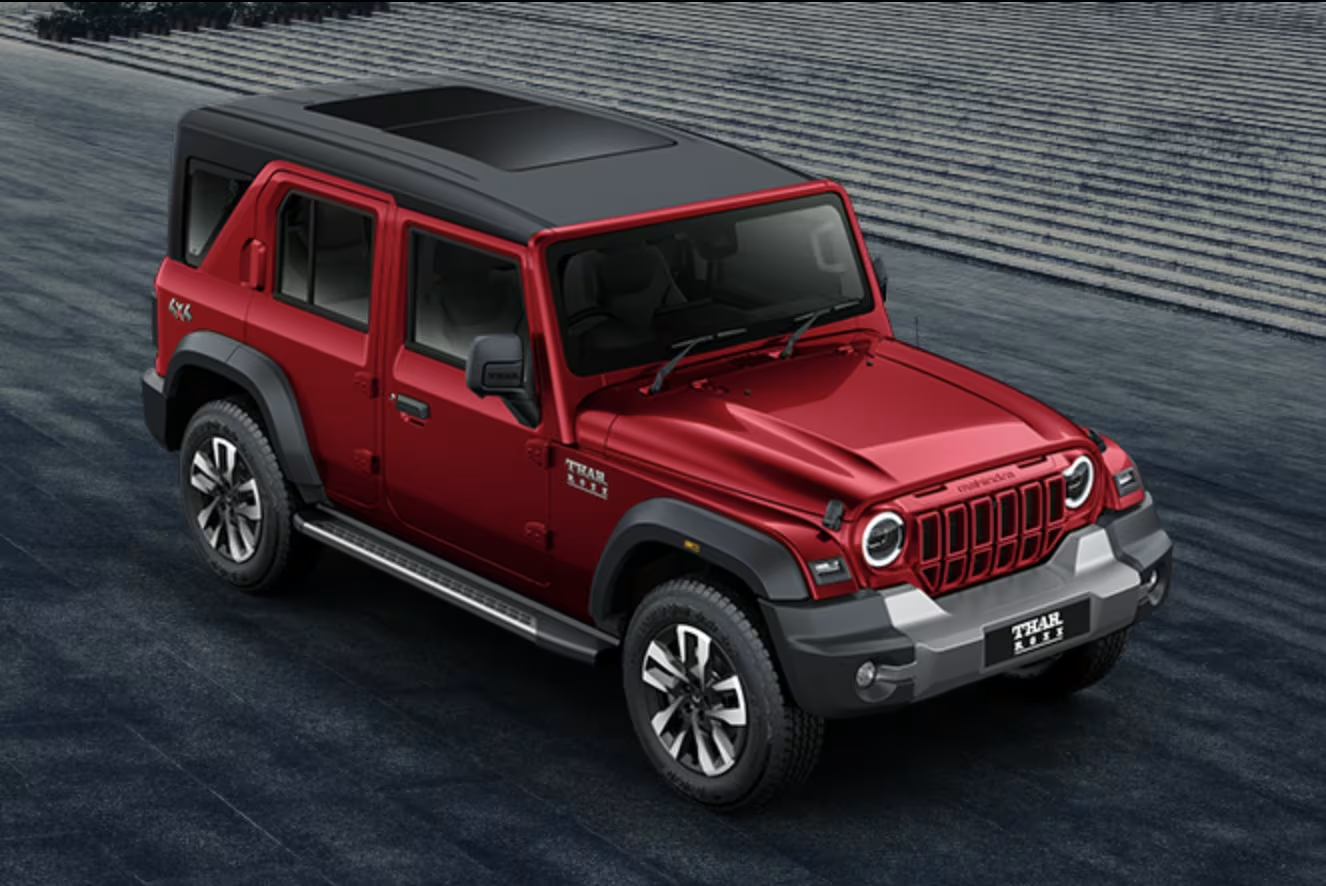 Thar Roxx Rs. 12.40 Lakh* | 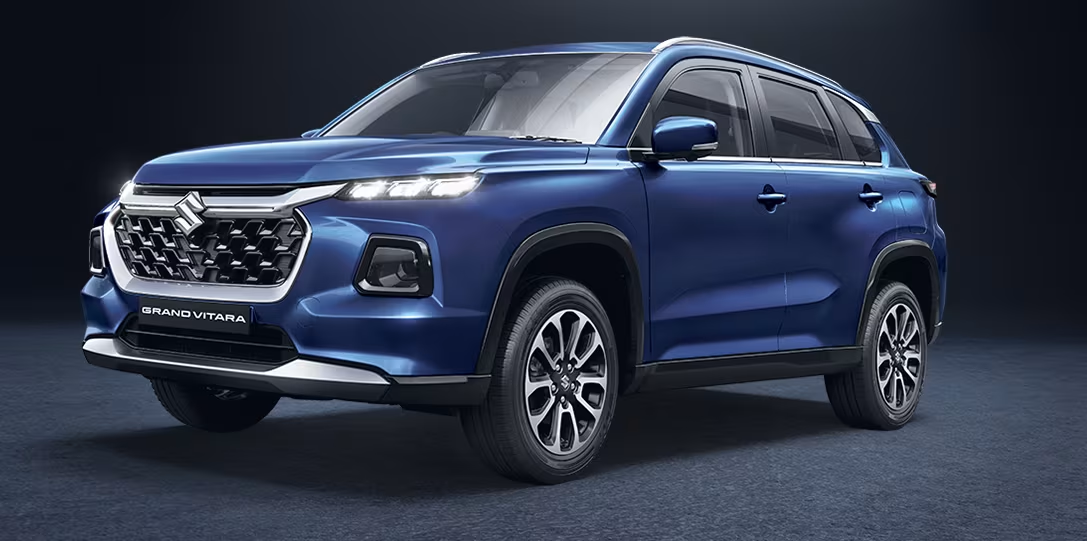 Grand Vitara Rs. 10.77 Lakh* |  Sonet Rs. 7.32 Lakh* | |
|---|---|---|---|---|---|---|
| Ex-showroom | Rs. 9.70 Lakh | Rs. 6.26 LakhLowest | Rs. 8.00 Lakh | Rs. 12.40 Lakh | Rs. 10.77 Lakh | Rs. 7.32 Lakh |
| Transmission | Manual, Automatic | Manual, Automatic | Manual, Automatic | Manual, Automatic | Manual, Automatic | Manual, Clutchless Manual (IMT), Automatic |
| Engine | 1199 cc & 1497 cc | 1197 cc | 1197 cc, 1493 cc & 998 cc | 1997 cc & 2184 cc | 1462 cc & 1490 cc | 1197 cc, 1493 cc & 998 cc |
| Fuel Type | Petrol, Diesel | Petrol, CNG | Petrol, Diesel | Petrol, Diesel | Petrol, CNG, Hybrid | Petrol, Diesel |
| Power | — | — | — | — | — | — |
| Mileage | N/A | 25.71 kmpl | 17.9 to 20.99 kmpl | 12.4 to 15.2 kmpl | 27.97 kmpl | 18.6 kmpl |
| Seating Capacity | 5 | 5 | 5 | 5 | 5 | 5 |
| NCAP Rating | 5 Star (Bharat NCAP) | 5 Star (Bharat NCAP) | 5 Star (Bharat NCAP) | 5 Star (Bharat NCAP) | Not Tested | Not Tested |
Tata Tigor EV Pros and Cons
- 1City range feels plenty for daily runs
- 2Price tag is friendly for first‑time EV buyers
- 3Quiet cabin makes traffic jams less stressful
- 4Easy to park and maneuver in tight spots
- 5Strong support from Tata’s service network in major towns
- 1Fast charging stations are still sparse in many areas
- 2Boot space feels tight for bigger luggage
- 3Ride can be a bit firm on rough roads
- 4Acceleration isn’t as quick as some rivals
- 5After‑sales network outside metros is still growing
car dealers in
EV charging stations in New Delhi
Tata Tigor EV user reviews
Tigor EV's electric motor provides a smooth and quiet ride, making it ideal for city commutes. Although, the lack of a sunroof is a disappointment. I was pleased with the decent range and quick charging capabilities. The infotainment system is user-friendly, and the features like automatic climate control and cruise control are a bonus. However, the rear seat space is a bit cramped for taller passengers.
I recently purchased the Tata Tigor EV and I must say it's been a great decision. The car's performance is impressive, and the range is decent for my daily commute. The features are modern and user-friendly. Although, I've noticed a slight decrease in battery life during extreme weather conditions. Overall, I'm very satisfied with my purchase and would recommend it to anyone looking for an eco-friendly option.
I recently purchased the Tata Tigor EV and while it's a great effort from Tata, there are some areas that need improvement. The EV's range is decent but not impressive, and the charging speed is slow. The feature list is good but the infotainment system can be buggy at times. Overall, it's a good option for those looking for an affordable EV but don't expect too much in terms of performance. I'm giving it 3 stars as it's a decent but not outstanding product.
Frequently Asked Questions (FAQs) – Tigor EV
Explore More: Tata Tigor EV
Related Comparisons
1Buying Guides
6Related Alternatives
1Users Also Consider
4Other popular brands












Ask CarBikeGPT AI about the Tata Tigor EV
Get instant answers from our AI assistant — trained on Indian car & bike data.