What's The Big News?
So, there's a new Hyundai on the block that's been doing the rounds globally – the Bayon. You might've seen some pictures floating around, and honestly, it's quite the looker, carrying that signature Hyundai design language we've come to expect. It's primarily designed for European markets, slotting in as their entry-level crossover, but here at CarBikeGPT.com, we're always thinking: what does this mean for India?
This isn't just about another car; it's about Hyundai's strategy. They've nailed the compact SUV segment with the Venue and Creta, but what if there's space for something even more urban-focused, perhaps with a slightly different flavour? The Bayon seems to be Hyundai's answer to that question overseas, and its recent first drive impressions give us a lot to ponder about its potential fit for our crowded roads and value-conscious buyers.
Design & Road Presence: A Fresh Face, But Familiar Heart
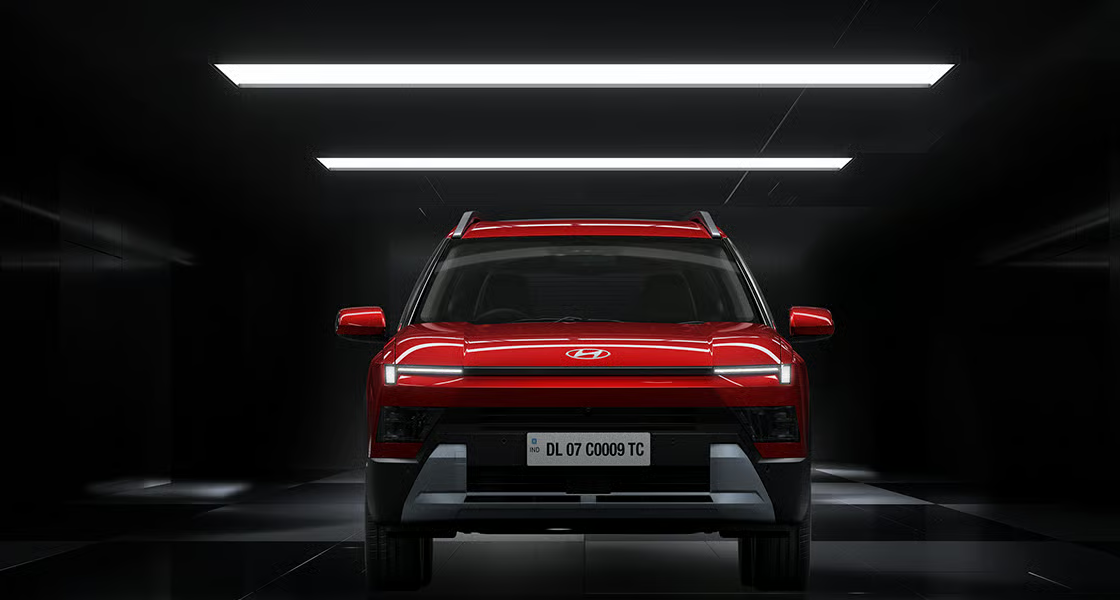
Look, when it comes to design, Hyundai usually doesn't disappoint, and the Bayon is no exception. It sports their 'Sensuous Sportiness' design identity, which means you get sharp lines, a bold grille, and those distinctive boomerang-shaped DRLs that flow into the headlamps. It's got a slightly aggressive, yet sophisticated stance that makes it stand out without being over-the-top. From the side, the sculpted creases give it a dynamic feel, and the rear gets a similar treatment with arrow-shaped taillights connected by a thin light bar – a design cue that's becoming quite popular.
Compared to something like a Venue, the Bayon feels a bit more stretched out and lower slung, leaning more towards a crossover than a traditional boxy SUV. This contributes to a sleeker profile and perhaps a more car-like driving experience, which many urban buyers actually prefer. The ground clearance, for the global model, seems decent, but we'd definitely need an India-spec version to tackle our infamous speed breakers without scraping. Honestly, it's a design that could definitely turn heads on Indian streets, offering something a bit different from the current crop of compact SUVs.
Inside the Bayon: Practicality Meets Modern Tech
Step inside the Bayon, and you're greeted with a familiar Hyundai cabin, but with its own unique touches. The dashboard layout is clean and driver-centric, and the material quality, while not premium, feels robust and well put together. You'll find a fully digital instrument cluster, which looks slick, and a large touchscreen infotainment system taking centre stage. This unit, expected to be around 8 or 10.25 inches depending on the variant, will likely come packed with all the connectivity features we've grown accustomed to – Apple CarPlay, Android Auto, and possibly Hyundai's Bluelink connected car tech.
Space is always a concern for Indian families, and here the Bayon seems to offer a decent package. For a car of its size, there's respectable legroom in the rear, though three adults might find it a bit of a squeeze on longer journeys – typical for this segment. The boot space, at over 400 litres for the global model, is quite generous, which is a big plus for weekend getaways or the weekly grocery run. Storage cubbies are aplenty, making it a practical choice for daily use. It's clearly designed with everyday usability in mind, which is something our buyers genuinely appreciate.
Specs At A Glance
Feature | Global Model Spec |
|---|---|
Engine Options (Expected) | 1.0L Turbo Petrol, 1.2L Naturally Aspirated Petrol |
Transmission (Expected) | 5-speed MT, 6-speed MT, 7-speed DCT, iMT |
Length | 4,180 mm |
Width | 1,775 mm |
Height | 1,490 mm |
Wheelbase | 2,580 mm |
Boot Space | 411 litres |
Fuel Type | Petrol |
Note: Specs are for the global model. Indian-market specifications and availability are yet to be revealed.
How Does It Stack Up Against The Competition?
If the Bayon does land in India, it'd find itself in a rather crowded arena. Think Maruti Brezza, Tata Nexon, Kia Sonet, and even its own sibling, the Hyundai Venue. The Bayon's slightly longer, lower stance could put it in direct competition with the Venue, but perhaps targeting those who want a bit more road presence than an i20 without going full-blown SUV. It's a bit like how some buyers choose a C3 Aircross over a Nexon – a slightly different flavour of compact utility.
Against the Brezza and Nexon, the Bayon would likely offer a more contemporary design and potentially a richer feature list, especially if Hyundai brings in some of its advanced driver-assistance systems (ADAS) that are becoming common in its global line-up. On the powertrain front, Hyundai's trusted 1.0L turbo petrol and the 1.2L naturally aspirated engine would give it a strong footing against rivals. The key, as always, will be the pricing. If it's positioned shrewdly, say, between a premium hatchback and a compact SUV, it could carve out its own niche.
The Good And The Not-So-Good
What We Like
- Sharp, modern design: It truly stands out with its unique styling.
- Feature-rich cabin: Hyundai's known for loading its cars, and the Bayon looks no different.
- Generous boot space: Over 400 litres is impressive for its segment.
- Expected refined powertrains: Hyundai's engines are usually smooth and efficient.
- Potential for a unique positioning: Could slot perfectly between hatchback and compact SUV.
What Could Be Better
- Rear passenger width: Three abreast might be a tight fit.
- Ground clearance for India: Would need to be adapted for our conditions.
- Unknown India launch: It's still a big 'if' for our market.
- Potential overlap with Venue: Hyundai would need to differentiate it clearly if it comes.
Price & When You Can Buy It
Alright, let's address the elephant in the room: pricing and availability for India. As of now, Hyundai India hasn't made any official announcements regarding the Bayon's launch here. It's primarily a European model, filling a specific need there. However, given how popular the compact SUV and crossover segments are in India, it wouldn't be surprising if Hyundai is evaluating its potential.
If it were to come, pricing is expected to be competitive, likely in the ₹8–12 lakh (ex-showroom) range, depending on variants and features, to sit just below or alongside the Venue. As for when you can buy it? That's the million-dollar question, and honestly, we'll have to wait for official word from Hyundai. Don't hold your breath for an immediate launch, but keep an eye out for any future announcements.
Our Verdict
Having driven and seen what the Hyundai Bayon brings to the table globally, it's clear this is a well-thought-out product. It's got the looks, the tech, and the practicality that many Indian buyers crave. The design is fresh, the interiors are modern, and the expected powertrains are proven performers. It definitely feels like a car that could offer a slightly different flavour in our market, a bit more crossover-y than a full-blown SUV, bridging the gap between a premium hatchback and a compact SUV beautifully. Here's the thing — if Hyundai decides to bring the Bayon to India, adapts it for our roads, and prices it right, it could absolutely shake things up. It wouldn't just be 'one stone, two birds' for Hyundai; it could be a whole flock. We're keeping our fingers crossed for an India debut, because this one's got potential.