What's The Big News?
Alright folks, buckle up! We're hearing strong whispers from the Hyundai camp, and it looks like the much-anticipated Bayon is finally making its grand entry into India. The word on the street is that we'll see it officially break cover as early as tomorrow, and honestly, the excitement's palpable.
For a market that can't get enough of compact SUVs, this is huge. Hyundai's already got a strong player in the Venue, so the Bayon's arrival will surely stir things up, not just for rivals but perhaps even within Hyundai's own showroom. What's it bringing to the table, and more importantly, who is it for? Let's find out.
Design: A Fresh Face Or Too Familiar?
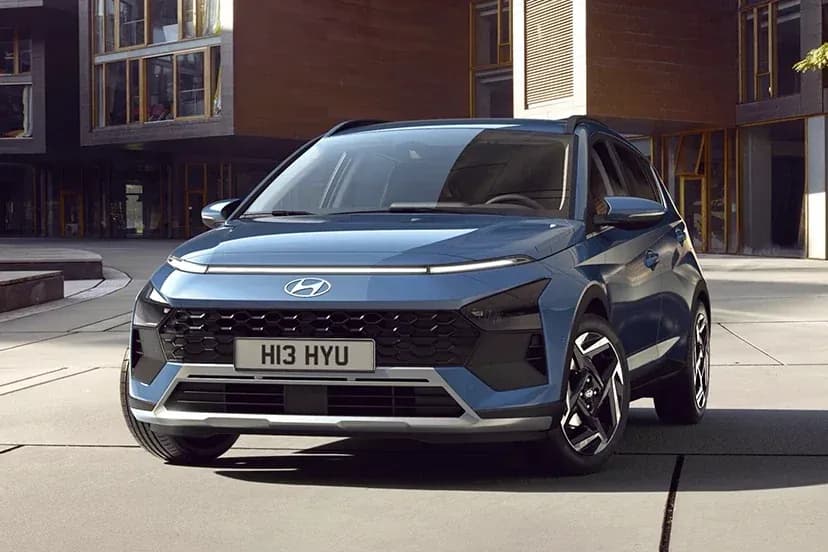
Now, the Bayon we've seen globally sports a rather distinctive look, quite different from the Venue. It's got that split headlamp design, typical of new Hyundais, but the overall silhouette is a bit more crossover-ish than outright SUV. Think of it as a slightly longer, more athletic i20 with a higher stance, rather than a butch mini-Creta.
The design isn't as polarizing as some of Hyundai's recent efforts (remember the original Creta's rear?). It's sleek, modern, and should appeal to those who find the Venue a bit too upright. The rear, especially, is quite unique with boomerang-shaped taillights connected by a thin light bar – definitely a head-turner in traffic. The big question is, will Hyundai tweak this design much for India, or will we get the global spec as is? We're betting on minor changes, mostly for ground clearance and maybe some chrome bits to satisfy Indian tastes.
Features & Powertrain Expectations
When it comes to features, Hyundai rarely disappoints, and we don't expect the Bayon to be any different. We're talking about a feature-packed cabin that's likely to mirror the i20 and Venue in many aspects. Expect a large touchscreen infotainment system, digital instrument cluster, connected car tech (BlueLink, naturally), wireless charging, and maybe even ventilated seats in the top trims. Safety will also be a priority, with multiple airbags, ABS with EBD, ESC, and perhaps even some ADAS features, which are slowly becoming common even in this segment.
Under the bonnet, it's a pretty safe bet what we'll get. The 1.2-litre naturally aspirated petrol engine (like the one in the i20) will likely be the entry-level offering, paired with a manual or an AMT. For those who crave more punch, the 1.0-litre turbo-petrol, a fantastic engine we've tested countless times, will surely make an appearance, possibly with both manual and DCT gearbox options. A diesel option seems unlikely given the market trend, but we'll have to wait for official confirmation.
Specs At A Glance
Feature | Details (Expected for India) |
|---|---|
Engine Options | 1.2L Kappa Petrol, 1.0L Turbo GDi Petrol |
Transmission | 5-speed Manual, 6-speed Manual, iMT, DCT |
Dimensions (L x W x H) | Expected ~4180mm x 1775mm x 1500mm |
Wheelbase | Expected ~2580mm |
Seating Capacity | 5 Adults |
Infotainment | Large Touchscreen (likely 8-inch or 10.25-inch) |
Airbags | Multiple Airbags (expected 6 in top trim) |
How Does It Stack Up Against The Competition?
The compact SUV space is a battlefield, isn't it? The Bayon will go head-to-head with established players like the Maruti Brezza, Tata Nexon, Kia Sonet, and even its own sibling, the Hyundai Venue. Compared to the Brezza and Nexon, the Bayon's design might feel a bit more urban and less rugged, which could be a pro or a con depending on what you're looking for.
Where it could really shine is in its feature list and powertrain refinement, typical Hyundai strengths. It'll likely offer a more premium cabin feel than the Brezza and might even outmatch the Nexon in terms of advanced tech. Against the Kia Sonet, it's going to be a close fight, as both share platforms and components. The real challenge, though, is the Venue. If priced too close, buyers will have a tough choice between two very capable Hyundais. It needs a clear differentiation, maybe as a slightly more premium, design-forward option.
The Good And The Not-So-Good
What We Like
- Fresh, distinctive design could stand out in the crowded segment.
- Expected feature-rich cabin, typical of Hyundai.
- Proven and peppy engine options (especially the 1.0L turbo-petrol).
- Likely to offer strong build quality and refinement.
What Could Be Better
- Risk of cannibalizing Venue sales if not positioned correctly.
- Exterior design might be polarizing for some traditional SUV buyers.
- Pricing will be critical; can it justify a slight premium over rivals?
Price & When You Can Buy It
Given the “launch tomorrow” buzz, we expect Hyundai to reveal the full pricing and variant details very soon. Currently, there's no official word on the price. However, looking at the segment and Hyundai's current portfolio, we'd estimate the Bayon to fall in the ₹8 lakh to ₹13 lakh (ex-showroom) bracket, putting it squarely against its rivals.
As for when you can get your hands on one, usually, once a car is launched, bookings open immediately, followed by test drives and deliveries within a few weeks. So, if you're keen, keep your eyes peeled for official announcements tomorrow!
Our Verdict
Here's the thing — another compact SUV from Hyundai might seem redundant to some, especially with the Venue already doing well. But the Bayon brings a different flavour, a more European design aesthetic, and potentially an even more premium cabin experience. It's for the buyer who wants something a bit more stylish, a bit less boxy, but still expects Hyundai's bulletproof reliability and feature-packed offerings. Honestly, if they price it right and differentiate it clearly from the Venue, it could carve out its own niche and be another winner for Hyundai in India.