What's The Big News?
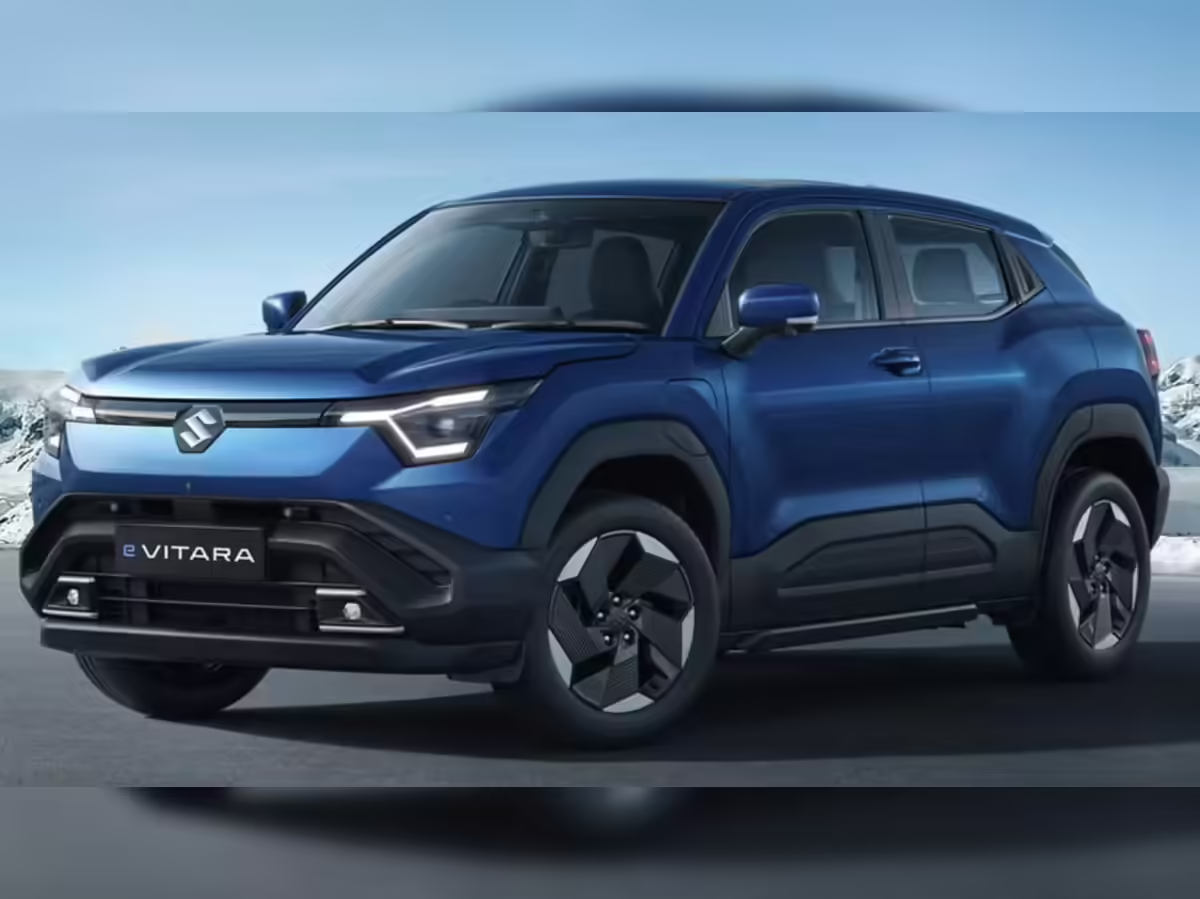
Alright, folks, buckle up. If you've been eyeing Maruti Suzuki's eVitara, India's largest carmaker's electric SUV, here's a bit of a bummer: it's just received its first-ever price hike since hitting the market. Yes, you heard that right, your potential electric dream car just got a tad bit more expensive.
This isn't just a minor adjustment either. The price increase isn't limited to the standard purchase options; even the innovative Battery-as-a-Service (BaaS) variants, which Maruti introduced to make EVs more accessible, are now costing more. For many Indian families saving up for years, every rupee counts, and this change definitely impacts the buying decision.
eVitara's New Price Tag: What It Means For Your Wallet
So, what does this mean for those of us who've been following the eVitara closely? Essentially, if you've been holding out for a purchase, the price you saw a few months ago isn't the price you'll pay today. Maruti hasn't detailed the exact quantum of the hike publicly in all cases, but dealers will have the updated charts.
This kind of move isn't entirely unexpected in the auto industry, especially with rising input costs and evolving market dynamics. However, for a vehicle that's still relatively new to the market, a price revision this early can be a bit of a shocker for potential customers. It forces you to reconsider the value proposition, especially when competing models are also fighting for attention in this hot EV segment.
Battery-as-a-Service: Still A Smart Move?
The BaaS model was a pretty clever move by Maruti. It significantly lowered the upfront cost of the eVitara, making it more palatable for budget-conscious buyers who were hesitant about the high initial investment of EVs. You essentially buy the car without the battery and pay a monthly subscription for the battery itself. It’s a bit like renting your phone’s charger instead of buying it with the phone, but for a much bigger, more crucial component.
Now that the BaaS options are also dearer, the core appeal of the model might take a hit. The whole point was affordability. If the monthly costs or the overall cost-effectiveness diminishes, buyers might start crunching numbers again, wondering if the traditional purchase model, or even a different EV, makes more sense. Honestly, the BaaS model works best when the cost savings are substantial and clear, and any increase here needs careful justification.
Specs At A Glance
Detail | Status |
|---|---|
Affected Models | Maruti Suzuki eVitara (all variants) |
Affected Options | Standard purchase & Battery-as-a-Service (BaaS) variants |
Nature of Change | First Price Hike Since Launch |
Specific Price Increase | Details Awaited; Please check with Maruti Suzuki dealerships |
Other Specifications | Remain as initially announced at launch (details not part of this update) |
How Does It Stack Up Against The Competition?
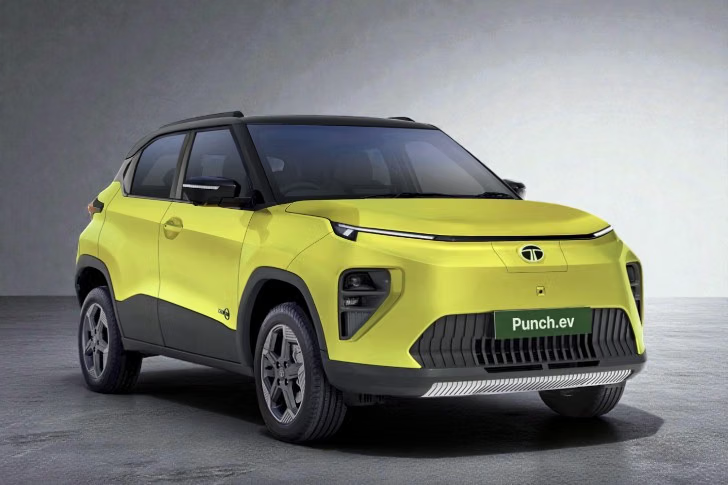
The compact electric SUV space is heating up, and the eVitara faces stiff competition. With this price hike, it's going to be an even tougher fight against established players like the Tata Nexon EV and the recently launched Tata Punch EV. The Nexon EV, particularly, has a strong hold on the market, offering a compelling package of range, features, and an ever-expanding charging network.
Then you've got the Mahindra XUV400, which offers good performance, though its interior might not feel as premium as some rivals. Even the MG ZS EV, while a segment above in pricing, often gets considered by buyers looking for a more premium experience. Maruti's strength has always been its vast service network and reliability, but in the EV space, range, charging infrastructure, and value for money are paramount. A price increase, without a corresponding feature upgrade, makes the eVitara's positioning a bit more challenging.
The Good And The Not-So-Good
What We Like
- Maruti's widespread service network, a huge plus for peace of mind.
- Likely reliable powertrain, given Maruti's track record.
- The initial push for BaaS to make EVs more accessible (even with the hike).
- The promise of a spacious, family-friendly electric SUV.
What Could Be Better
- Transparency on the exact quantum of the price hike.
- Any feature additions or upgrades to justify the increased cost.
- Better clarity on how the BaaS cost increase impacts long-term ownership.
- More aggressive pricing strategy in a competitive EV market.
Price & When You Can Buy It
As confirmed, the Maruti Suzuki eVitara has seen an increase in its ex-showroom prices across all variants. This includes both the outright purchase models and the Battery-as-a-Service options. Specific revised figures haven't been widely publicized by Maruti directly in this update, so your best bet is to head over to your nearest Maruti Suzuki dealership. They'll have the latest, most accurate pricing details for you. The car is, of course, available for purchase right now, but at these new, revised prices.
Our Verdict
Look, a price hike is never good news for a buyer, especially for something as significant as a car purchase. For the eVitara, which is trying to establish itself in a crowded and rapidly evolving EV market, this first increase since launch could be a double-edged sword. On one hand, it might reflect genuine cost pressures or strong demand for the product, which is good for Maruti. On the other, it could deter fence-sitters who were already meticulously calculating every EMI.
In my opinion, for Maruti to truly dominate the EV space like it does with ICE cars, it needs to maintain a very aggressive value proposition. While the eVitara has a lot going for it – Maruti's reliability, wide service network – the segment is moving fast. Buyers are getting savvier, and every lakh, sometimes even every thousand, makes a difference. If you were planning to buy, definitely re-evaluate your budget and compare the new prices carefully against its rivals before making the jump. It's a big investment, and you deserve to know exactly what you're paying for.