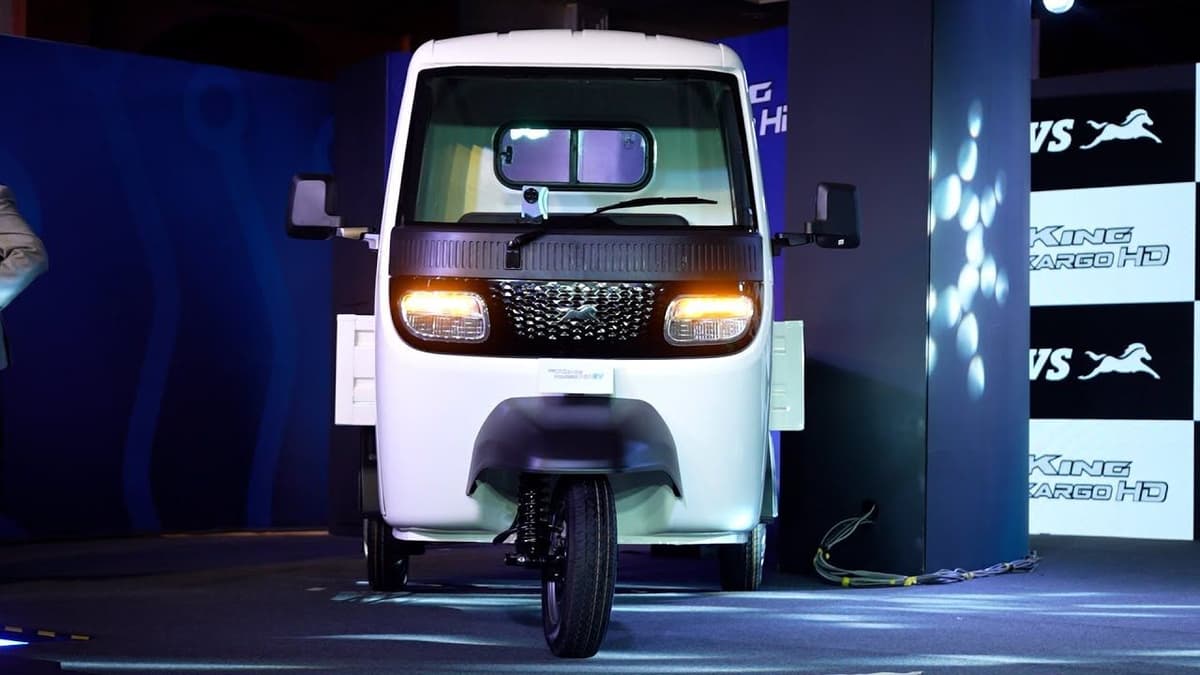
What's The Big News?
Alright, folks, Arman here, fresh off the grapevine. Our very own TVS Motor, a name synonymous with reliable two-wheelers and commercial vehicles across India, has just rolled out something pretty interesting on international soil. They've launched an electric cargo tricycle called the 'Armado' all the way in Angola. Now, you might be thinking, "Angola? What's that got to do with us?" But trust me, when an Indian automotive powerhouse like TVS makes a strategic global move, it always has implications for our market back home.
This isn't just another product launch; it's a statement. It showcases TVS's growing global ambition and, more importantly, their commitment to the electric mobility space. For Indian enthusiasts and businesses eyeing sustainable logistics, this Angolan debut could very well be a peek into what TVS has cooking for our rapidly evolving electric last-mile delivery segment. After all, the cargo three-wheeler market in India is massive, and an electric option from a trusted brand like TVS could be a game-changer.
TVS Armado: What's Under the Hood (or Battery Pack)?
Let's dive into the nuts and bolts of the Armado, because that’s what we petrolheads (or in this case, electriceads?) really care about. The TVS Armado is designed to be a workhorse, a proper utility vehicle built for demanding cargo operations. It comes packed with a robust 10.2 kWh lithium-ion battery, which is a pretty decent size for an electric three-wheeler aimed at city deliveries. This big battery powers a potent 12 kW electric motor, ensuring it has enough grunt to haul goods efficiently.
Payload is king in this segment, and the Armado boasts a substantial 180 kg capacity. That’s enough to handle a variety of goods, from FMCG products to e-commerce parcels, making it a versatile option for businesses. In terms of range, TVS claims about 100 km on a single charge – quite practical for urban and semi-urban routes. And when it comes to charging, you’re looking at around 3.5 hours for a full top-up, which is fairly standard. Top speed is capped at a sensible 48 km/h, perfect for navigating congested city streets without being a hazard. Honestly, it looks like a well-thought-out package tailored for efficiency and reliability, which is exactly what businesses look for.
Angola First, But What About India?
Now, the million-dollar question: why Angola first, and what does it mean for India? Often, manufacturers use specific international markets as testing grounds, or they tailor products to meet unique local demands before a broader rollout. Angola's market dynamics might be a perfect fit for the Armado’s current configuration. However, the electric cargo three-wheeler segment in India is exploding, with incredible potential for growth, especially in last-mile logistics.
We've seen a massive push for electrification in our country's commercial sector, driven by government incentives, rising fuel costs, and a growing environmental consciousness. A robust, reliable electric cargo three-wheeler from a brand like TVS would be an instant contender against established players. Given TVS's manufacturing prowess and extensive service network here, bringing the Armado (or a variant of it) to India seems like a very natural next step. We feel it’s only a matter of time before we see something similar from TVS on our roads, perhaps tweaked for Indian conditions like extended range options or faster charging infrastructure compatibility.
Specs At A Glance
Feature | Specification (TVS Armado) |
|---|---|
Battery Capacity | 10.2 kWh Lithium-ion |
Motor Power | 12 kW |
Payload Capacity | 180 kg |
Range (claimed) | ~100 km per charge |
Top Speed | 48 km/h |
Charging Time | ~3.5 hours |
Advertisement
How Does It Stack Up Against The Competition?
In the Indian electric cargo three-wheeler space, the competition is heating up faster than a pressure cooker on high flame. The TVS Armado, if launched here, would go head-to-head with some strong contenders. Think of rivals like the Mahindra Treo Zor and the Piaggio Ape E-City FX Max.
The Mahindra Treo Zor is a popular choice, known for its robust build and decent performance. It typically offers a 48V Lithium-ion battery with various capacities and a motor ranging from 8kW to 10kW, giving it a range of about 80-125 km depending on the variant. Its payload capacity is also quite competitive, often around 550 kg for the larger variants, which is significantly more than the Armado’s 180 kg. This suggests the Armado is targeting a lighter, quicker delivery segment.
Then there’s the Piaggio Ape E-City FX Max, another strong player. It comes with a 48V / 5.5 kWh battery and a 9.5 kW motor, offering a range of about 110-120 km. Its payload is also in the higher range, often around 450-500 kg. Compared to these, the Armado's 10.2 kWh battery is larger than Piaggio's, implying potentially better sustained performance or slightly longer range in real-world conditions, though its payload is notably lower. The Armado, with its 12kW motor, does seem to have a power advantage, which translates to better acceleration and gradient climbing, crucial for Indian road conditions. It’s clear TVS has aimed for a specific niche, perhaps emphasizing agility and quicker turnaround for smaller, more frequent deliveries over sheer bulk capacity.
The Good And The Not-So-Good
What We Like
- TVS Reliability: You know what you're getting with a TVS product. Their build quality and engineering are generally top-notch, and that's critical for commercial vehicles that work tirelessly.
- Potent Motor: A 12 kW motor is quite powerful for this segment, promising good pulling power and decent speeds for city runs.
- Decent Battery Capacity: A 10.2 kWh battery should provide a usable range for most last-mile delivery operations, meaning fewer charging stops during the day.
- Focus on Electrification: It's great to see an Indian major expanding its EV portfolio globally, showing intent for a sustainable future.
What Could Be Better
- Payload Capacity: At 180 kg, the Armado's payload is on the lower side compared to some current Indian electric cargo three-wheelers, which might limit its appeal for heavier goods.
- Range: While 100 km is acceptable, some rivals offer slightly more, and in India, operators often want every kilometer they can get. An option for a larger battery pack or faster charging would be a plus.
- Availability in India: The biggest drawback right now for us Indian buyers is that it's not here yet! We're all waiting patiently.
Price & When You Can Buy It
Alright, let's talk brass tacks. As of now, TVS Motor hasn't officially announced the pricing for the Armado in Angola. And predictably, there's no word on an India launch date or pricing either. Typically, these kinds of commercial EVs in India can range anywhere from ₹3 lakh to ₹5 lakh, depending on battery size, motor power, and features.
We'll have to wait for official announcements from TVS regarding its availability and cost in India. But if it does come, expect it to be competitively priced to take on the established players. Keep your eyes peeled, because when TVS makes a move in the Indian EV space, it's usually big!
Our Verdict
Here's the thing — the TVS Armado electric cargo tricycle launched in Angola is more than just a new product; it's a strong indicator of where TVS is heading. It shows their confidence in electric mobility solutions and their ambition to be a global player. While the payload might be a bit lower than some Indian rivals, the robust motor and trusted TVS engineering make it a compelling package. Honestly, this move shows TVS isn't just playing local; they're thinking global, and that's a huge win for an Indian manufacturer. We're certainly hopeful that TVS brings this electric workhorse, or a version specifically tailored for our diverse market, to India soon. The future of last-mile delivery here is undeniably electric, and TVS seems perfectly poised to capture a significant chunk of it.