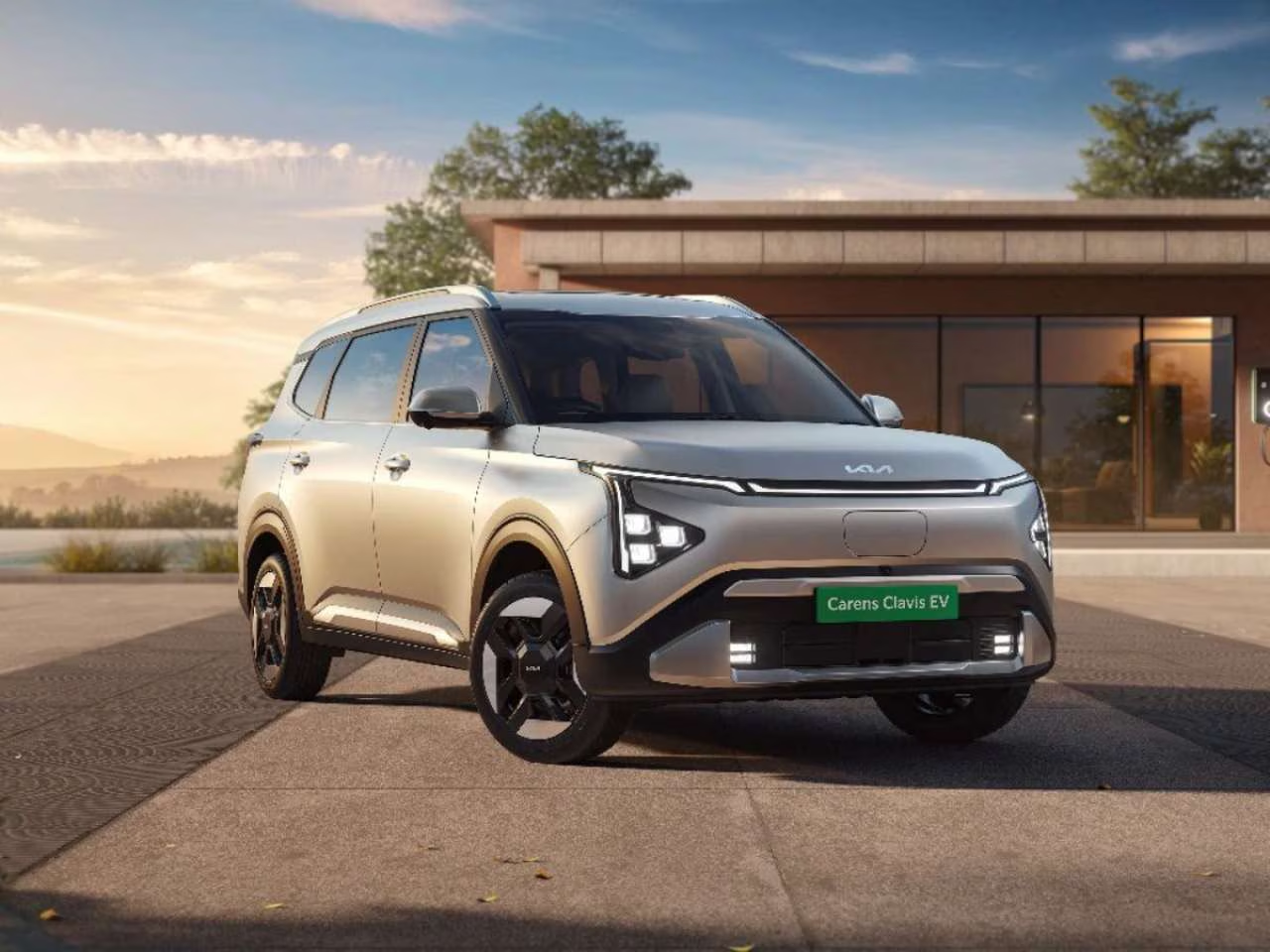
What's The Big News?
Indians love SUVs, and we Indians love space. So, naturally, the idea of a seven-seater electric SUV is incredibly appealing. Several manufacturers are gearing up to launch their contenders in this segment. From Maruti Suzuki's much-anticipated YMC to Tata's Safari EV, the options are starting to look promising.
But with so much buzz, what can you realistically expect? What are the confirmed details, and what's still just speculation? Let's dive into the upcoming 7-seater electric SUVs set to make waves in the Indian market.
The Contenders: Design, Features, and Expectations
While official details are scarce, we can piece together some likely scenarios based on what we know about these manufacturers and the evolving EV landscape. Here's a breakdown:
- Maruti Suzuki YMC: Maruti's entry is shrouded in mystery, but it's expected to be a completely new model, not based on an existing platform. This suggests a ground-up design optimized for electric powertrains. Think spacious interiors and a focus on practicality, very much like what Maruti gives you at this price point.
- Tata Safari EV: This one's almost a sure thing, following Tata's commitment to electrifying its existing lineup. Expect the Safari EV to retain the core design of the ICE-powered Safari but with EV-specific styling cues, like a closed-off grille and unique alloy wheel designs. Crucially, it'll keep the three-row seating that makes the Safari so popular.
- Other Potential Entrants: Mahindra has showcased its IN.8 concept, a potential three-row electric SUV, and MG could also bring a 7-seater EV to India. Keep an eye on these manufacturers as the EV market matures.
Battery, Range, and Charging: What To Expect
The battery tech and range of these upcoming EVs are still largely under wraps. However, we can make some educated guesses. Expect battery packs in the 60-80 kWh range for decent real-world range – probably 400-500 km on a single charge (claimed, of course!). Fast charging capabilities will also be crucial, with charging times expected to be around 30-45 minutes using a DC fast charger.
Specs At A Glance
Model | Expected Battery Capacity | Expected Range | Seating Capacity |
|---|---|---|---|
Maruti Suzuki YMC | TBA | TBA | 7 |
Tata Safari EV | 60-80 kWh (Expected) | 400-500 km (Expected) | 7 |
How Does It Stack Up Against The Competition?
Currently, there aren't any direct 7-seater EV competitors in the Indian market. However, these upcoming SUVs will likely compete with:
- MG ZS EV: A popular electric SUV, but with only five seats.
- Hyundai Kona Electric: Another five-seater EV that offers a good balance of range and features.
- Future 5-Seater EVs: Many more 5-seater EVs are on the horizon, offering consumers a wide array of choices in the electric SUV space.
The Good And The Not-So-Good
What We Like
- Potential for spacious and practical electric vehicles.
- Eco-friendly and cost-effective alternative to petrol/diesel SUVs.
- Growing charging infrastructure making EV ownership more convenient.
What Could Be Better
- Initial cost of EVs can be higher than ICE vehicles.
- Range anxiety is still a concern for some buyers.
- Charging infrastructure needs further expansion, especially in Tier-2 and Tier-3 cities.
Price & When You Can Buy It
Pricing for these 7-seater EVs is purely speculative at this point. The Maruti YMC's pricing is a complete unknown, but Tata's Safari EV could start somewhere in the ₹25-30 lakh range, ex-showroom. As for launch timelines, expect the Safari EV to arrive first, possibly in late 2024 or early 2025. The Maruti YMC's launch date remains a mystery.
Our Verdict
The arrival of 7-seater electric SUVs has the potential to revolutionize the Indian EV market. These vehicles promise to combine the practicality and space of traditional SUVs with the environmental benefits and lower running costs of electric powertrains. Whether these vehicles deliver on their promises remains to be seen, but we're definitely excited to see what the future holds. Honestly, I think Tata has the best shot at cracking this segment first, given their existing Safari platform and their aggressive EV strategy. The race is on!