What's The Big News?
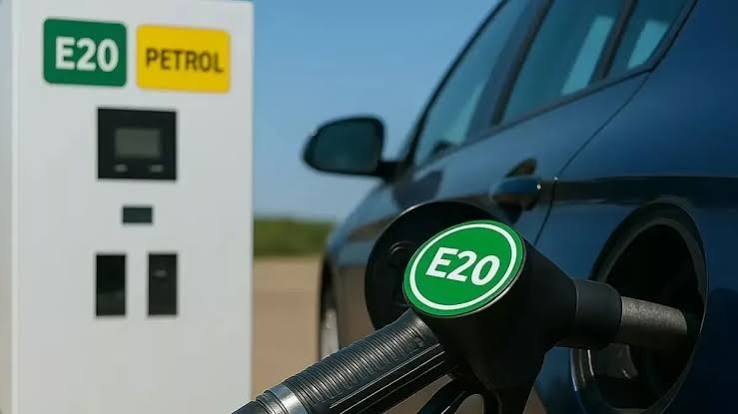
We Indians love our cars, but we love our mileage even more. Let's be honest, "kitna deti hai" isn't just a marketing slogan; it's a financial reality for millions of families who save up for years to buy their dream hatchback or compact SUV. So when the government announced the rapid rollout of E20 fuel—petrol blended with 20% ethanol—panic spread faster than a WhatsApp rumor. Rumors flew around that our engines would choke, fuel lines would melt, and fuel efficiency would drop off a cliff.
Well, we finally have some hard, official data to put those fears to rest, and it comes straight from India's largest carmaker. Maruti Suzuki's Executive Director of Corporate Affairs, Rahul Bharti, recently confirmed that the actual drop in fuel efficiency when running on E20 fuel is limited to a mere 3% to 3.5% (yes, really). If you've been losing sleep over whether your next car purchase will turn out to be a fuel-guzzler, you can finally take a deep breath.
The Real-World Math: How E20 Affects Your Pocket
Let's break down these numbers because petrol in India isn't getting any cheaper, and every single drop counts. If your current Maruti Swift or Baleno gives you a solid 20 kmpl on standard fuel, a 3.5% drop means your mileage will slide down to roughly 19.3 kmpl. In the grand scheme of things, that is a difference of less than one kilometer per liter. You'll lose more mileage by simply running your air conditioner on high during a hot Delhi summer afternoon or by sitting in a typical bumper-to-bumper Bengaluru traffic jam.
Why does ethanol drop mileage in the first place? Ethanol has a lower energy density compared to pure fossil-fuel petrol. This means a liter of ethanol contains less energy than a liter of petrol, so your engine has to burn slightly more of it to produce the same amount of power. Many internet experts warned us of a massive 10% to 15% drop in efficiency, but modern engine tuning has worked wonders to mitigate this. Maruti has spent massive resources recalibrating their K-Series engines to extract every bit of energy from this blended fuel, and it seems their hard work has paid off.
The Engine Health Question: Will It Corrode Your Fuel Tank?
Aside from fuel efficiency, the other major concern for Indian buyers has been engine durability. Ethanol is hygroscopic, which is a fancy scientific way of saying it loves to absorb moisture from the atmosphere. Water inside your fuel system can lead to rust in steel fuel tanks, clogged injectors, and degraded rubber pipes. If you own an old, carbureted Maruti 800 or a first-generation Swift, running E20 fuel over a long period could indeed cause some fuel system wear and tear.
Fortunately, car manufacturers have been preparing for this transition for years. Every single passenger vehicle manufactured and sold in India after April 2023 is fully compliant with BS6 Phase 2 norms, meaning they are built from the ground up to handle E20 fuel safely. Engineers have swapped out vulnerable rubber hoses for high-grade fluorinated elastomers, and fuel tanks are now coated with corrosion-resistant materials. If your car is relatively new, you don't have to worry about your engine corroding from the inside out.
Specs At A Glance
Parameter | Details / Status |
|---|---|
Fuel Type | E20 Petrol (20% Ethanol, 80% Petrol) |
Official Mileage Drop | 3% to 3.5% (as per Maruti Suzuki) |
Compatibility Cut-off Date | All BS6 Phase 2 vehicles (Post-April 2023) |
Target Nationwide Availability | By 2025 |
Engine Modifications Required | None for post-April 2023 cars |
How Does It Stack Up Against The Competition?
While Maruti Suzuki is leading this conversation because they sell every second car in India, other manufacturers are facing the exact same transition. Hyundai and Kia have already updated their popular 1.2-litre Kappa and 1.5-litre naturally aspirated engines to be E20 compliant. Similarly, Tata Motors has upgraded its Revotron turbo-petrol engines across the Nexon and Altroz lineups to handle the new fuel blend without breaking a sweat.
Comparing the real-world impact, Maruti's naturally aspirated engines still hold a massive advantage due to their lightweight platforms. Even with a minor 3.5% drop in mileage, a Fronx or a Grand Vitara will still easily outperform heavier rivals like the Hyundai Venue or Tata Nexon in pure fuel economy. Turbo-petrol engines from rivals tend to be highly sensitive to driving styles and fuel quality, so you might notice a slightly larger mileage drop in those cars if you have a heavy right foot.
The Good And The Not-So-Good
What We Like
- Negligible real-world impact on your monthly fuel budget
- Reduced tailpipe emissions, helping clean up our congested cities
- No extra maintenance or tuning costs for post-April 2023 vehicles
- Boosts the local agricultural economy by sourcing ethanol from sugarcane
What Could Be Better
- Older cars (pre-2023) might face long-term fuel system wear if run on E20 continuously
- The cost benefit of ethanol blending isn't being passed down directly to the consumer at the pump yet
Price & When You Can Buy It
E20 fuel is already being rolled out progressively across public petrol pumps in India, with the government targeting 100% nationwide availability by 2025. Currently, oil marketing companies are selling E20 fuel at the exact same price as regular petrol. We feel this is a missed opportunity, as a slightly lower price point for E20 would have made it much easier for budget-conscious buyers to adopt.
Our Verdict
Here's the thing — this E20 transition is a storm in a teacup, and you don't need to lose sleep over your car's engine health or your monthly fuel budget. A minor 3% drop in mileage is a very small price to pay for reducing our country's massive crude oil import bills and cutting down harmful tailpipe emissions. If you are planning to buy a new car today, go ahead and make that booking without any hesitation; your wallet and your engine are both perfectly safe.