What's The Big News?
So, you've probably seen a few pictures floating around of Hyundai's latest global crossover, the Bayon. It's built on the same platform as the i20, which is a big deal because we know that chassis well here in India. This isn't just another pretty face; the Bayon is Hyundai's entry into the burgeoning B-segment SUV market in Europe, designed to offer a blend of compact dimensions and surprising practicality. People are talking about its bold looks and efficient powertrains, and honestly, it's piqued our interest too.
For us at CarBikeGPT.com, the moment a new Hyundai SUV pops up globally, our phones start ringing. Everyone wants to know if it's coming to India. While the Bayon isn't confirmed for our market – let's be super clear about that upfront – it's worth examining what this compact SUV brings to the table and whether it possesses the DNA that could succeed in our crowded sub-4-meter or even mid-size SUV segments. It's always good to keep an eye on what Hyundai is doing elsewhere, right?
Design That Divides, But Also Delights
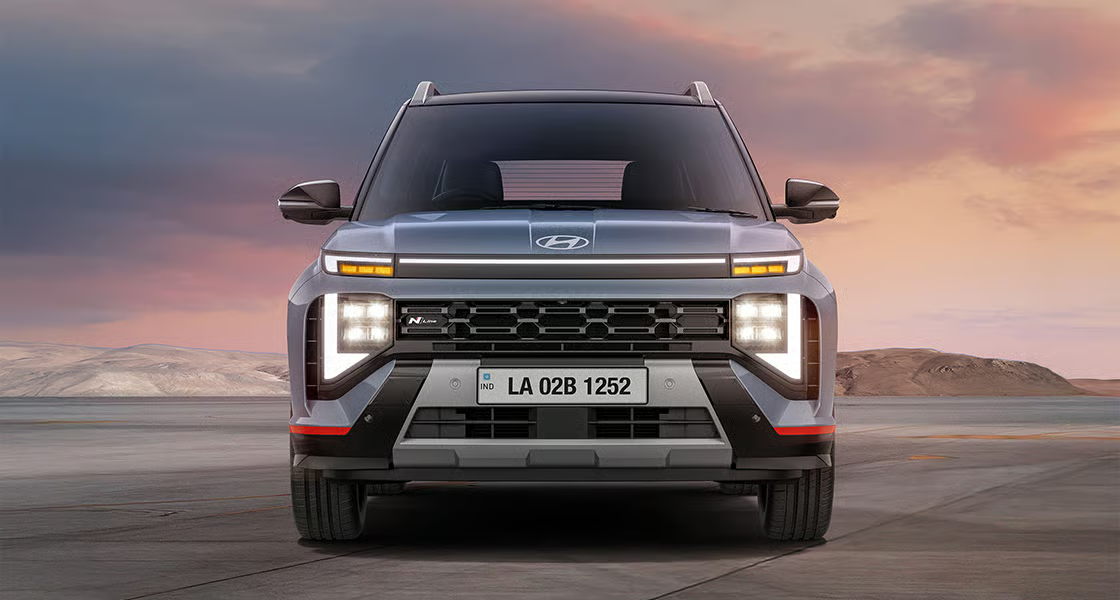
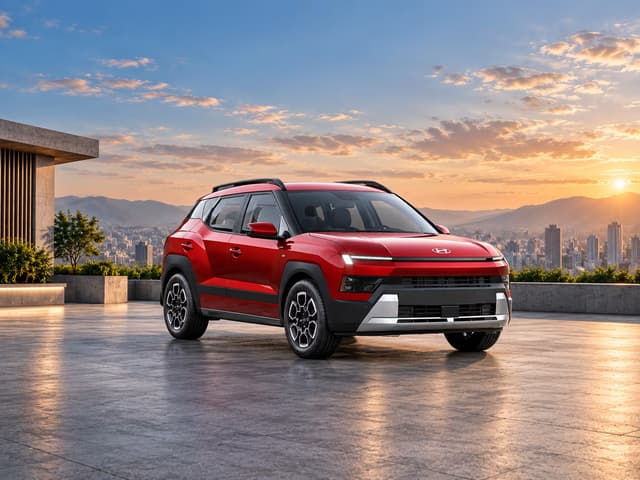
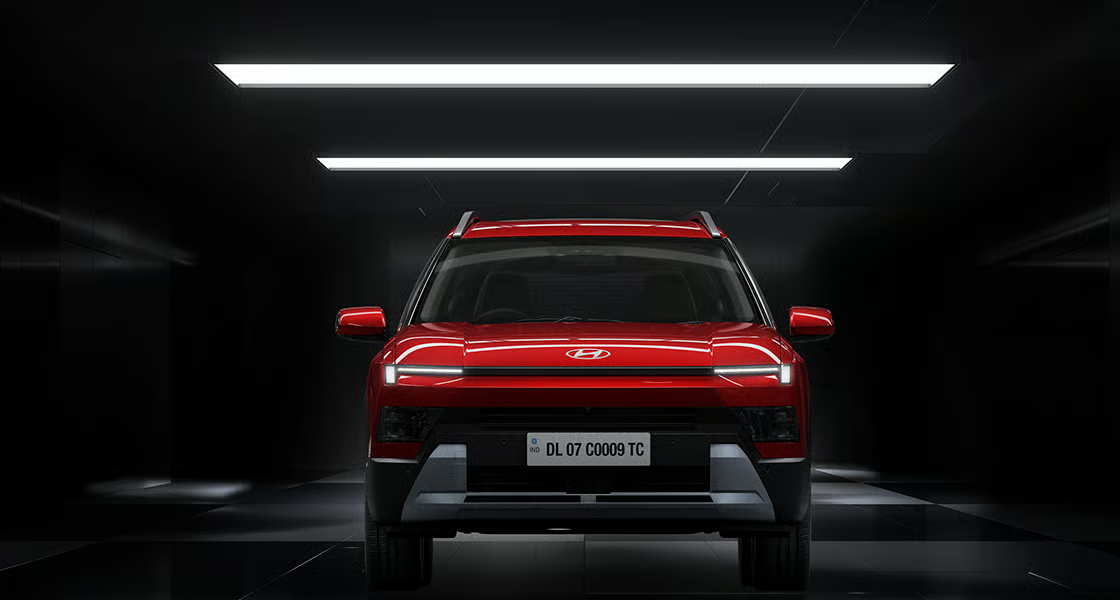
Look, the Bayon's design is polarizing, and honestly, it shows. Hyundai has gone for a really adventurous aesthetic here, especially at the front. You get those split headlamps, a signature look we've seen on the Kona and Venue, but taken up a notch. The wide grille gives it a substantial road presence, which is always a plus in India, isn't it?
Where it really stands out is the rear. Those boomerang-shaped LED taillights connected by a thin light bar are quite unique. It's a fresh take, moving away from some of Hyundai's more conventional designs. Inside, it's typical modern Hyundai – clean lines, a floating touchscreen, and good material quality. It doesn't scream luxury, but it certainly feels well put together, better than what some manufacturers give you at this price point globally. The design is bold, and if it were to come to India, it'd certainly turn heads at the traffic light, much like the Venue did when it first launched.
Under The Hood: Practicality Over Punch
Now, let's talk powertrains. The Bayon, being a European-focused product, primarily gets efficient petrol engines. We're talking a 1.0-litre T-GDi turbo-petrol and a 1.2-litre naturally aspirated MPi petrol unit. These are paired with manual, Intelligent Manual Transmission (iMT), or dual-clutch automatic (DCT) options. The 1.0-litre turbo also comes with a 48V mild-hybrid system in some markets, which is fantastic for fuel efficiency.
While these engines are perfect for Europe's emissions norms and city driving, you've got to wonder how they'd stack up against our Indian market expectations. The 1.0-litre T-GDi would be familiar, as it's in the Venue and i20. The 1.2-litre MPi is a solid workhorse, but perhaps a bit underpowered for an SUV of this size for those highway dashes with a full load. For city commutes, though, it'd be perfectly adequate, offering that smooth, refined Hyundai experience we've come to expect.
Specs At A Glance
Feature | Global Spec |
|---|---|
Length | 4,180 mm |
Width | 1,775 mm |
Height | 1,500 mm |
Wheelbase | 2,580 mm |
Boot Space | 411 litres |
Engine Options | 1.0L T-GDi Turbo Petrol, 1.2L MPi Naturally Aspirated Petrol |
Transmission Options | 5/6-speed Manual, iMT, 7-speed DCT |
Mild-Hybrid | 48V (with 1.0L T-GDi, market dependent) |
How Does It Stack Up Against The Competition?
If the Bayon were to launch in India, it'd find itself in a really tight spot. It's essentially an i20 on stilts, making it a B-segment crossover. This would put it head-to-head with its own siblings, the Venue and the Creta, not to mention formidable rivals like the Tata Nexon, Kia Sonet, Maruti Brezza, and Mahindra XUV300. Dimensionally, it's slightly longer than the Venue but shorter than the Creta, so it'd be a unique offering in terms of size.
Its feature set, mirroring the latest i20 and Venue, would be strong: multiple airbags, advanced driver-assistance systems (ADAS) in top trims (globally, yes, really), a large touchscreen, connected car tech, and premium audio. That's all great. But the real challenge would be carving out a clear identity. Hyundai already has the Venue for the sub-4-meter crowd and the Creta dominating the mid-size segment. The Bayon would need something truly special to justify its existence here, beyond just a fresh face.
The Good And The Not-So-Good
What We Like
- Distinctive and bold exterior design, especially the rear lights.
- Modern, feature-rich interior typical of new Hyundais.
- Practical boot space for its compact footprint.
- Efficient engine options, good for city driving.
- Strong safety features, including global ADAS availability.
What Could Be Better
- Unconfirmed for India, which is a bummer for enthusiasts.
- Engine options, while efficient, might feel underpowered for Indian highway conditions compared to rivals.
- Would need a very clear positioning to avoid cannibalizing sales of Venue or Creta.
- The polarizing design might not appeal to everyone in India.
Price & When You Can Buy It
Here's the thing – the Hyundai Bayon is currently a Europe-specific model. There's no official word, or even a strong rumour, about its launch in India. So, as of now, you can't buy it here. If Hyundai were to ever consider bringing it to India, pricing would be crucial. Globally, it competes in the compact crossover segment, which would translate to a price range that would likely overlap with the Venue and lower variants of the Creta if it were to come here. But for now, it remains a tantalizing 'what if' for the Indian market.
Our Verdict
Honestly, the Hyundai Bayon is a really interesting car. It showcases Hyundai's willingness to experiment with design and offer practical, efficient packages for its target audience. For European buyers, it makes perfect sense – a compact, stylish, and economical crossover for navigating city streets and occasional weekend getaways. In my opinion, it's a well-rounded product for its intended market.
However, for India? While the design is fresh and the features are abundant, its entry into our market seems unlikely. Hyundai already has a strong hold with the Venue and Creta. Bringing the Bayon here would require significant localization and a very sharp strategy to differentiate it from its own family members. As much as we'd love to see more options, it feels like a product designed specifically for different tastes and regulations. So, for now, the Bayon remains an intriguing global offering, a benchmark of what Hyundai can do, but probably not our next compact SUV.