What's The Big News?
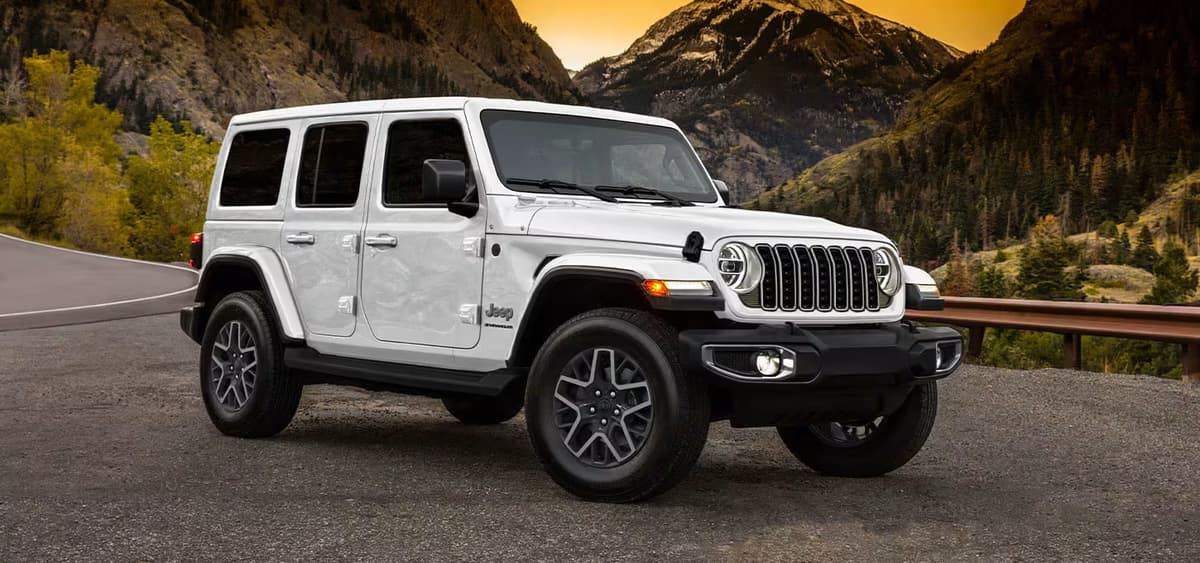
Imagine spending over eighty lakh rupees on a vehicle, only to realize it has the aerodynamics of a concrete brick and drinks petrol faster than a college student at a free buffet. That's the Jeep Wrangler Rubicon for you. Most owners keep these machines tucked away in air-conditioned garages, taking them out only for Sunday morning coffee runs or the occasional off-road club meet. We decided to do the exact opposite to see what happens when you actually use it.
We lived with this monster for 27,000 kilometers, driving it through every imaginable Indian terrain. From the bumper-to-bumper nightmare of Mumbai's peak-hour traffic to the rocky, broken trails of Spiti, this Rubicon has seen it all. It has been sneezed on by dust storms, drowned in monsoon floods, and pushed to its absolute mechanical limits. Here's what we learned after a year of pure, unadulterated daily abuse in Indian conditions.
Daily Driving A Monster: City Potholes and Highway Wind Noise
Let's get one thing straight: the Wrangler is not a soft family crossover. It doesn't glide over bumps like a Hyundai Creta or a Jeep Compass. With heavy-duty solid axles at both ends, you'll feel every single pebble on the road. On Indian highways, the ride can get busy, and you're constantly making small steering corrections to keep this giant in its lane. It's an active driving experience, not a relaxing one.
Then there's the wind noise. Because you can strip this car down to its bare bones—removing the doors, the roof, and even folding down the windshield—the cabin insulation is minimal. Cruise at 100 km/h, and it sounds like you're sitting inside a canvas tent during a monsoon cyclone. But you know what? You simply won't care. The commanding view of the road is completely unmatched. You look down on Fortuner drivers, and that alone is worth the price of admission for many.
The Mechanical Masterclass: Why The Rubicon Justifies Its Badge
Under that high hood sits a 2.0-litre turbo-petrol engine. While traditionalists might cry for a massive V6, this four-cylinder unit is a masterpiece. It pumps out 268 horsepower and a massive 400 Nm of torque. Step on the gas, and this heavy box lunges forward with an urgency that will surprise most mid-size sedans. The 8-speed automatic transmission is intuitive, finding the right gear without any fuss.
Off the tarmac is where the Rubicon transitions from a quirky daily driver to an absolute off-road god. You get Jeep's legendary Rock-Trac four-wheel-drive system, electronic locking front and rear differentials, and a sway bar that disconnects at the touch of a button. We took it to some of the most brutal off-road tracks we could find, places where even modified gypsies struggled. The Rubicon walked over boulders like they were minor speed bumps, and honestly, it shows how much engineering has gone into making this thing practically unstoppable.
Specs At A Glance
Parameter | Specification |
|---|---|
Engine | 2.0-litre, 4-cylinder, Turbo-petrol |
Power | 268 hp @ 5250 rpm |
Torque | 400 Nm @ 3000 rpm |
Transmission | 8-speed Torque Converter Automatic |
Drivetrain | Rock-Trac 4WD System |
Ground Clearance | 244 mm |
Fuel Economy (Tested) | 6.5 - 8.5 km/l |
How Does It Stack Up Against The Competition?
When you're spending this kind of money, the main rival that comes to mind is the Land Rover Defender. The Defender is vastly superior on the highway, offering luxury-car comfort, air suspension, and a silent cabin. However, it's also much more complex and expensive to fix when things go wrong on a trail. The Wrangler feels raw, mechanical, and far more durable when you're bashing it against rocks.
On the other end of the spectrum, we have the Mahindra Thar. Yes, you can buy three Thars for the price of one Wrangler Rubicon. While the Thar has democratized off-roading in India, it simply cannot match the Wrangler's mechanical sophistication, cabin space, highway high-speed stability, or that unmistakable global heritage. The Rubicon remains the gold standard that the Thar aspires to be.
The Good And The Not-So-Good
What We Like
- Unmatched road presence; you get more stares than a supercar
- Incredible off-road capability that makes difficult trails feel like a joke
- Surprisingly punchy 2.0-litre turbo-petrol engine
- Modular design allows you to take off the roof and doors for ultimate outdoor fun
- Waterproof interior with drain plugs means you can wash the floor with a hose (yes, really)
What Could Be Better
- Terrible fuel efficiency; your CA will weep at your petrol bills
- High wind and road noise at speeds above 80 km/h
- The steering feels vague and requires constant correction on the highway
- Interior plastic quality in some areas feels too basic for a car of this price
Price & When You Can Buy It
The Jeep Wrangler Rubicon is currently on sale in India as a Semi-Knocked Down (SKD) unit, which helps keep the pricing slightly lower than a full import. It is priced around ₹67-72 lakh ex-showroom, which easily pushes it past the ₹80 lakh mark on-road depending on your state taxes. While it isn't cheap, there is no waiting period like some luxury SUVs, and you can walk into any Jeep dealership to book one today.
Our Verdict
Here's the thing — the Jeep Wrangler Rubicon makes absolutely no financial sense. It's expensive to buy, drinks petrol like water, and lacks the plush ride comfort of similarly priced luxury SUVs. If you're looking for a sensible family car to do mall runs, look elsewhere. But if you want a machine that makes you feel alive every single time you start the engine, a vehicle that can literally drive over a mountain and look cool doing it, nothing else comes close. We'll miss it terribly now that the keys are going back.