
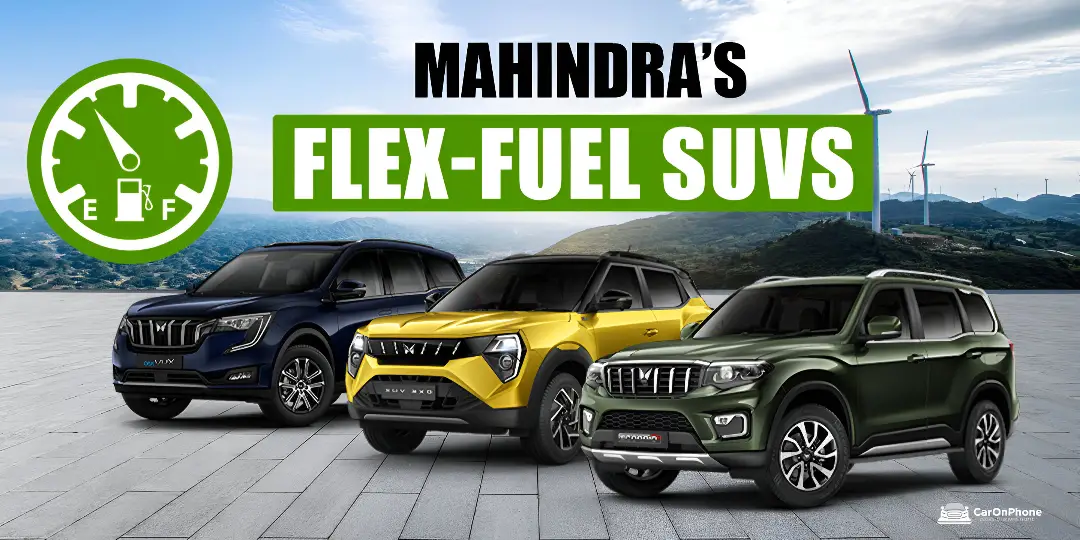
After recently unveiling its new NU-IQ modular platform that will underpin a range of upcoming SUVs, Mahindra has also revealed plans to develop flex-fuel engines for its future lineup. This move aligns with the Government of India’s roadmap to introduce E30 ethanol-blended petrol across the country in the coming years.
Mahindra’s Flex-Fuel Engine Plans
Mahindra is actively working on flex-fuel engines that can run on petrol blended with up to 30% ethanol (E30). In fact, the automaker is also preparing to adapt these engines for even higher ethanol concentrations as India pushes forward with its ethanol-blending program.
These engines will be integrated into upcoming SUVs based on the NU-IQ architecture, which has been designed to support multiple body styles and diverse powertrain options including ICE, hybrid, and electric.
Technical Challenges with E30 Fuel
To enable smooth operation on higher ethanol blends such as E30 and above, engines require significant re-engineering and hardware upgrades, including:
- Ethanol sensors to detect and adjust to the varying fuel blend in real time
- Heated fuel rails and injectors to improve cold-start performance with ethanol-rich fuel
- Enhanced corrosion-resistant materials to withstand ethanol’s chemical properties
Industry-Wide Push for Flex-Fuel Technology
Mahindra is not alone in this initiative. Multiple automakers are gearing up for the ethanol transition, as the government promotes eco-friendly, locally produced biofuel to reduce crude oil imports.
- Maruti Suzuki: Showcased the Wagon R Flex Fuel prototype
- Toyota: Displayed the Innova Hycross petrol-hybrid, compatible with E20 and higher ethanol blends
- Hyundai: Brought the Creta 1.0 Flex Fuel to Auto Expo 2025
- Tata Motors: Unveiled an E85-ready Punch SUV
These developments underline the industry-wide adoption of flex-fuel tech, with Mahindra now joining the ranks of India’s largest carmakers preparing for ethanol-powered mobility.
Why It Matters
- Supports India’s ethanol-blending targets (E30 by 2030)
- Reduces dependence on imported crude oil
- Provides a more eco-friendly, affordable fuel alternative for consumers
- Ensures Mahindra’s future SUV lineup remains compliant with evolving fuel regulations
Conclusion
With the government committed to expanding ethanol blending, Mahindra’s plan to roll out flex-fuel engines is a forward-looking step. The technology will help future SUVs run efficiently on ethanol-petrol blends, making them eco-friendly, cost-effective, and future-ready. As Mahindra develops its flex-fuel lineup alongside its new NU-IQ platform, the brand is well-positioned to meet India’s ethanol-driven mobility future.
FAQs on Mahindra Flex-Fuel Engines
Q1: What is a flex-fuel engine?
A flex-fuel engine can run on petrol blended with ethanol in varying proportions, typically between 20% to 85% ethanol.
Q2: When will Mahindra launch flex-fuel vehicles in India?
Mahindra has announced development but has not specified a launch date. Expect rollouts towards the end of this decade, in sync with India’s E30 adoption by 2030.
Q3: Why is ethanol blending important in India?
It reduces oil imports, lowers emissions, and promotes energy independence by using domestically produced biofuels.
Q4: Which other carmakers are developing flex-fuel vehicles in India?
Maruti Suzuki, Toyota, Tata Motors, and Hyundai are all working on ethanol-compatible cars.
Q5: What technical changes are needed for flex-fuel engines?
Key upgrades include ethanol sensors, cold-start assist systems, and corrosion-resistant fuel system components.
