What's The Big News?
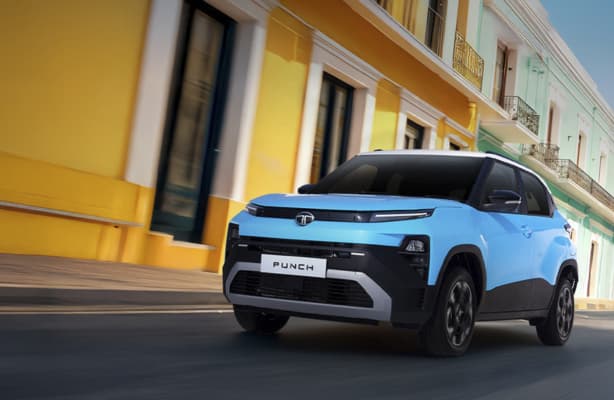
Alright, so here's the chai. Our very own Tata Punch, that plucky little micro-SUV we've all come to love for its ruggedness and street smarts, has just launched in South Africa. Now, before you dismiss this as just another export story, hold your horses. This isn't just any Punch they're getting; it's a souped-up version with features we've been practically begging for.
Imagine this: six airbags, not as an option, but standard across the entire range. Add to that wireless smartphone connectivity – no more fumbling with cables – and a brand-new turbo-petrol engine option to properly live up to its name. All this, starting at roughly ₹12.86 lakh (direct conversion, mind you). It really sets a new, higher benchmark for what a 'micro-SUV' can offer right out of the showroom.
The Safety & Feature Game Just Got Serious
Let's talk about those six airbags first, because honestly, that's the headline grabber. In India, we're still largely fighting tooth and nail for dual airbags as standard on many budget-friendly cars. And here's the Punch in South Africa, giving six straight out of the box, even on the base variant. This isn't just about ticking a regulatory box; it's a monumental step forward for occupant safety, especially for a car in this segment. It genuinely changes the entire narrative around affordable, family-friendly cars.
Think about it: in a market where road conditions can be unpredictable and traffic can be chaotic, that extra layer of protection is priceless. Six airbags mean better protection for passengers from various angles of impact, not just frontal collisions. This kind of proactive safety from Tata is commendable and shows a commitment to global safety standards that we desperately hope translates to the Indian market soon. It makes you feel a lot more secure behind the wheel or as a passenger, knowing you're surrounded by that kind of passive safety.
And then there's wireless smartphone connectivity. This might seem like a small thing, but trust me, it's a game-changer for daily convenience. No more wrestling with tangled wires or forgetting your charging cable just to use Apple CarPlay or Android Auto. You just hop in, and your phone connects seamlessly. It's the kind of modern, premium touch that elevates the cabin experience and makes the car feel a generation ahead of some of its rivals. Honestly, these are features that Indian buyers crave; we're becoming increasingly demanding about both safety and creature comforts, and this Punch delivers on both fronts.
A Turbo-Petrol Heart for Punchier Performance
The other big news that got my engine revving is the introduction of a new turbo-petrol engine option. While Tata hasn't spilled the beans on the specific power and torque figures for this unit yet, just the mention of 'turbo' gets us enthusiasts excited. The current 1.2L naturally aspirated Revotron engine in the Indian Punch is decent for city commutes and pottering around, but it often feels a bit out of breath when you hit the highways or need to make a quick, confident overtake. It's adequate, but not exhilarating.
A turbo unit could fundamentally transform the Punch's driving dynamics. It typically means more torque available lower down the rev range, which translates to a much more engaging and relaxed driving experience. Imagine effortlessly cruising on a national highway, maintaining triple-digit speeds without the engine screaming, or tackling steep uphill sections in places like the Western Ghats or Himachal Pradesh without constantly having to downshift. That's the promise and the real-world benefit of a turbo-petrol engine.
Tata already has a well-proven 1.2L turbo-petrol engine in its arsenal, which powers the Nexon. It's a capable and refined unit. It's highly probable that they'll use a similar, if not identical, powertrain for the Punch turbo. This would put it in a different league altogether, offering a truly 'punchy' performance that its name suggests and that buyers have been asking for. We've been waiting for a more powerful Punch to really stretch its legs, and it seems South Africa is getting that taste first. About time, Maruti, your competitors are upping their game!
Specs At A Glance
Feature | Details |
|---|---|
Starting Price (South Africa) | R224,900 (approx. ₹12.86 Lakh direct conversion) |
Airbags | 6 (Standard across all variants) |
Smartphone Connectivity | Wireless Apple CarPlay & Android Auto (Standard) |
Engine Options | 1.2L Revotron Petrol (NA), Turbo-Petrol (New option) |
Number of Variants | 3 |
Availability | South Africa |
Indian Launch with upgrades | Official figures yet to be revealed |
How Does It Stack Up Against The Competition?
In India, the Tata Punch largely plays in a segment where it competes with cars like the Maruti Ignis, the Citroen C3, and even lower variants of compact SUVs like its elder sibling, the Nexon, or the Maruti Brezza. The current Indian Punch already boasts a commendable 5-star GNCAP rating for adult occupant safety with its dual airbags, setting a high standard in its class.
Now, throw in six airbags as standard and a potent turbo engine into the mix, and the competitive landscape completely shifts. The Maruti Ignis, for example, is a decent, quirky city car, but it doesn't offer anything close to this level of passive safety or the potential performance boost of a turbo. The Citroen C3 does offer a turbo option, which is a commendable move, but it still lags significantly on the safety front when compared to a Punch with six airbags.
This South African Punch, if it ever makes it to India with these exact specifications, would be a segment disruptor, plain and simple. It would force competitors to seriously rethink their safety and feature offerings in this crucial micro-SUV space. For the price of a mid-spec Swift or a decent compact sedan, you'd be getting something far more robust, safer, and feature-rich. It's truly raising the bar for the entire micro-SUV segment, showing what's possible when manufacturers push the envelope.
The Good And The Not-So-Good
What We Like
- Six Airbags as Standard: A monumental win for safety, setting a new benchmark for the segment and potentially for affordable cars.
- Wireless Smartphone Connectivity: A modern convenience that significantly enhances the daily user experience and makes the cabin feel premium.
- New Turbo-Petrol Engine: Promises a much-needed performance boost, making the Punch far more capable on highways and for spirited driving.
- Retains Core Strengths: It still holds onto its rugged build, impressive ground clearance, and compact dimensions, which are perfect for navigating crowded Indian cities.
- Globally Relevant Upgrades: Shows Tata's intent to bring world-class features and safety to its smaller cars.
What Could Be Better
- Indian Launch Still Uncertain: This is the biggest bummer. We desperately want these crucial upgrades for the Indian market!
- Specific Turbo Engine Specs: While the turbo is exciting, we'd love to know the exact power, torque, and fuel efficiency figures to truly judge its capabilities.
- No Diesel Option: Though demand for diesel is decreasing, a small section of buyers might still prefer the torque and fuel economy of a diesel for long-distance driving.
- Pricing Implications: If these features come to India, the price point would definitely move up, potentially encroaching into higher segments.
Price & When You Can Buy It
In South Africa, the updated Tata Punch kicks off at R224,900 for the base variant. That's roughly ₹12.86 lakh when converted directly to Indian rupees. Now, it's crucial to remember that direct currency conversions rarely tell the full story for Indian pricing, primarily due to varying import duties, local taxes, and distinct market strategies. However, this pricing positions it as a very strong contender in the South African market, offering excellent value for the features it packs.
As for an Indian launch with these specific, beefed-up specifications? Official word isn't out yet, but looking at how Tata Motors has been aggressively updating and enhancing its lineup, it's certainly not a far-fetched idea. We've seen them introduce advanced features and safety tech across other models, often trickling down from higher segments. If a Punch with six airbags and a turbo engine were to launch in India, its pricing would likely push it into the territory of compact SUVs, possibly starting around ₹8.5-9 lakh for the turbo variants and going up to ₹11-12 lakh for the top-end, fully loaded models. It would be a premium offering for sure, but one that justifies its price with significant safety and performance advantages.
Our Verdict
Look, what Tata has done with the Punch for the South African market is truly commendable. They haven't just exported a car; they've significantly enhanced it, particularly in critical areas like safety and performance. Six airbags as standard for a micro-SUV? That's not just a feature; it's a powerful statement about prioritizing occupant protection, and honestly, it shows a commitment to global safety standards that will resonate with discerning buyers.
This isn't just news for South Africa; it's a tantalizing peek into the future of the Punch, and by extension, hopefully, other budget-friendly cars in India. It's an aspiration, a clear signal of what's possible when manufacturers are willing to push the envelope and equip even their most accessible vehicles with top-tier safety and modern features. Indian buyers deserve nothing less than the best, especially when it comes to safety. In my opinion, this updated Punch could very well redefine expectations for its segment. Now, let's just hope Tata hears our collective pleas and brings this 'punchier' and safer Punch home to India soon. We're ready for it!