What's The Big News?
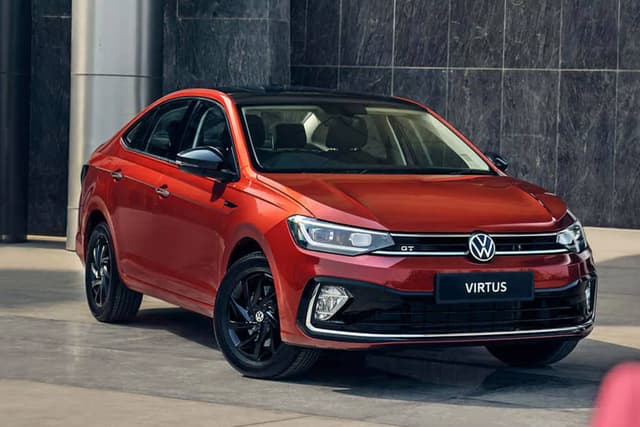
Alright, folks, Arman here, fresh off the grapevine, and I've got some juicy news for all you sedan lovers. It looks like Volkswagen is already getting ready to give its sharp-looking Virtus a significant facelift for the Indian market. Now, this isn't just a minor nip-and-tuck; we're talking about a proper update that could bring some much-needed changes and keep it competitive in a segment that's heating up faster than a pressure cooker.
You know how it is – in India, if you don't evolve, you get left behind. The Virtus has been a strong player since its launch, winning over enthusiasts with its driving dynamics and solid build. But the competition isn't sitting idle. So, what exactly could VW be cooking up for its stylish sedan? Let's dive in and see what's likely headed our way, potentially making it even more tempting than a plate of hot jalebis.
Expected Design & Feature Enhancements
First up, let's talk aesthetics and creature comforts, because that's often the first thing that catches your eye. We're expecting some subtle yet impactful design tweaks to the Virtus. Think a refreshed front bumper, maybe a slightly revised grille that brings it more in line with VW's global design language, and possibly new LED DRL signatures. Don't be surprised if you see some snazzy new alloy wheel designs too – because who doesn't love a fresh set of shoes for their car?
Inside the cabin, the big talk is about potential feature upgrades. While the current Virtus is well-equipped, there's always room for improvement. We could see a larger, more responsive infotainment touchscreen, which is something many buyers are now demanding, especially when rivals are offering massive units. Improved upholstery materials or new trim finishes wouldn't go amiss either, giving the interior a fresher, more premium feel. And here's the thing — if they can integrate better connected car tech and maybe even some minor ergonomic adjustments, it'll truly elevate the experience from just 'good' to 'great'.
Powertrain Refinements & Safety Upgrades
Now, onto the bits that matter to us driving enthusiasts – what's under the hood and how safe is it? While specific engine changes aren't confirmed, it's reasonable to expect some minor refinements to the existing 1.0L TSI and 1.5L TSI powertrains. This could mean subtle tweaks for better fuel efficiency or smoother power delivery, especially in stop-and-go city traffic. Volkswagen's TSI engines are already a joy to drive, offering a great balance of performance and economy, but continuous improvement is always welcome.
Where we're hoping for a significant leap is in the safety department. The Virtus already boasts a 5-star GNCAP rating, which is fantastic. But the word on the street is that VW might finally bring some Advanced Driver-Assistance Systems (ADAS) to the party. We're talking features like Adaptive Cruise Control, Lane-Keeping Assist, and Autonomous Emergency Braking. These aren't just fancy gadgets; they're genuine life-savers, and frankly, with rivals like the Hyundai Verna already offering them, it's about time Volkswagen stepped up its game in this area. (Yes, really, it's becoming a must-have!).
Specs At A Glance
Feature | Current Volkswagen Virtus (Expected Facelift Updates) |
|---|---|
Engine Options | 1.0L TSI (115 PS, 178 Nm), 1.5L TSI EVO (150 PS, 250 Nm) |
Transmission | 6-speed Manual, 6-speed Automatic (1.0L TSI), 7-speed DSG (1.5L TSI) |
Fuel Type | Petrol |
Length | 4,561 mm (Expected similar) |
Width | 1,752 mm (Expected similar) |
Height | 1,507 mm (Expected similar) |
Wheelbase | 2,651 mm (Expected similar) |
Boot Space | 521 litres (Expected similar) |
Safety Features | 6 Airbags, ABS with EBD, ESC, TPMS (ADAS features expected) |
Infotainment | 10-inch Touchscreen (Larger/updated system expected) |
How Does It Stack Up Against The Competition?
The Virtus plays in a tough playground, going head-to-head with the likes of the Honda City, Skoda Slavia (its platform sibling), and the formidable Hyundai Verna. The current Virtus already holds its own with its robust build quality, excellent driving dynamics, and that undeniable European sedan feel. Its 1.5L TSI engine, especially, is a hoot to drive, easily outperforming many rivals in sheer grunt.
However, rivals like the Verna have pulled ahead significantly in terms of feature richness, particularly with their ADAS suite and some cabin comforts. The Honda City, while perhaps not as dynamically sharp, offers a supremely comfortable ride and Honda's bulletproof reliability. The Slavia shares its core strengths with the Virtus but carves its own niche with a slightly different design language and cabin feel. If the Virtus facelift brings those expected ADAS features and a more tech-savvy cabin, it'll significantly narrow the gap and potentially even leapfrog some competitors, giving buyers a truly compelling choice. It's not just about matching; it's about pushing the envelope.
The Good And The Not-So-Good
What We Like
- Sharp, timeless design: The Virtus already looks great, and minor tweaks will only enhance it.
- Engaging driving dynamics: That TSI engine with the DSG is pure joy on open roads.
- Robust build quality: You feel safe and secure inside, which is crucial for Indian roads.
- Potential ADAS inclusion: A major step up in active safety.
- Improved infotainment: Keeping up with the times is essential.
What Could Be Better
- Cabin plastics: While good, some areas could use a touch more premium feel, especially compared to some rivals.
- Rear seat comfort: While spacious, a slightly softer ride or better under-thigh support would be a welcome change for long journeys.
- Lack of ADAS (currently): This is the biggest gap the facelift needs to fill.
- Standard features: Making more desirable features standard across lower variants would sweeten the deal.
Price & When You Can Buy It
As of now, Volkswagen hasn't officially announced anything about the Virtus facelift, so specific launch dates are still under wraps. However, considering the usual product cycle, we expect an announcement sometime in late 2024 or early 2025. Pricing will naturally be revealed closer to the official launch, but expect a slight premium over the current model, considering the added features and potential upgrades. Currently, the Virtus starts around ₹11.56 lakh (ex-showroom) for the base variant. We anticipate the facelifted model could see its starting price nudge upwards, possibly in the ₹12-12.5 lakh range for the entry-level model, making it competitive with its current rivals.
Our Verdict
Look, the Volkswagen Virtus is already a fantastic car. It brings German engineering, solid performance, and a sleek design to a segment that's otherwise dominated by slightly less exciting options. This facelift isn't just about keeping it fresh; it's about making it future-ready. If Volkswagen genuinely brings in the rumored design enhancements, a more feature-rich cabin, and especially those crucial ADAS functionalities, the Virtus facelift could easily become the benchmark in its segment. It's an opportunity for VW to reaffirm its position and win over even more discerning buyers. Honestly, if these updates come through as expected, it's going to be tough to beat for anyone looking for a well-rounded, safe, and fun-to-drive sedan for the Indian roads.