What's The Big News?
Volkswagen's long-rumoured compact SUV for India, based on the Skoda Kylaq platform, has reportedly received global approval. This isn't just another rumour; it's a solid indication that Volkswagen is finally ready to jump into India's most fiercely contested automotive battleground: the sub-four-meter SUV segment. For years, enthusiasts and potential buyers alike have been asking when VW would bring a direct rival to the likes of the Nexon and Brezza. Well, it seems the wait is almost over.
This move signals a serious intent from the German giant to reclaim lost ground and carve out a significant share in a market that truly matters. For us Indian folks, who save up for years to buy their dream car, a VW compact SUV means another strong contender with that unique blend of European engineering and local adaptability. It’s about time, Maruti, the competition is getting tougher!
VW's Big Bet: India 2.0 and the Kylaq Connection
This upcoming SUV is a cornerstone of Volkswagen's revitalized "India 2.0" strategy. The decision to base it on the Skoda Kylaq’s underpinnings, which itself uses the highly localized MQB A0 IN platform, is a smart one. It means high levels of local content, which directly translates to competitive pricing and potentially lower ownership costs – a critical factor for Indian buyers. Think about it: shared components, shared development, but distinct styling and brand identity.
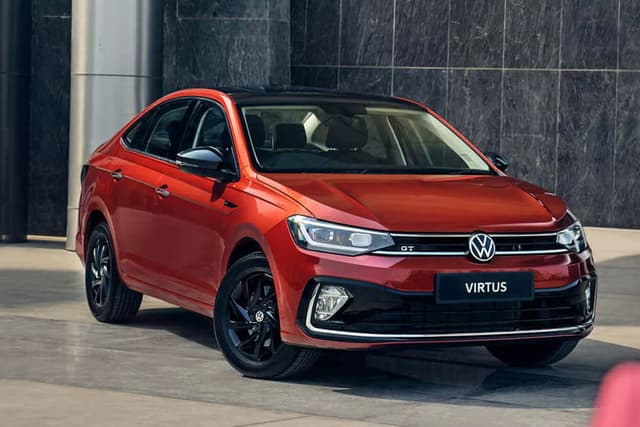
This platform has already proven its mettle with the Kushaq, Slavia, Taigun, and Virtus, offering a sturdy base for a new compact SUV. It's about leveraging the Volkswagen Group's collective might to offer something robust and desirable to the Indian consumer. We've seen how well the platform handles Indian roads, and that gives us a lot of confidence in this new vehicle's fundamental strengths.
What's Under the Bonnet and Inside the Cabin?
Powertrain-wise, we're almost certain it'll feature the familiar and much-loved 1.0-litre TSI turbo-petrol engine. This motor, known for its peppy performance and surprising fuel efficiency, has been a hit in other VW and Skoda models. It's a sophisticated unit that offers a driving experience far superior to many naturally aspirated rivals in this segment. You'll likely get a choice of a 6-speed manual or a 6-speed torque converter automatic, a smooth and reliable combination perfect for both city commutes and highway cruising.
Inside, expect that typical Volkswagen blend of understated elegance and solid build quality. No fancy gimmicks, just well-appointed ergonomics, durable materials, and a sense of solidity that often surpasses what Maruti gives you at this price point (yes, really). We're talking about a driver-focused cabin with intuitive controls and comfortable seating for five. Features will be competitive, including a large touchscreen infotainment system, connected car tech, automatic climate control, and possibly a digital instrument cluster in higher variants. Volkswagen usually doesn't skimp on safety either, so expect a strong suite of active and passive safety features.
Design & Road Presence: A True VW or Something Different?
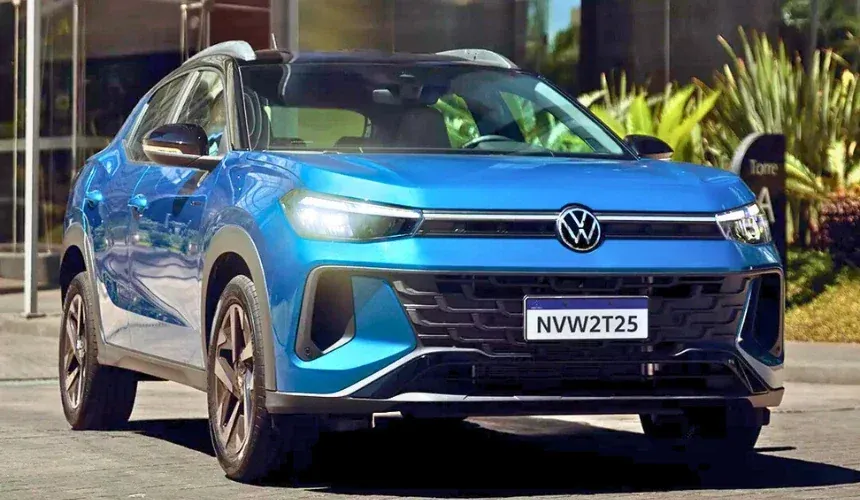
While it shares its platform, don't expect it to look like a rebadged Kylaq. Volkswagen has a distinct design language, and we anticipate a more mature, robust aesthetic, possibly drawing inspiration from their global SUV portfolio like the T-Cross or Taigun. We're talking sharp lines, a commanding grille, and well-proportioned dimensions that give it a proper SUV stance, not a jacked-up hatchback look. Road presence is everything in this segment, and VW usually nails that 'premium' look better than most.
It’ll have to be visually distinct enough from its Skoda sibling to justify its badge and appeal to different sets of buyers. We hope for a clean, timeless design that ages well, something VW is known for. The headlamps and tail lamps will likely carry the signature VW lighting elements, ensuring it stands out, even in a crowded parking lot.
Specs At A Glance
Feature | Details |
|---|---|
Platform | MQB A0 IN |
Engine | Likely 1.0L TSI Turbo Petrol |
Transmission | 6-speed Manual & 6-speed Torque Converter Automatic |
Dimensions | Sub-4-meter compact SUV (Specifics TBA) |
Safety Features | Expected 6 Airbags, ABS with EBD, ESP, Traction Control (Higher variants) |
Infotainment | Large Touchscreen with Apple CarPlay & Android Auto (Specific size TBA) |
Expected Launch | Late 2024 / Early 2025 |
How Does It Stack Up Against The Competition?
This segment is a battlefield. The new VW compact SUV will go head-to-head with established players like the Tata Nexon, Maruti Suzuki Brezza, Hyundai Venue, Kia Sonet, and even newer entrants like the Maruti Fronx. Each rival brings something strong to the table – Nexon with its safety and EV option, Brezza with Maruti's reliability and network, Venue/Sonet with features and design. VW's differentiator will have to be its superior driving dynamics, solid build quality, and that 'premium German' feel.
It needs to offer a compelling package that justifies potentially slightly higher pricing compared to some rivals, but still stays firmly within the compact SUV bracket. It can't afford to be seen as overpriced; that's where many European brands have struggled in India. For the price of a mid-spec Swift, a buyer could get a base model of this VW, and that's a comparison VW will want to win on value, not just badge appeal.
The Good And The Not-So-Good
What We Like
- Volkswagen's renowned build quality and safety standards.
- The potent and refined 1.0L TSI engine, offering excellent performance.
- Likely superior driving dynamics and handling compared to rivals.
- Premium cabin feel and well-thought-out ergonomics.
- Potential for a distinct, sophisticated design language.
- Leveraging the proven, localized MQB A0 IN platform.
What Could Be Better
- VW's service network and after-sales reach needs significant improvement, especially in Tier 2/3 cities.
- Pricing will be absolutely critical; it must be aggressive to compete.
- Feature list needs to be class-leading, not just competitive, to grab attention.
- Brand perception in the mass market SUV segment needs a strong boost.
- Longer waiting periods might frustrate buyers if production isn't ramped up effectively.
Price & When You Can Buy It
Pricing is the elephant in the room for any new VW product in India. We anticipate it will sit strategically below the Taigun, making it accessible to a wider audience. Expect ex-showroom prices to kick off somewhere in the ₹8.5 lakh to ₹9 lakh range for the base variants, potentially stretching up to ₹13.5 lakh or ₹14 lakh for the fully loaded automatics. This would put it right in the thick of the competition, positioning it as a premium, yet attainable, option.
As for availability, while approval is a big step, bringing a new model to market takes time. Don't hold your breath for an immediate launch; we're realistically looking at a debut sometime in late 2024 or, more likely, early 2025. VW will want to get everything perfect before hitting showrooms, and honestly, it shows in their launches.
Our Verdict
Look, a new compact SUV from Volkswagen is genuinely exciting news for the Indian market. The brand needs a strong volume player in this segment, and the Kylaq-based model, with its proven platform and expected VW flair, has serious potential. If they nail the pricing, pack it with the right features, and back it up with a strong service network, this SUV could be a massive hit.
Honestly, this is VW's golden opportunity to truly establish itself in India's booming compact SUV segment, and they simply can't afford to miss this shot. It's time for them to bring their 'A' game, and we're ready to see what they deliver.