In this report
- Indian Road Conditions & Car Maintenance Costs: A 2026 Guide
- The Tyre Toll: India's Roads vs. Your Car's Rubber
- Suspension Under Siege: The Jarring Cost of Potholes
- Engine and Brakes: The Grind of Dust and Stop-Go Traffic
- Beyond the Mechanicals: AC, Paint, and Overall Longevity
- Expert Recommendations: Choosing and Maintaining Your Car for Indian Roads
Indian Road Conditions & Car Maintenance Costs: A 2026 Guide
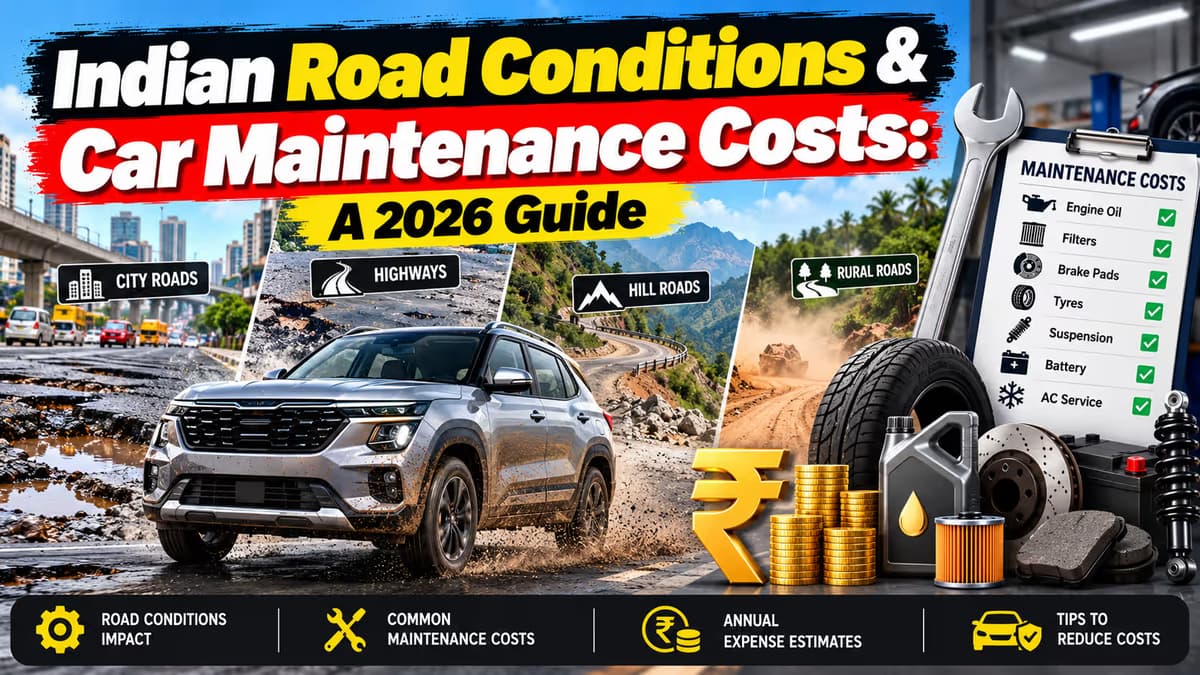
As of 19 October 2026, one of the biggest hidden costs of car ownership in India stems directly from our roads. The combination of potholes, dust, extreme heat, and relentless traffic significantly increases your car's maintenance bills and shortens its lifespan by prematurely wearing out critical components like tyres, suspension, and engine parts. Understanding these specific impacts is the first step to saving money and keeping your car healthier for longer.
This guide breaks down how each unique Indian driving condition affects your car and provides expert advice on how to mitigate the damage and reduce long-term ownership costs.
The Tyre Toll: India's Roads vs. Your Car's Rubber
Tyres are your car's first line of defence, and they take the most punishment. The difference in wear is stark: a tyre that might last 60,000 km in Europe will often only last 45,000 km in India under identical driving patterns. In real-world Indian conditions, most tyres last just 3-5 years or between 40,000-80,000 km, which is significantly shorter than global standards. In metro cities with poor roads and heavy traffic, this can drop to as little as 3 years.
Several factors are at play:
- Heat: Summer temperatures exceeding 45°C can soften rubber compounds, reducing a tyre's lifespan by a staggering 20-30%.
- Poor Surfaces: Constant impacts from potholes and uneven roads cause structural damage and throw off wheel alignment, leading to rapid, uneven wear.
- Owner Habits: Underinflation is a major issue. Most Indians are found to be running tyres 2-3 PSI below the recommended pressure, which can cut lifespan by up to 2 years. Similarly, overloading a vehicle can slash tyre life by 15-25%.
The financial impact is substantial. A full set of tyres for most cars can cost anywhere between ₹16,000 and ₹60,000. For popular small cars like the Alto or Maruti Suzuki Wagon R, a set typically costs ₹10,000 to ₹12,000.
Models mentioned above

Maruti Suzuki
Dzire
Ex-showroom₹6.26 Lakh – ₹9.31 Lakh
- Fuel
- Petrol, CNG
- Mileage
- 25.71 kmpl
- Engine
- 1197 cc
- Safety
- 5 Star (Bharat NCAP)

Kia
Seltos
Ex-showroom₹10.99 Lakh – ₹20.39 Lakh
- Fuel
- Petrol, Diesel
- Engine
- 1482 cc, 1493 cc & 1497 cc
- Safety
- 5 Star (Bharat NCAP)
- Transmission
- Manual / Clutchless Manual (IMT) / Automatic
Note: Figures are based on real-world data from facts [f8], [f9], [f10], and [f13]. Premium brands can cost 15-40% more than value brands like MRF, CEAT, or Apollo.
Actionable Advice: Rotate your tyres every 10,000 km. Because front tyres wear 30% faster due to steering, this simple step can extend the overall life of the set by 6-12 months. Also, check your tyre pressure weekly.
Suspension Under Siege: The Jarring Cost of Potholes
If tyres are the first line of defence, your suspension is the second. Every pothole, unmarked speed breaker, and broken patch of tarmac sends a shockwave through the suspension system, wearing out shock absorbers, struts, bushings, and ball joints. This not only leads to a harsh, noisy ride but also compromises safety and handling.
The repair costs can be significant. While smaller jobs like replacing a leaking shock absorber might cost between ₹5,000 and ₹15,000, a complete suspension overhaul can easily set you back ₹25,000 to ₹40,000. While we lack official data that quantifies how many potholes lead to a specific cost increase, these real-world repair bills confirm the heavy toll.
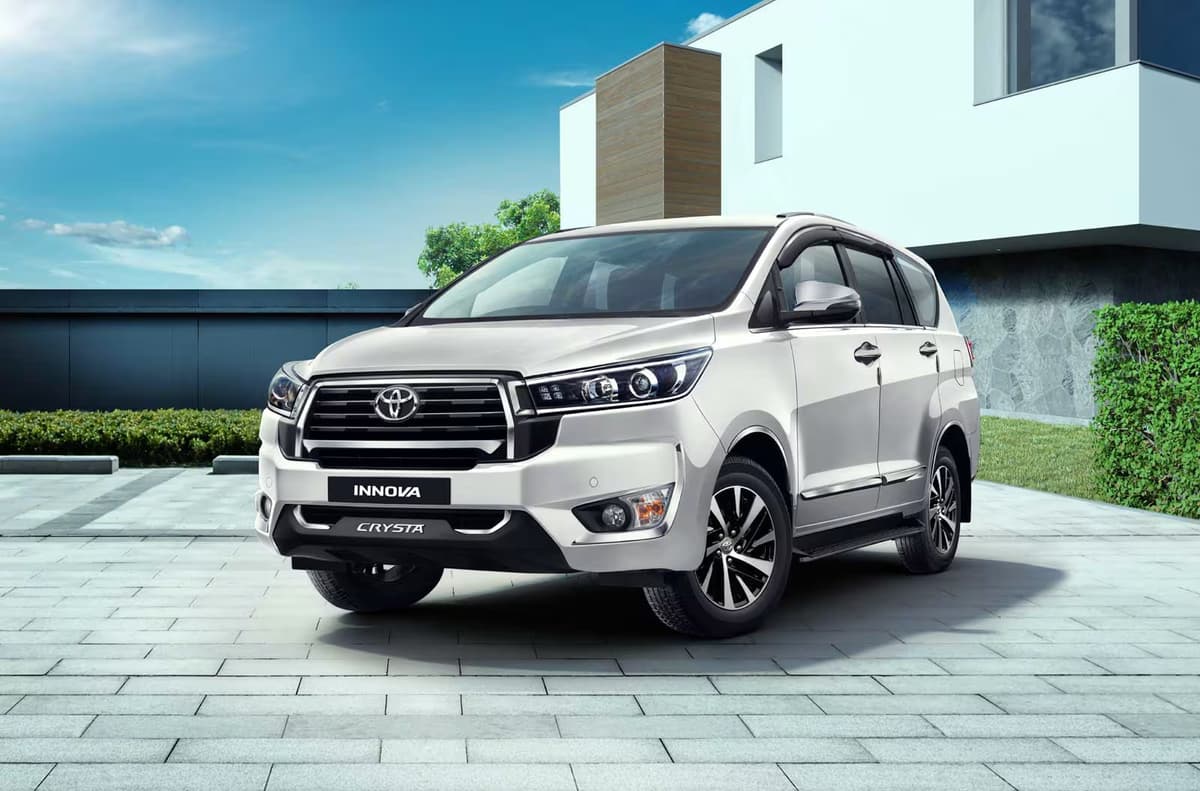
Actionable Advice: The best way to save your suspension is to drive attentively. Slow down for rough patches and speed breakers. If you hear new creaks, rattles, or feel the car bouncing excessively, get it inspected immediately. A small fix now can prevent a major, expensive failure later. If you frequently travel on poor roads, consider vehicles known for their robust build, like the Toyota Innova Crysta.
Engine and Brakes: The Grind of Dust and Stop-Go Traffic
The impact of Indian conditions goes deeper than just the parts you can see. The engine and brakes are also under constant assault.
Dusty Roads and Engine Wear
India's dusty environment is a major enemy of your car's engine. Fine dust and particulate matter can clog air filters faster than expected. A choked air filter restricts airflow, reducing performance and fuel efficiency. More critically, some fine particles can get past the filter and into the engine oil, turning it into a grinding paste that accelerates wear on internal components like pistons and bearings.
This is why standard service intervals aren't always enough. While most manufacturers recommend a service every 10,000 km or once a year, real-world conditions demand more care. It's recommended to change mineral oil every 5,000 km and synthetic oil every 10,000 km. For cars driven primarily in heavy city traffic like a Maruti Suzuki Swift, a shorter service interval of 6,000 to 8,000 km is advisable.
Heavy Traffic and Brake Wear
The relentless stop-and-go traffic in Indian cities means your brakes are almost constantly in use. This causes brake pads and discs to wear out much faster than they would in highway driving conditions. While specific replacement costs vary greatly by car model, it's a frequent and unavoidable maintenance expense for any city driver.
Actionable Advice: Inspect and clean your car's air filter between services, especially after driving in very dusty areas. Adopting a defensive driving style by keeping a safe distance from the car ahead can reduce the need for sudden, hard braking, extending the life of your brake pads.
Beyond the Mechanicals: AC, Paint, and Overall Longevity
The challenges aren't just mechanical. The climate and environment also take a toll on other parts of your car.
Air Conditioning System: The double whammy of extreme heat and high dust levels puts immense strain on your car's AC. The system has to work harder to cool the cabin, while the condenser and filters get clogged with dust, reducing efficiency. It's wise to get your AC checked every 6 months. A basic fan and filter check costs around ₹800-₹1,200, while a comprehensive service with a leak test and gas recharge can cost ₹3,000-₹4,500.
The Big Picture on Longevity: All these factors culminate in a shorter overall lifespan for cars in India. In real-world scenarios, cars here generally last for 2-3 lakh km. An average car is estimated to run smoothly until it covers around 3,00,000 km to 3,50,000 km. This is in sharp contrast to the US, where cars often reach 5-10 lakh km, a difference attributed primarily to better road conditions and different driving patterns.
Expert Recommendations: Choosing and Maintaining Your Car for Indian Roads
So, what does this all mean for you as a car buyer or owner?
- Choose Wisely: When buying a new or used car, look beyond features and performance. Prioritize cars with a reputation for robust suspension and durable build quality. Pay attention to the cost of consumables; a car with expensive, large-diameter tyres will have a higher running cost.
- Adopt a 'Severe Conditions' Maintenance Schedule: The service interval in your owner's manual is often a guideline for ideal conditions. For Indian realities, it's better to be proactive. Shorten your service intervals, especially for oil and filter changes, if you drive in dusty or high-traffic areas.
- Be Proactive, Not Reactive: The key to saving money is catching problems early. Weekly tyre pressure checks, regular tyre rotation, and immediate attention to any new noise or vibration can prevent a ₹5,000 problem from escalating into a ₹40,000 overhaul.
- Drive Smarter: Your driving style has a direct impact on wear and tear. Avoiding sudden acceleration, hard braking, and navigating rough patches with care will significantly extend the life of your tyres, brakes, and suspension.
Models in this report
5 models

Maruti Suzuki
Wagon R
Ex-showroom₹4.99 Lakh – ₹8.50 Lakh
- Fuel
- Petrol, CNG
- Mileage
- 25.19 kmpl
- Engine
- 1197 cc & 998 cc
- Safety
- 1 Star (Global NCAP)
Maruti Suzuki
Dzire
Ex-showroom₹6.26 Lakh – ₹9.31 Lakh
- Fuel
- Petrol, CNG
- Mileage
- 25.71 kmpl
- Engine
- 1197 cc
- Safety
- 5 Star (Bharat NCAP)
Kia
Seltos
Ex-showroom₹10.99 Lakh – ₹20.39 Lakh
- Fuel
- Petrol, Diesel
- Engine
- 1482 cc, 1493 cc & 1497 cc
- Safety
- 5 Star (Bharat NCAP)
- Transmission
- Manual / Clutchless Manual (IMT) / Automatic
Toyota
Innova Crysta
Ex-showroom₹19.18 Lakh – ₹26.12 Lakh
- Fuel
- Diesel
- Engine
- 2393 cc
- Safety
- 5 Star (ASEAN NCAP)
- Transmission
- Manual

Maruti Suzuki
Swift
Ex-showroom₹5.79 Lakh – ₹8.80 Lakh
- Fuel
- Petrol, CNG
- Mileage
- 25.75 kmpl
- Engine
- 1197 cc
- Transmission
- Manual / Automatic
How we researched this
Show the 4 calculations
- 1.Low-end cost for a set of 4 sedan tyres: 4 * 4500 = 18000
- 2.High-end cost for a set of 4 sedan tyres: 4 * 9000 = 36000
- 3.Low-end cost for a set of 4 SUV tyres: 4 * 6500 = 26000
- 4.High-end cost for a set of 4 SUV tyres: 4 * 14000 = 56000
Frequently asked questions
How much does a full suspension repair cost in India?
A major suspension overhaul can cost around ₹25,000 to ₹40,000. Smaller repairs, such as replacing shock absorbers, may cost between ₹5,000 and ₹15,000 depending on the car model.
How often should I change my car's engine oil for Indian city driving?
For heavy city driving in India, it is recommended to service your car every 6,000 to 8,000 km. Due to dusty conditions, engine oil gets dirty faster, requiring changes around every 5,000 km for mineral oil or 10,000 km for synthetic oil.
What is the real-world lifespan of car tyres on Indian roads?
In real-world Indian conditions, most car tyres last for 3 to 5 years or 40,000 to 80,000 km. In metro cities with poor roads and heavy traffic, the lifespan can be as short as 3 years.
How much does a new set of tyres cost for a hatchback in India?
For small hatchbacks like the Alto, i10, or WagonR, a new set of four tyres typically costs between ₹10,000 and ₹12,000.
Why do cars in India have a shorter lifespan than in the US?
Cars in India generally last 2-3 lakh km versus 5-10 lakh km in the US primarily due to harsher environmental impacts and driving conditions. Factors include poor road quality, extreme dust and heat, and heavy stop-start traffic, which accelerate wear on all components.

Researched & written by
Abhinav SrivastavSenior Automotive Journalist & Editor
Abhinav Srivastav is a Senior Automotive Journalist with over 8 years of experience covering the Indian automobile industry. He specialises in car reviews, EV technology, and in-depth market analysis. Before joining CarBikeGPT, he contributed to leading automotive publications and test-drove over 200 vehicles across segments. His expertise spans petrol, diesel, hybrid, and electric powertrains, with a particular focus on value-for-money buying decisions for Indian consumers.