What's The Big News?
The International Energy Agency (IEA) just dropped its Global EV Outlook, and the headline is clear: electric vehicles are on a tear. Forget slow and steady – the report suggests the shift to EVs is happening faster than even the most optimistic forecasts predicted. What does that mean for India? Well, potentially a lot.
We're talking about a future where electric cars aren't just a niche product for tech enthusiasts, but a mainstream choice for the average Indian family. But before you trade in your petrol guzzler, there are a few speed bumps (pun intended) to consider.
The Rise of EVs: An Indian Perspective
Globally, the trends are undeniable. Sales are up, battery tech is improving, and prices are (slowly) coming down. But India has its own unique challenges and opportunities. The biggest hurdle? Infrastructure. You can't expect people to buy EVs if they're constantly worried about range anxiety and finding a charging point. That's where government policy and private investment need to step up.
Look, India is a price-sensitive market. To truly go mainstream, EVs need to be affordable. Government subsidies like FAME II have helped, but we need more. Battery production within India will also be key to reducing costs and dependence on imports. On the plus side, India has a massive potential for renewable energy, which can power these EVs and make them truly green. It's a complex puzzle, but the pieces are starting to fall into place.
Charging Ahead: The Infrastructure Challenge
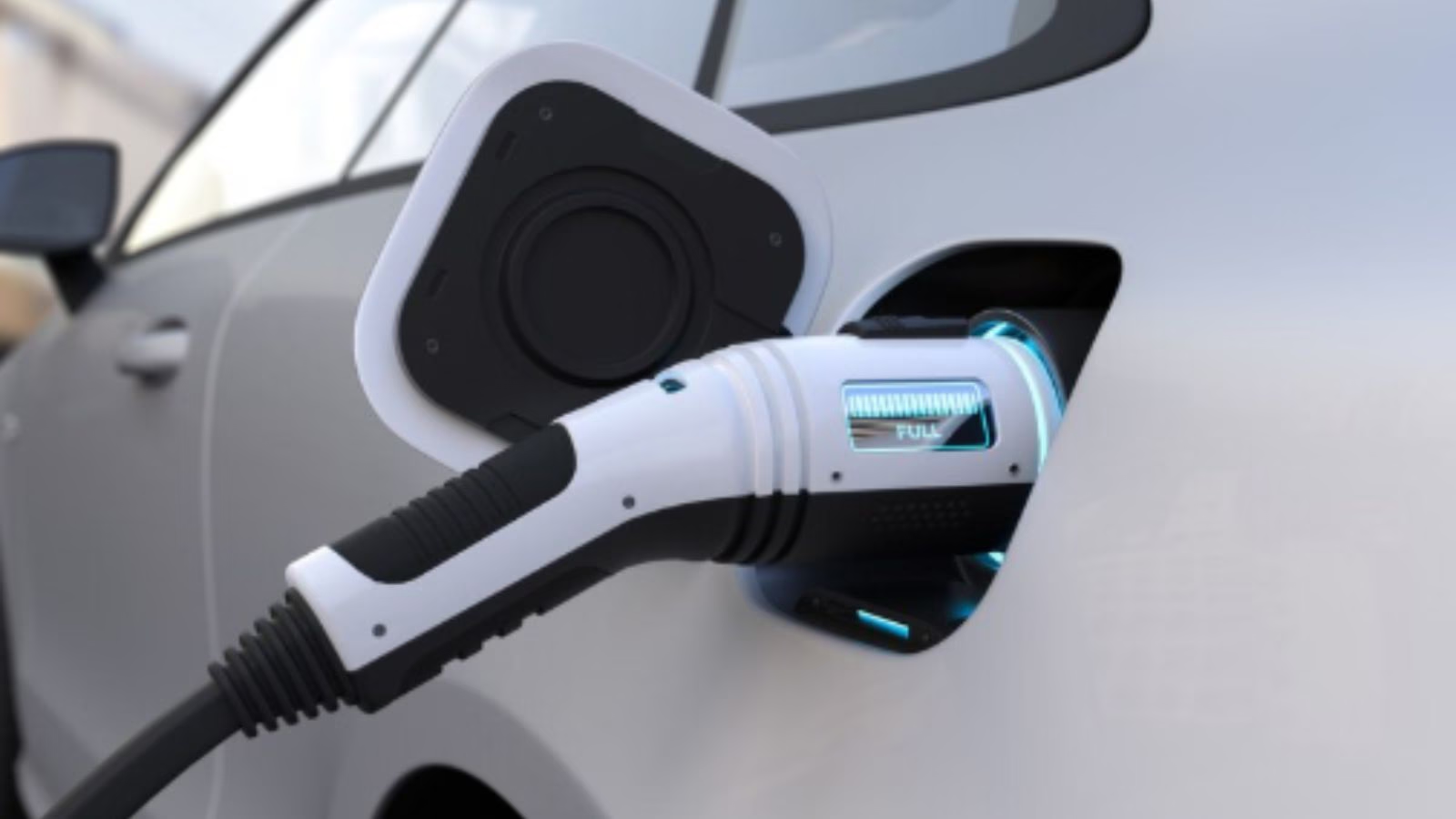
A surge in EVs will require a massive expansion of charging infrastructure. We're not just talking about a few charging points in metro cities. We need a network that spans highways, smaller towns, and even rural areas. Think about it: most people in India don't have dedicated parking spaces with charging outlets. Public charging stations need to be easily accessible, reliable, and affordable. The good news is that companies are already investing heavily in this space.
But it's not just about quantity; it's about quality too. Fast charging is crucial to reduce charging times and make EVs more convenient. Standardization of charging protocols is also essential. Imagine having to carry different adapters for different charging stations – what a headache! A coordinated approach between government, automakers, and energy companies is needed to create a seamless and user-friendly charging experience.
Specs At A Glance
Feature | Details |
|---|---|
Battery Capacity | TBA |
Range | TBA |
Charging Time | TBA |
Motor Power | TBA |
How Does It Stack Up Against The Competition?
The EV market in India is heating up. The Tata Nexon EV has been a frontrunner, offering a decent range and affordability. Mahindra is also making a push with its XUV400, boasting a more powerful motor. And let's not forget MG Motor with the ZS EV, which offers a premium experience at a higher price point. The competition is fierce, and that's good news for consumers.
Here's the thing — these EVs are constantly evolving, with manufacturers rolling out updates and improvements. It's no longer just about the range; it's about the overall package – the features, the comfort, the driving experience, and of course, the price. And with more global players entering the Indian market, the choices are only going to get better.
The Good And The Not-So-Good
What We Like
- Growing awareness and acceptance of EVs
- Increasing availability of charging infrastructure
- Falling battery prices (slowly but surely)
- Government support and subsidies
- Eco-friendly driving experience
What Could Be Better
- Higher upfront costs compared to petrol/diesel cars
- Range anxiety remains a concern
- Inconsistent charging infrastructure reliability
- Lack of standardization in charging protocols
- Limited availability of EV models in some segments
Price & When You Can Buy It
Specific pricing and availability will vary depending on the model and manufacturer. However, expect entry-level EVs to start around ₹10-12 lakh, while premium models can easily cross the ₹25 lakh mark. Keep an eye out for announcements from automakers in the coming months, as several new EV models are expected to launch in India soon.
Our Verdict
The EV revolution in India is not a question of 'if', but 'when'. The IEA report confirms what many of us have suspected: electric vehicles are the future. However, India needs to accelerate its efforts in building a robust charging infrastructure and making EVs more affordable. The potential is immense, but it requires a concerted effort from all stakeholders.
Honestly, I'm optimistic about the future of EVs in India. With the right policies and investments, we can create a cleaner, greener, and more sustainable transportation system. It won't happen overnight, but the journey has begun. Buckle up; it's going to be an exciting ride!