What's The Big News?
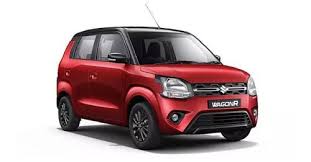
You can talk all day about panoramic sunroofs, wireless chargers, and high-riding pseudo-SUVs, but when regular Indian car buyers pull out their checkbooks, practicality wins. Maruti's latest monthly delivery numbers prove this point yet again. The tall-boy WagonR has secured the crown as the brand's top-selling nameplate, outpacing flashier metal to remind everyone what true value looks like in our price-sensitive market.
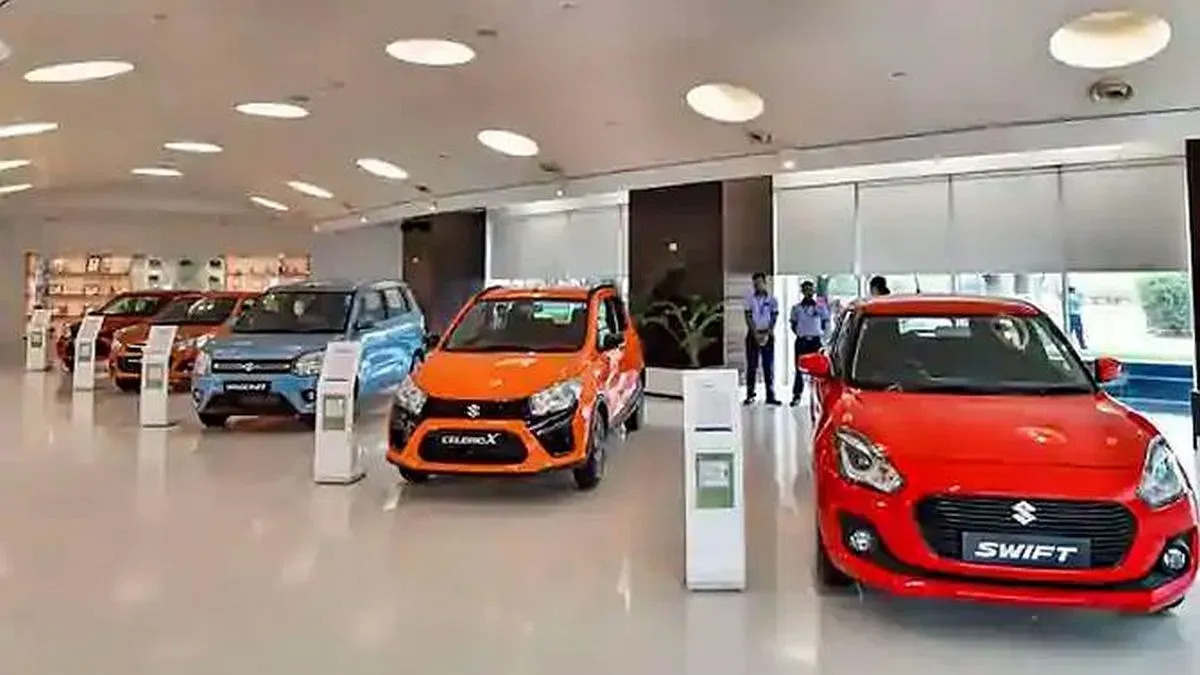
Hot on the heels of the tall-boy is the evergreen Swift, trailed closely by the crossover-styled Fronx, the workhorse Ertiga, and the dependable Dzire. It is a telling picture of where everyday Indian motorists are putting their hard-earned cash. Despite rising showroom stickers and endless marketing pushes towards larger vehicles, the core hatchback and compact family hauler segments remain completely alive and kicking.
The Tall-Boy Phenomenon: Why The WagonR Refuses To Die
Step outside any tier-1 railway station or metro hub, and you will spot a dozen WagonRs in five minutes flat. There is a solid reason for that ubiquity. It isn't pretty, and nobody ever bought a WagonR to show off at a weekend farmhouse party. But climb inside, and you'll immediately get it. The sheer ease of stepping in without bending your knees, the cavernous headroom, and visibility that makes tight city traffic a breeze are qualities that glossy brochures simply cannot capture.
Then you factor in the running costs. With factory-fitted S-CNG technology and frugal K-Series petrol engines, running a WagonR daily costs virtually nothing compared to running a heavy compact SUV. For urban commuters and fleet operators alike, it remains a financial no-brainer. The Swift sits right behind it on the tally charts, appealing to private buyers who want a bit more road presence, a tighter chassis, and that recognizable youthful silhouette without sacrificing fuel efficiency.
Crossovers vs The Old Guard: Shifting Market Dynamics
What makes these numbers particularly fascinating is the tight scrap just behind the top two. The Fronx has rapidly established itself as a massive volume driver for Maruti's premium Nexa chain. Indian buyers clearly love the Baleno-derived underpinnings wrapped in an aggressive, mini-Grand Vitara stance. It gives people that raised driving view and tough look for the price of a mid-spec hatchback (and honestly, it shows in the dealership footfalls).
Meanwhile, the Ertiga continues to print money quietly in the background. If you want a genuine, comfortable seven-seater that does not guzzle fuel or drive like a commercial truck, nothing else under ₹12 lakh comes anywhere close. Competitors have tried chipping away at its dominance for years, yet the Ertiga sits comfortably ahead of sedans and hatchbacks alike. Speaking of sedans, the Dzire holding firm near the top proves that the classic compact three-box shape is far from dead, serving both family duties and cab aggregators with equal grit.
Specs At A Glance
Model | Segment | Engine Options | Fuel Types | Claimed USP |
|---|---|---|---|---|
Maruti WagonR | Tall-boy Hatchback | 1.0L / 1.2L K-Series Petrol | Petrol, CNG | Maximum interior headroom and fuss-free city driving |
Maruti Swift | Compact Hatchback | 1.2L Z-Series / K-Series Petrol | Petrol, CNG | Punchy styling, tight handling, and stellar fuel economy |
Maruti Fronx | Sub-Compact Crossover | 1.2L DualJet / 1.0L Boosterjet Turbo | Petrol, CNG | Crossover styling, upright stance, and Nexa cabin feel |
Maruti Ertiga | Compact MPV | 1.5L K15C Smart Hybrid Petrol | Petrol, CNG | Genuine 3-row practicality and bulletproof reliability |
Maruti Dzire | Sub-4m Compact Sedan | 1.2L Petrol | Petrol, CNG | Spacious boot, comfortable rear bench, and low running costs |
How Does It Stack Up Against The Competition?
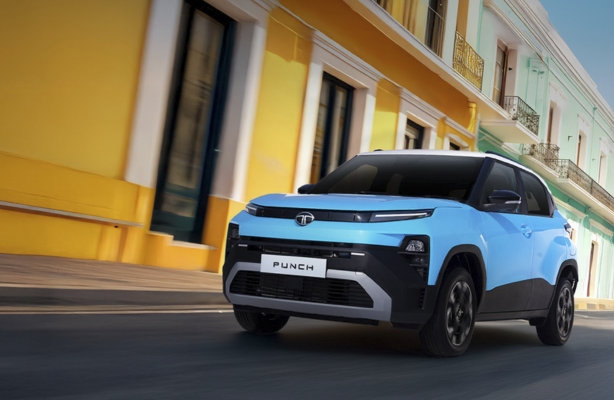
Rivals have thrown everything at this budget playground. Tata Motors has mounted a fierce offensive with the Punch and Tiago, leveraging strong safety credentials and tough build quality. While the Punch consistently fights for the overall top spot across India, Maruti's widespread multi-model defense — spreading buyers across WagonR, Swift, and Baleno — ensures the Indo-Japanese carmaker keeps the biggest slice of the pie.
Hyundai plays the game with the Grand i10 Nios and the Exter. The Exter brings a refined four-cylinder engine and a rich interior, but it hasn't completely unseated the Fronx or the Swift when it comes to outright rural and semi-urban reach. Look at Mahindra, too; while they dominate the rugged ladder-frame SUV space with the Scorpio and Bolero, they simply do not have a dog in this ₹6 lakh to ₹10 lakh daily commuter fight. Maruti owns the bottom end of the pyramid, and that foundation remains unshakable.
The Good And The Not-So-Good
What We Like
- Unmatched Fuel Economy: Whether you choose standard petrol or S-CNG, these cars deliver real-world mileage that protects your monthly household budget.
- Unbeatable Service Footprint: You can break down in the remote hills of Himachal or a sleepy village in Tamil Nadu, and someone nearby will know how to fix a K-Series engine.
- Rock-Solid Resale Value: Buy a WagonR or Swift today, run it for five years, and you will still get a surprisingly high chunk of your money back on the used market.
- Clever Packaging: Cars like the Ertiga and WagonR maximize every millimeter of interior space better than vehicles twice their price.
What Could Be Better
- Safety Perceptions: Maruti still faces persistent criticism over light sheet metal and lower crash-test ratings on its entry-level platform compared to rivals from Tata.
- Bland Interior Plastics: Lower trims feature hard, scratchy dashboard plastics that look noticeably dated next to newer competitors.
- High Waiting Periods on CNG: Popular variants of the Ertiga CNG and Fronx still command frustrating wait times in major metro cities.
Price & When You Can Buy It
All of these high-performing models are readily available across Arena and Nexa showroom floors nationwide, though waiting periods differ widely by variant. The WagonR range kicks off from roughly ₹5.55 lakh (ex-showroom), making it one of the most accessible four-wheelers left in India. The Swift starts near ₹6.49 lakh, while stepping up to the crossover styling of the Fronx requires a starting budget around ₹7.52 lakh.
If you are eyeing the Ertiga, base petrol trims start around ₹8.69 lakh, but high-demand CNG trims often push delivery timelines out by several months depending on your city. The Dzire remains competitively placed in the ₹6.57 lakh bracket, giving compact sedan shoppers a sensible alternative to entry-level crossovers.
Our Verdict
Look, everyone loves arguing on social media about 200-horsepower turbo engines, multi-link suspensions, and giant touchscreens. But real India buys cars with hard-earned savings, factoring in routine service costs, city parking hassles, and the price of fuel at the local pump. That is why the WagonR still sits at the absolute top of the pile.
Here's the thing — flashy features are great, but unmatched peace of mind will always sell in massive volumes. Maruti understands the pulse of the average Indian commuter better than any marketing department in the country. If you need an honest, stress-free runabout for our chaotic roads, the public verdict has already been cast, and the humble WagonR still wears the crown with pride.