What's The Big News?
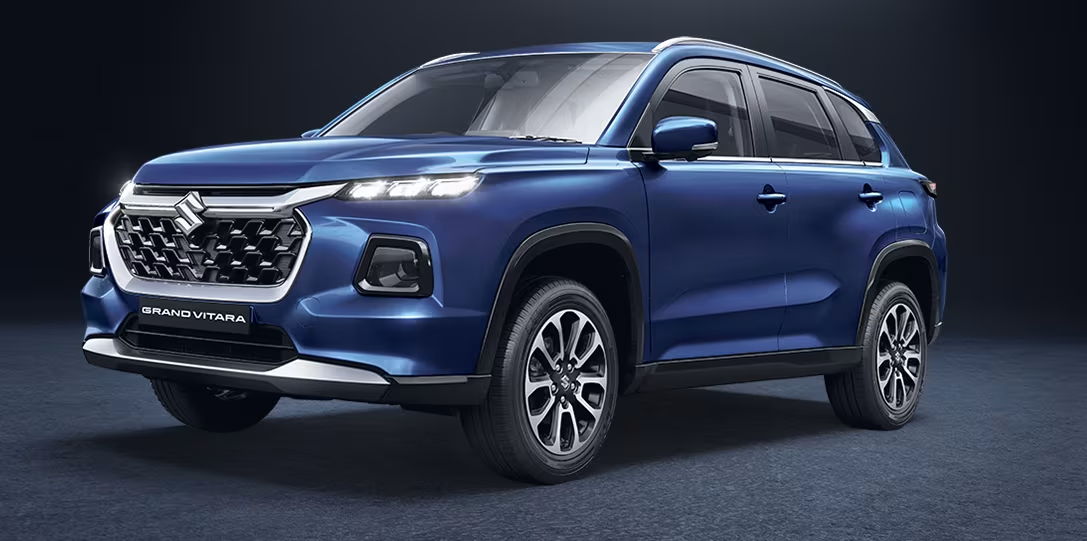
Alright folks, here's the drill: Maruti Suzuki has just dropped another bombshell, announcing its third price hike for 2026. Yes, you read that right — *third*. This isn't just a minor adjustment; it's a significant move that'll affect their entire passenger vehicle range, from the humble Alto to the popular Brezza and Grand Vitara.
For those of you who've been eyeing a new Maruti, meticulously calculating EMIs and waiting for the right moment, this news probably feels like a punch to the gut. It's becoming a recurring theme, isn't it? Just when you think you've budgeted, the goalposts shift. This latest increment is bound to make your favourite Maruti model a little more expensive, and honestly, it shows the increasing pressure on manufacturers.
The Growing Cost Of Your Daily Drive
Let's be real, no one likes a price hike. Maruti usually cites rising input costs – raw materials, logistics, manufacturing expenses – as the primary reasons, and that's fair enough. The global economy isn't exactly a smooth ride these days, and manufacturers do have to pass on some of that burden. But for the average Indian buyer, who's often buying their first or second car with years of hard-earned money, these frequent increases add up quickly.
We're talking about a company that built its empire on affordability and value. These consecutive hikes, while perhaps necessary for their bottom line, subtly chip away at that core promise. It makes you wonder how long Maruti can sustain its 'budget-friendly' image if prices keep climbing this rapidly. It's a delicate balance, and we're seeing it play out in real-time.
Understanding The Market Impact
This isn't just about Maruti; it's about the broader market. When the segment leader raises prices, it often sets a precedent. Other manufacturers might follow suit, citing similar pressures. This creates an environment where buying a new car, which is already a significant investment for most Indian families, becomes even more challenging. It might push some buyers towards the used car market, or perhaps make them reconsider their purchase altogether, waiting for a better time.
On the flip side, Maruti's strong resale value and extensive service network still remain big draws. So, while the initial cost goes up, the long-term ownership experience is still a strong point. But how much premium are buyers willing to pay for that peace of mind? That's the million-dollar question now.
Specs At A Glance
Aspect | Details |
|---|---|
Affected Vehicles | Entire Maruti Suzuki passenger vehicle range (hatchbacks, sedans, SUVs, MPVs, vans) |
Price Hike Percentage | Official figures are yet to be revealed, but applies across models. Specific increase will vary by model and variant. |
Effective Date | Expected to be implemented very soon, post-announcement. |
Reason Cited | Rising input costs, inflationary pressures, and regulatory compliance. |
How Does It Stack Up Against The Competition?
Here's the thing — Maruti's traditional strong suit has always been its aggressive pricing, offering a lot of car for the money. With these repeated hikes, that competitive edge starts to blur. In the entry-level segment, where Maruti dominates, even a small increase can push buyers towards alternatives like the Tata Tiago or Hyundai Grand i10 Nios, which are already strong contenders in terms of features and safety.
Move up to the compact SUV space, and the Brezza now faces even stiffer competition from the likes of the Hyundai Venue, Kia Sonet, and Tata Nexon. These rivals often pack more features or offer different powertrain options for a similar or slightly higher price point. If Maruti's prices continue to creep up, it might just give buyers that extra nudge to look beyond the showroom next door. It's not about being 'bad' value, but about narrowing the gap where Maruti used to hold a clear advantage.
The Good And The Not-So-Good
What We Like
- Maruti's strong brand reliability and widespread service network remain top-notch, offering peace of mind.
- The company continues to offer a wide range of fuel-efficient options, which helps offset rising ownership costs in the long run.
- Despite price increases, many Maruti models still represent good value compared to some international rivals in terms of running costs.
What Could Be Better
- Frequent price hikes in quick succession are tough on buyers, eroding purchasing power and making budgeting difficult.
- The increases might make some entry-level models less accessible for first-time car owners.
- It could potentially push price-sensitive buyers towards competitors or the pre-owned market, impacting sales volumes.
Price & When You Can Buy It
Well, the bad news is the new prices are expected to kick in very soon after this announcement. So, if you've been procrastinating on that booking, you might want to call your dealer ASAP to lock in the current rates, if possible. Maruti hasn't revealed the exact percentage increase yet, stating it will vary across models and variants. We expect an official detailed list to follow, but rest assured, your preferred model will cost more.
For those holding out, there's no official word on when or if these hikes will stabilize. Given the current economic climate, it's a wait-and-watch situation. It's tough to plan when the prices keep changing faster than the weather in Delhi.
Our Verdict
Look, Maruti Suzuki has been the backbone of the Indian automotive market for decades, and for good reason. Their cars are reliable, efficient, and generally offer solid value. But these continuous price increases, the third in 2026 alone, are genuinely concerning for the average Indian buyer. For someone saving up for years, every single rupee counts.
Honestly, while manufacturers face legitimate cost pressures, these frequent hikes make the dream of owning a brand-new car a bit more distant for many. It forces buyers to re-evaluate their choices, and Maruti will need to work even harder to convince customers that their cars still offer the best bang for the buck, especially when competition is heating up like a summer afternoon in Rajasthan. We'll be keeping a close eye on how this impacts their sales and the broader market dynamics.