What's The Big News?
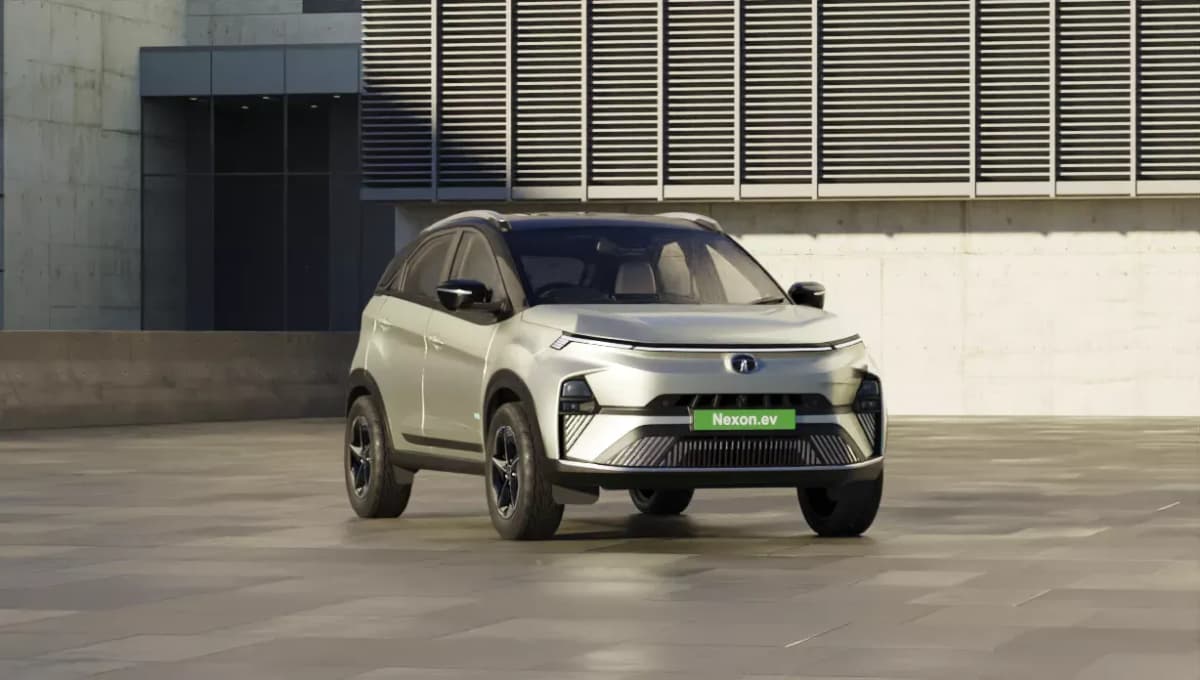
Alright, folks, buckle up! We've got some massive news for all you EV enthusiasts eyeing the future of electric driving in India. The next-generation Tata Nexon EV, the car that pretty much kickstarted the mainstream EV revolution here, has been spotted out in the wild. And let me tell you, it's not just a minor facelift; this looks like a complete game-changer.
Our sources confirm a test mule of the future Nexon EV was seen chilling on a flatbed, draped in heavy camouflage, but revealing enough to get us all excited. This isn't just another prototype; it's our first proper look at what Tata's cooking for its most important electric offering. The implications for range, space, and driving dynamics are huge, and honestly, it shows.
Under The Hood (Literally): The Dedicated EV Architecture
Now, here's where it gets really interesting. While the current Nexon EV does a fantastic job, it's built on a platform primarily designed for internal combustion engines. This new one? It's a different beast altogether. The spy shots clearly show an underbody-mounted battery pack. This isn't just a tweak; it's a fundamental shift, indicating Tata is likely moving to a dedicated, purpose-built EV architecture.
Why does that matter, you ask? Well, an underbody battery pack means several things. First, better weight distribution, which translates to superior handling and a more stable ride. You'll feel it on those highway stretches and around city corners. Second, and this is huge for us in India, it frees up cabin space. No more compromises on boot volume or rear passenger legroom just to accommodate batteries. Plus, those prominent orange cables visible are a dead giveaway of a high-voltage electric system – pure EV from the ground up, not an ICE conversion. This is about time, Maruti (oops, sorry, Tata!).
Design Evolution & What To Expect
The test mule was heavily camouflaged, naturally, but we can still glean a few things. Remember those recent spy shots of the next-gen ICE Nexon? This EV version will undoubtedly share a lot of its design language with that. Expect a bolder, more futuristic aesthetic, with Tata's IMPACT 3.0 design philosophy taking center stage. Think sleeker LED lighting, possibly a completely closed-off grille for better aerodynamics, and a more pronounced stance.
Inside, we're anticipating a significant upgrade too. Larger touchscreens, more premium materials (even for the price of a mid-spec Swift, Tata always tries to give you something a little better), and a host of connected tech features are almost a given. With a dedicated EV platform, designers will have more freedom to create an airy, spacious cabin that feels truly modern, rather than just an electrified version of an existing car. It's not just about what's under the hood; it's about the entire experience.
Specs At A Glance
Feature | Details (Expected) |
|---|---|
Platform | Dedicated Gen 2 EV architecture (likely based on ALFA-ARC evolution) |
Battery Pack | Underbody mounted, larger capacity expected |
Range | Significantly higher than current model (official figures TBA) |
Motor | More powerful options likely (specifics TBA) |
Charging | Faster DC charging capabilities expected |
Launch Timeline | Likely 2027 |
Body Style | Sub-compact SUV |
Note: Specific power, torque, and battery capacity figures are yet to be revealed by Tata Motors.
How Does It Stack Up Against The Competition?
Currently, the Nexon EV primarily battles it out with the Mahindra XUV400 and, to some extent, the MG ZS EV. The XUV400 offers more space, but the Nexon EV's overall package and charging network support have kept it ahead. With this new generation, Tata is clearly aiming to widen that gap significantly. An underbody battery means not just more range but also a lower center of gravity, which could give it better dynamics than the XUV400.
Looking ahead to 2027, the competition will only get fiercer. Maruti, Hyundai, and even new players are expected to have strong EV contenders. However, by moving to a dedicated EV platform, Tata is essentially future-proofing the Nexon EV, giving it a solid foundation that purpose-built EVs from other brands will struggle to match if they stick to adapted ICE platforms. It's a strategic move, positioning it well against what might come from the likes of Hyundai's Creta EV or even Maruti's upcoming eVX.
The Good And The Not-So-Good
What We Like
- Dedicated EV platform promises better space, range, and driving dynamics.
- Underbody battery pack for optimal weight distribution and safety.
- Potential for significantly increased range, addressing a key consumer concern.
- Expected design and interior upgrades will keep it fresh and competitive.
- Tata's strong EV ecosystem (charging, service) will continue to be a plus.
What Could Be Better
- The wait till 2027 feels like an eternity for eager buyers.
- Pricing will be critical; a premium over the current model is expected, but how much?
- Managing expectations until official details are out can be tough.
- Competition will be intense by its launch year, so it needs to be truly exceptional.
Price & When You Can Buy It
As for when you can park this beauty in your garage, the current speculation points to a market introduction around 2027. That's still a fair bit away, giving Tata plenty of time to refine everything.
Regarding pricing, official figures are obviously nowhere in sight. However, considering the significant architectural changes and expected upgrades, you can anticipate a bump over the current Nexon EV's price. It'll likely compete in a slightly higher segment than the current model, perhaps starting somewhere in the ₹16-20 lakh (ex-showroom) range, but we'll have to wait for solid confirmation closer to its launch. Don't expect it for the price of a standard petrol hatchback, that's for sure.
Our Verdict
Look, what we're seeing here isn't just another car; it's Tata Motors doubling down on its EV commitment, and that's fantastic news for Indian consumers. The shift to a dedicated EV platform with an underbody battery pack fundamentally changes the game for the Nexon EV. It's not just about being electric anymore; it's about being a better electric vehicle, designed from the ground up for the job.
This next-gen Nexon EV, even in its camouflaged test mule avatar, signals a future where electric cars are no longer compromises but genuine, compelling alternatives to ICE vehicles. Honestly, if Tata gets the pricing and features right, this could easily redefine the benchmark for mainstream EVs in India for years to come. The future is electric, and the Nexon EV is clearly leading the charge, quite literally.