What's The Big News?
Imagine walking into a showroom, ready to shell out an extra lakh for the top-tier version of your dream SUV, only to find out it has less horsepower than the base model. Sounds crazy, right? Well, that's exactly what's happening with the highly anticipated Tata Sierra EV. The larger 75 kWh rear-wheel-drive (RWD) version actually puts out 29 PS less than its smaller 63 kWh sibling (yes, really). This has left a lot of prospective buyers scratching their heads, wondering if they are being shortchanged for paying a premium.
For the price of a mid-spec Swift, that Rs 1 lakh premium is not small change, so spending that extra cash needs to make absolute sense. We've done some digging to understand what's cooking in Tata's engineering department, and the explanation is actually quite fascinating. It turns out this isn't a mistake on the spec sheet; it's a deliberate, calculated engineering decision designed to solve a very real problem for Indian EV buyers.
Decoding Tata's Logic: Why Less Is More For The 75 kWh Sierra
Let's break down the engineering puzzle here because it's not as simple as just slapping a bigger motor onto a bigger battery pack. When you build an electric vehicle, you're constantly fighting a battle against weight and heat. The massive 75 kWh battery pack is significantly heavier than the 63 kWh unit, which means the car has to work much harder just to move its own bulk around. To ensure that this premium, long-range variant actually delivers on its promise of superior range, Tata chose to optimize the electric motor for maximum efficiency rather than outright top-end performance.
Power delivery in an EV is highly dependent on how fast the battery can discharge energy without overheating. By capping the power output of the Sierra EV 75 RWD, Tata's engineers can ensure the battery doesn't drain too fast under hard acceleration. It's a classic case of choosing marathon endurance over a 100-meter sprint. You get a motor that's tuned to sip power gently, giving you those crucial extra kilometers on highway road trips when you're far away from a fast charger.
Another major factor is thermal management. Bigger batteries generate more heat when they are pushed to their limits, and keeping things cool is crucial for battery health over the long run. By keeping the power output slightly lower, Tata can manage heat build-up much better, ensuring that you don't experience sudden drops in performance during long summer drives. For the premium buyer paying that extra lakh, range anxiety and battery longevity are the bigger devils to conquer, not shaving a millisecond off the 0-100 km/h time.
The Real-World Impact: Will You Actually Feel The 29 PS Deficit?
Let's talk about how this translates to your daily run to the office or weekend trips to Lonavala. On paper, a 12.2% drop in power sounds like a massive downgrade that would make the car feel sluggish. But here's the thing about electric motors — they give you all their torque instantly, unlike petrol or diesel engines where you have to wait for the revs to build up. Whether you are driving the 63 kWh or the 75 kWh variant, that initial shove in the seat when you stomp the pedal in stop-and-go city traffic will still feel incredibly quick.
Where you might notice the difference is at triple-digit highway speeds. The Sierra EV 63 will likely feel a bit more eager when you try to pull off a quick overtaking maneuver at 100 km/h. Conversely, the Sierra EV 75 RWD will offer a more linear, relaxed power delivery. It is designed to cruise effortlessly, keeping noise, vibration, and harshness (NVH) levels low while preserving battery life.
We must also consider how RWD dynamics play into this. Rear-wheel-drive cars handle beautifully, but they can also be a handful if too much power is dumped onto the rear wheels instantly, especially on wet Indian roads. By managing the power curve, Tata prevents the rear end from getting too tail-happy, making it a sensible, safety-first setup that makes a lot of sense for a family SUV.
Specs At A Glance
Specification | Tata Sierra EV 63 | Tata Sierra EV 75 RWD |
|---|---|---|
Battery Pack | 63 kWh | 75 kWh |
Drive Configuration | TBA | Rear-Wheel Drive (RWD) |
Power Output | Higher (Baseline) | 29 PS Less (12.2% drop) |
Estimated Range | TBA | Higher than 63 kWh variant |
Expected Price Premium | Baseline | ~Rs 1 Lakh Premium |
How Does It Stack Up Against The Competition?
The Sierra EV is stepping into a highly competitive space where it'll go up against the likes of the upcoming Hyundai Creta EV and Maruti's eVX. Now, Hyundai is known for giving you exactly what you pay for on the spec sheet — more money usually equals more power and more features. If Hyundai brings a larger battery variant, you can bet it'll have more horses under the hood to brag about.
Maruti, on the other hand, always prioritizes efficiency above all else, but they usually keep their lineups straightforward to avoid confusing the average buyer. Tata is trying to play a different game here by offering a retro-modern lifestyle SUV that appeals to the heart. While competitors might offer simpler, more predictable lineups, Tata's strategy with the Sierra EV shows they are willing to make bold engineering compromises to target specific buyer profiles who value real-world range over paper specs.
The Good And The Not-So-Good
What We Like
- Excellent real-world range focus for the larger 75 kWh variant
- Rear-wheel-drive setup promises great driving dynamics and handling balance
- Smart thermal management to ensure long-term battery health
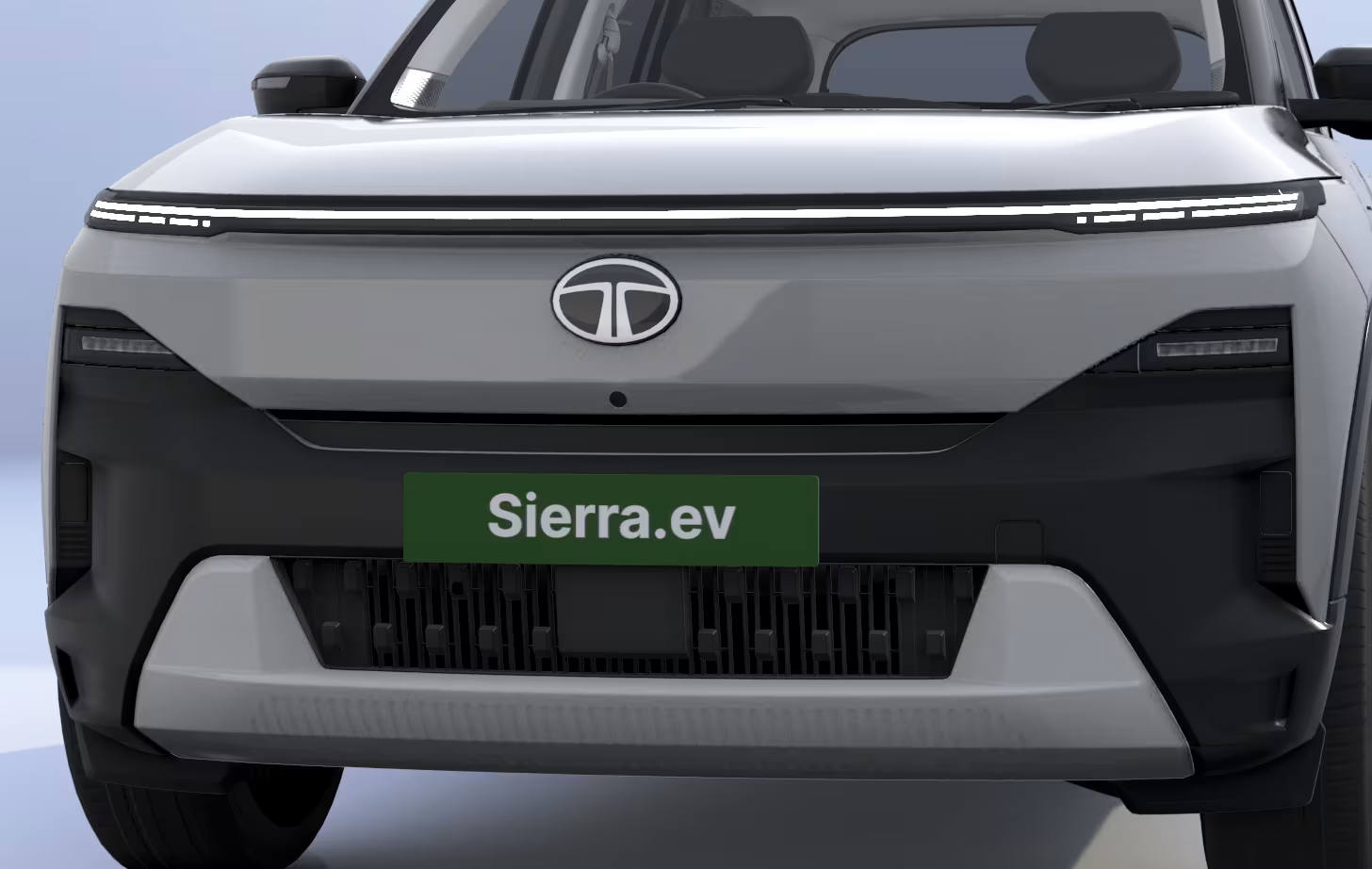
- Distinct retro-modern styling that stands out in a crowd of generic SUVs
What Could Be Better
- Paying Rs 1 lakh premium for less horsepower is tough to digest on paper
- Highway overtaking at high speeds might feel slightly less urgent compared to the 63 kWh model
- Confusing variant naming could baffle everyday car buyers
Price & When You Can Buy It
Tata hasn't officially launched the Sierra EV yet, so exact variant-wise pricing remains under wraps. However, we expect the Sierra EV range to start around Rs 20-25 lakh, with the 75 kWh RWD commanding a premium of about Rs 1 lakh over the comparable 63 kWh variants. Launch is expected sometime in late 2025 or early 2026, and we can't wait to get our hands on both versions for a proper real-world range test.
Our Verdict
Honestly, paying more for less power is a tough pill to swallow, but real-world range is what actually keeps you smiling on the highway. Tata is taking a massive gamble here by prioritizing range over bragging rights. Indian buyers love big numbers on spec sheets because it's what we talk about over tea with our friends. Explaining to your neighbor why your more expensive car has less power isn't going to be easy, but if you look past the spec sheet and focus on what actually matters — driving range on long family trips — the Sierra EV 75 RWD might just be the most sensible highway cruiser in its class.