What's The Big News?
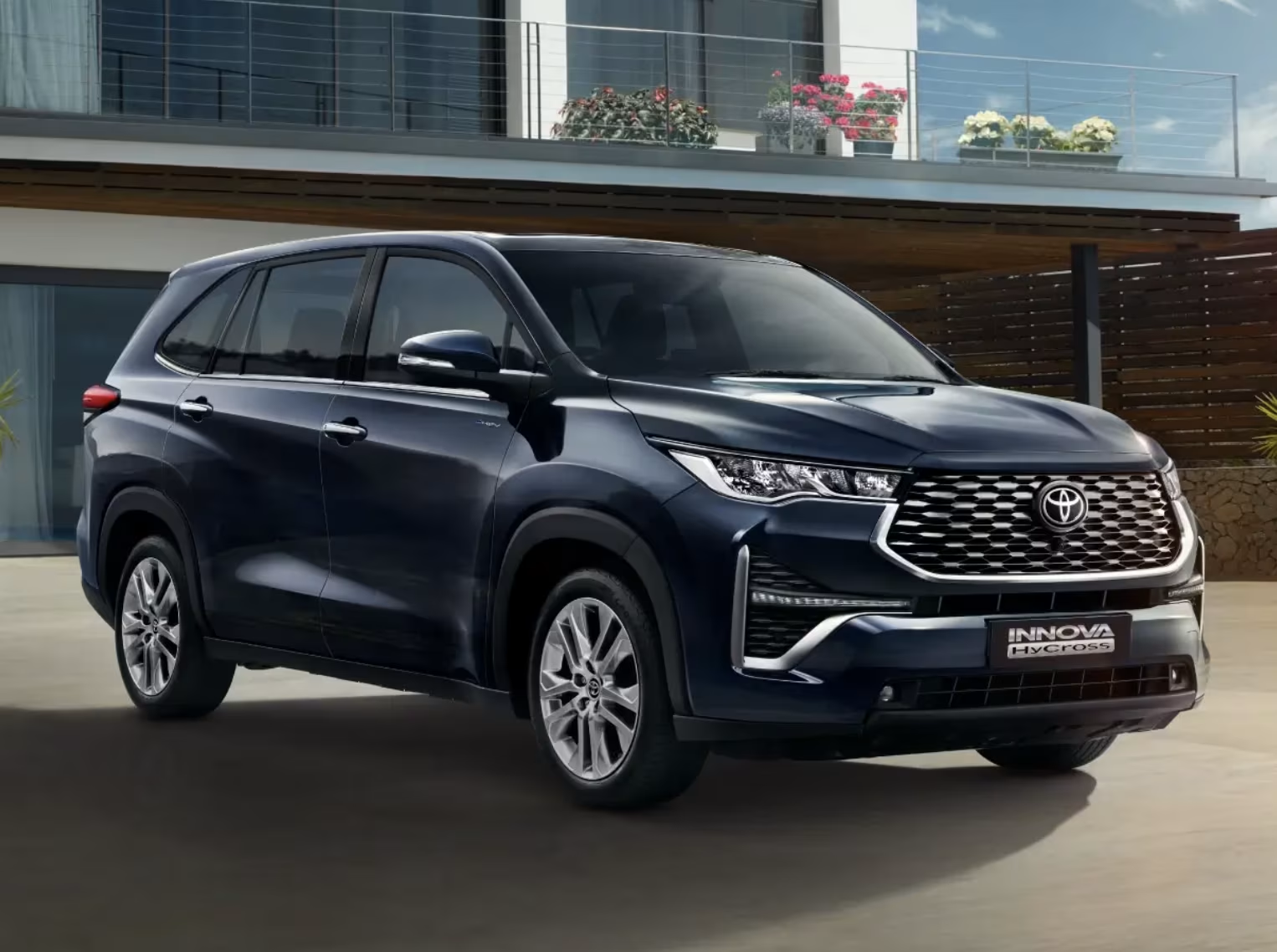
Imagine spending hard-earned money on India's most trusted highway cruiser, only to watch it get towed to a workshop before its second service. That's the nightmare Manish Kashyap from Bihar faced recently. His Toyota Innova Hycross Hybrid, which hasn't even crossed the 15,000 km mark, reportedly broke down, leaving him stranded and extremely frustrated on the side of the road.
He didn't just call road assistance; he took to social media, uploading videos that quickly went viral across car groups. His target? The government's heavily promoted E20 petrol. While Toyota officially claims the Hycross is perfectly compatible with 20% ethanol-blended fuel, this sudden failure has sent shockwaves through the Indian motoring community, raising tough questions about what we are actually pumping into our fuel tanks.
The E20 Petrol Debate: Is It Really The Fuel at Fault?
Let's dive into the meat of the issue because this isn't just about one broken MPV. Ethanol is highly hygroscopic. In plain English, it absorbs moisture from the air like a sponge. When water mixes with ethanol in your fuel tank, it can cause a messy phenomenon called phase separation. This corrosive mixture can clog fuel lines, rust fuel pumps, and choke fuel injectors, which are built to incredibly tight tolerances in modern engines.
Manish claims his vehicle suffered fuel system failure specifically due to the E20 fuel he filled at a local station. Now, we've seen older cars struggle with ethanol, but the Hycross is built from the ground up to handle E20. Did he get a bad batch of adulterated fuel, or is there a deeper compatibility issue that car manufacturers aren't telling us about? We need to wait for Toyota's official diagnostic report, but the optics are terrible for a brand built on bulletproof reliability.
The Indian Biofuel Push and Your Car's Health
India is pushing hard for E20 adoption to cut down on massive crude oil import bills. It's a great move for the economy, but the transition has been incredibly fast. Most of us are forced to use blended fuel whether we want to or not. For the price of a mid-spec Swift, you shouldn't have to worry about fuel quality, let alone when you spend nearly thirty lakh rupees on a premium hybrid. (and honestly, it shows) that our fuel infrastructure might not be fully ready to store and distribute ethanol-blended fuel without moisture contamination.
Fuel pump storage tanks in many rural parts of India are notorious for water seepage, which spells disaster for modern high-pressure direct injection systems. If a brand like Toyota, famous for building engines that can run on rough fuel, is facing fuel-related breakdowns, what happens to budget cars? Owners are rightfully worried that the push for green fuel is happening at the cost of engine longevity.
Specs At A Glance
Parameters | Toyota Innova Hycross Hybrid Details |
|---|---|
Engine Type | 2.0-Litre 4-Cylinder Petrol Hybrid |
Max Power (Combined) | 184 bhp (approx) |
Transmission | e-CVT Automatic |
E20 Compatibility | Yes (Officially Certified) |
Claimed Fuel Efficiency | 23.24 kmpl |
How Does It Stack Up Against The Competition?
Let's compare this to rivals like the Kia Carens or the diesel-powered Mahindra XUV700. The XUV700 relies on tried-and-tested mHawk diesel or mStallion turbo-petrol engines. While diesel has its own DPF clog issues in short city runs, it doesn't suffer from the ethanol phase-separation headache. Kia's Carens offers a turbo petrol and diesel, both of which are E20 compliant but haven't faced such highly publicized fuel system meltdowns yet.
Buying a hybrid was supposed to be the ultimate peace-of-mind choice—diesel-like mileage without the diesel emission hassles. If fuel quality remains a wildcard in India, the hybrid advantage could quickly turn into an expensive repair nightmare for owners who live outside metro cities.
The Good And The Not-So-Good
What We Like
- Outstanding fuel efficiency for a large 7-seater MPV.
- Super smooth e-CVT automatic gearbox that makes city driving effortless.
- Spacious cabin with segment-first ottoman seats in high-end trims.
What Could Be Better
- Highly sensitive fuel system that seems vulnerable to local fuel quality.
- Interior plastic quality feels a bit cheap for a ₹30-lakh car.
- Long waiting periods that still stretch over several months.
Price & When You Can Buy It
The Toyota Innova Hycross is currently on sale across India. It starts at around ₹19.77 lakh for the base petrol variants and goes up to ₹30.98 lakh (ex-showroom) for the top-of-the-line hybrid trims. If you're planning to buy one, expect a waiting period ranging from three months to almost a year depending on the variant and your city. However, with these fuel issues coming to light, buyers might want to double-check their fuel choices before driving home.
Our Verdict
Here's the thing — we shouldn't panic and assume every Hycross is a ticking time bomb, but we must demand better fuel quality standards. Toyota needs to clear the air quickly because their entire reputation is built on reliability. If you're buying a modern E20 car, stick to trusted, high-volume fuel stations to minimize the risk of water-contaminated fuel.