What's The Big News?
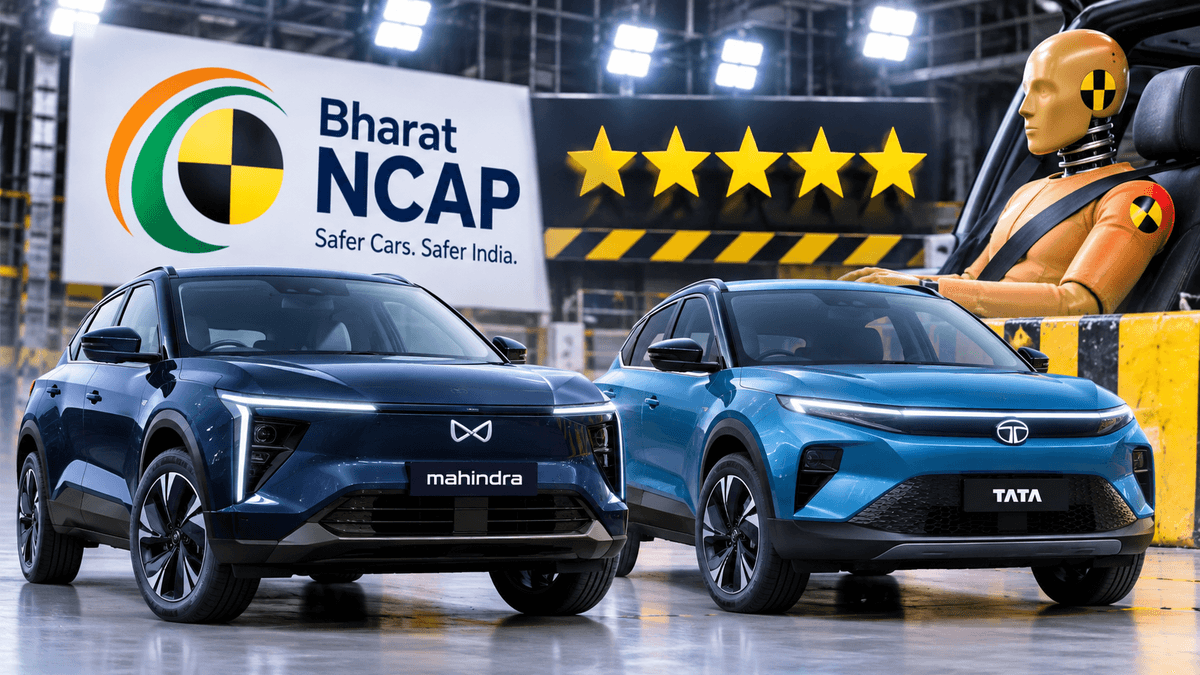
Alright, everyone, buckle up! We've been waiting for this, haven't we? Bharat NCAP, our very own crash testing authority, has finally dropped its first big set of safety ratings for Indian cars. This isn't just another global report; this is made for our roads, our traffic, and our driving conditions. And honestly, the results are pretty exciting, especially if you're looking towards an electric future.
The headlines are dominated by two electric behemoths: Mahindra's XEV 9e and Tata's harrier-ev">Harrier EV, both of which have apparently set the bar incredibly high. But it's not just the EVs making waves; the popular Kia Seltos has also put in an impressive showing. This is a clear sign that Indian car manufacturers, and even foreign players, are taking local safety standards seriously. About time, Maruti, maybe take some notes!
India's New Safety Standard Setters: The EV Frontrunners
Let's talk about the big guns first. The Mahindra XEV 9e and the Tata Harrier EV aren't just leading the charge on electric mobility; they're also leading the safety game according to Bharat NCAP. While specific star ratings and scores are yet to be officially revealed for public consumption, the buzz suggests both have achieved top-tier safety marks. This is huge, especially for EVs, where battery integrity in a crash is a primary concern. Automakers are clearly designing these vehicles from the ground up with occupant protection in mind, which is exactly what we want to see.
For years, we've seen Tata Motors push the safety envelope with their ICE vehicles, and it looks like they're continuing that legacy with the Harrier EV. Expect a robust body shell, advanced high-strength steel usage, and a suite of active and passive safety features. Similarly, Mahindra, with their new 'Born Electric' philosophy, seems to be focusing heavily on foundational safety for models like the XEV 9e. We're talking multiple airbags, ESP, ABS with EBD, and potentially more advanced driver-assistance systems (ADAS) as standard or optional. This isn't just about surviving a crash; it's about avoiding one in the first place.
Seltos's Strong Showing: A Win For Mainstream Buyers
Now, let's shift focus to a car many of you probably already own, or at least have on your shortlist: the Kia Seltos. This compact SUV has always been a looker, packed with features, but its safety credentials in previous global tests raised some eyebrows for certain variants. However, with the latest update and now its Bharat NCAP performance, it appears Kia has seriously stepped up its game. The word 'impressive' is being thrown around, which suggests a strong 4-star or even a full 5-star rating for the Indian-spec model.
This is fantastic news for the thousands of Indian families who've put their trust in the Seltos. It shows that manufacturers are adapting their products specifically for local safety norms, rather than just selling us a global platform that might not meet our unique requirements. A good safety score for a car in this segment means better protection for you and your loved ones without having to break the bank for a premium offering. It's about providing foundational safety to the masses, and Kia seems to be delivering on that promise now.
Specs At A Glance
Feature | Mahindra XEV 9e | Tata Harrier EV | Kia Seltos (Latest Model) |
|---|---|---|---|
Expected Safety Rating (Bharat NCAP) | Top-tier (likely 5-star) | Top-tier (likely 5-star) | Impressive (likely 5-star) |
Airbags (Minimum) | Expected 6 | Expected 6 | 6 (Standard) |
ABS with EBD | Yes | Yes | Yes (Standard) |
Electronic Stability Program (ESP) | Yes | Yes | Yes (Standard) |
Body Structure | High-strength steel | High-strength steel | High-strength steel |
Powertrain Type | Electric | Electric | Petrol / Diesel |
Launch Status | Upcoming / Prototype | Upcoming / Prototype | Currently Available |
Battery Pack (EVs only) | Official figures yet to be revealed | Official figures yet to be revealed | N/A |
Advertisement
How Does It Stack Up Against The Competition?
When you talk about safety, especially for the upcoming EVs, the Mahindra XEV 9e and Tata Harrier EV are going head-to-head with some pretty strong contenders in the electric SUV space, both current and future. Think about something like the MG ZS EV, which has a decent global NCAP score, or even the Hyundai Kona Electric. These new entrants are clearly aiming to not just match but surpass existing benchmarks, setting a higher standard for what an Indian EV should offer in terms of crash protection. This competition is great for us, the buyers, as it pushes everyone to innovate.
For the Kia Seltos, an impressive Bharat NCAP score places it firmly in contention with rivals like the Hyundai Creta (which has also performed well in previous tests) and the Maruti Grand Vitara/Toyota Urban Cruiser Hyryder twins. Previously, safety was a slight question mark for some Seltos variants, but now, it can confidently claim to be one of the safest compact SUVs in its price bracket. This is a massive advantage in a segment where buyers are becoming increasingly aware of vehicle safety, moving beyond just features and mileage. It's a clear differentiator.
The Good And The Not-So-Good
What We Like
- Local Testing, Local Relevance: Bharat NCAP's results mean cars are tested for our conditions, giving buyers truly relevant safety information.
- EVs Leading The Way: Mahindra XEV 9e and Tata Harrier EV showing top-tier safety from the get-go is a huge confidence booster for the EV segment.
- Seltos's Transformation: Kia proving they can deliver excellent safety in a popular, mainstream product is a big win for consumers.
- Increased Awareness: These results will further push manufacturers to prioritise safety across their entire lineup.
What Could Be Better
- Transparency & Detail: We'd love to see the full, detailed star ratings and AOP/COP scores published quickly for all tested vehicles.
- Standardisation: While some models score well, we still need to see top safety features made standard across all variants, not just the top-end ones.
- Faster Testing Cycle: To keep up with new launches, Bharat NCAP needs to ramp up its testing capacity and frequency.
Price & When You Can Buy It
The Kia Seltos is already available across India, with pricing starting from around ₹10.90 lakh (ex-showroom) for the base model, going up depending on the variant and engine choice. You can walk into a Kia showroom today and drive one home.
As for the Mahindra XEV 9e and the Tata Harrier EV, these are still upcoming models. The Harrier EV is expected to launch sometime in late 2024 or early 2025, and pricing is expected to be in the ₹25–30 lakh range, given its premium positioning. The Mahindra XEV 9e's launch timeline is a bit more uncertain, likely in 2025 or beyond, and its pricing will be announced closer to its official debut. Don't expect these EVs to be cheap, but they'll definitely bring cutting-edge tech and, clearly, top-notch safety to the table.
Our Verdict
Look, these initial Bharat NCAP results are a landmark moment for the Indian automotive industry. For years, we've relied on global agencies or just hoped for the best. Now, we have a clear, local benchmark. The fact that new EVs like the Mahindra XEV 9e and Tata Harrier EV are leading the pack in safety is incredibly reassuring, showing that 'green' doesn't mean compromising on protection. And Kia stepping up with the Seltos is a testament to how market demand for safety can drive real change.
Honestly, this is what Indian car buyers deserve — vehicles that are built not just for our pockets but also for our lives. It's a big step towards safer roads and more informed purchasing decisions. We at CarBikeGPT.com are keen to see more results and will keep you updated. Drive safe!