What's The Big News?
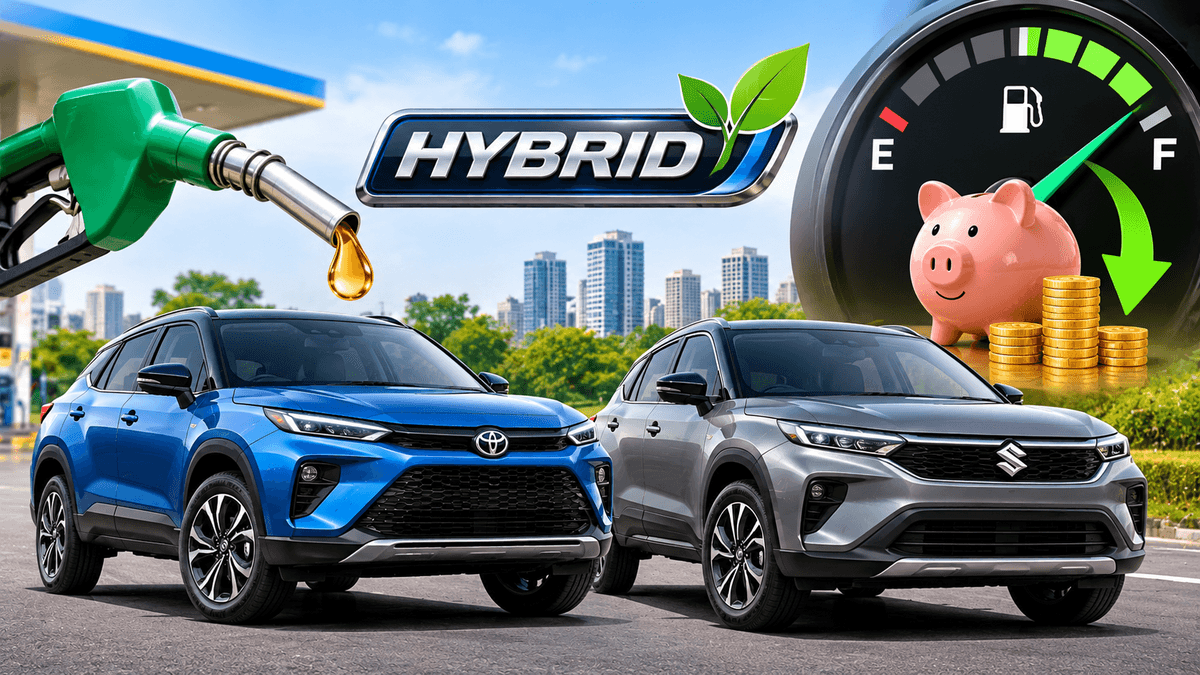
The rising fuel prices, coupled with a growing environmental consciousness, have really got Indian car buyers thinking. It's not just about what looks good anymore; it's about what makes sense for your wallet in the long run. And that's where strong hybrid cars are stepping into the limelight, offering a compelling middle ground between traditional petrol burners and full-blown electric vehicles.
You see, for years, we've been chasing that elusive "kitna deti hai?" number. Now, with hybrids, that number is getting seriously impressive. We're talking about mileage figures that make even some small hatchbacks blush, all while offering more power and features. It's no longer just a niche; it's becoming a mainstream consideration for anyone looking to upgrade without breaking the bank on fuel bills.
The Mileage Masterclass: How Strong Hybrids Are Changing the Game
Alright, so what exactly is a "strong hybrid" and why should you care? Forget those 'mild' hybrids that just give a tiny electric boost; a strong hybrid is a different beast altogether. It's got an electric motor and a petrol engine that can work independently or together. This means the car can actually run purely on electric power for short distances, especially in slow-moving city traffic or while cruising at low speeds.
Think about it: you're stuck in bumper-to-bumper Delhi traffic, and your car is silently gliding along on electric power, sipping zero petrol. That's real-world savings right there! When you need more grunt, or you're on the highway, the petrol engine kicks in, either powering the wheels directly or charging the battery, or both. This intelligent system constantly switches between electric and petrol mode, optimising for efficiency without you even noticing. It's truly smart tech, helping you squeeze every drop out of that fuel tank (and honestly, it shows in the mileage figures). No charging worries, no range anxiety, just impressive fuel economy that makes daily commutes far less painful.
India's Hybrid Heroes: Who's Leading the Charge?
The Indian market has seen a welcome surge in strong hybrid offerings lately, giving buyers actual choices beyond just petrol or diesel. Toyota, a pioneer in hybrid tech globally, leads the pack with models like the Urban Cruiser Hyryder and the mighty Innova Hycross. Maruti Suzuki, seeing the writing on the wall, has smartly partnered with Toyota, giving us the Grand Vitara and the premium Invicto – essentially rebadged versions but with their own flavour. And let's not forget Honda, who brought their sophisticated City e:HEV to our shores, proving that sedans can also join the high-mileage club.
What's great is that these vehicles cover different segments. You've got compact SUVs, a popular sedan, and even a large MPV, meaning there's a strong hybrid option for almost every kind of Indian family or buyer. Each one brings its own blend of comfort, features, and crucially, that brilliant fuel efficiency. It's a genuine win-win for consumers looking for a greener, more economical ride without having to commit fully to an EV.
Specs At A Glance
Here’s a quick look at some of the prominent strong hybrid models currently available in India:
Advertisement
Model | Engine Type | Claimed Mileage (kmpl) | Price Range (Ex-showroom, ₹ Lakh) |
|---|---|---|---|
Maruti Grand Vitara Strong Hybrid | 1.5L, 3-Cylinder Petrol + Electric Motor | ~27.97 | ~18.39 – 19.93 |
Toyota Urban Cruiser Hyryder Strong Hybrid | 1.5L, 3-Cylinder Petrol + Electric Motor | ~27.97 | ~18.89 – 19.99 |
Honda City e:HEV | 1.5L, 4-Cylinder Petrol + Electric Motor | ~27.1 | ~19.03 |
Toyota Innova Hycross Strong Hybrid | 2.0L, 4-Cylinder Petrol + Electric Motor | ~23.24 | ~25.97 – 30.98 |
Maruti Invicto Strong Hybrid | 2.0L, 4-Cylinder Petrol + Electric Motor | ~23.24 | ~25.21 – 28.92 |
*Note: Mileage figures are as per manufacturer claims under standard test conditions. Real-world figures may vary. Prices are approximate ex-showroom and subject to change.
How Does It Stack Up Against The Competition?
When you look at strong hybrids, they really carve out their own space. Compare a Grand Vitara Strong Hybrid to its petrol-only rivals like a Hyundai Creta or Kia Seltos, and the mileage difference is stark. While the initial cost of the hybrid might be a bit higher – often by ₹1 to ₹2 lakh – you start recovering that premium surprisingly fast, especially if your daily commute involves a lot of city driving. Your monthly fuel bill could easily drop by 30-40%, which is a massive saving for any Indian household.
Then there are mild hybrids, like what Maruti offers in many of its other models. They give a tiny boost and some start-stop functionality, but they can't run on electric power alone. Strong hybrids are in a different league for actual fuel savings. And against EVs? Well, EVs offer zero emissions and even lower running costs if you charge at home, but they come with range anxiety and require dedicated charging infrastructure. Strong hybrids give you the best of both worlds: great mileage without ever having to worry about finding a charging station or running out of juice on a long trip. It's essentially an EV that refills itself with petrol!
The Good And The Not-So-Good
What We Like
- Unbeatable Fuel Efficiency: This is the headline, isn't it? Numbers close to 28 kmpl in an SUV are just phenomenal.
- Lower Running Costs: Reduced fuel consumption directly translates to lighter pockets for daily use, which is a huge plus for Indian buyers.
- Smooth & Quiet Drive: In EV mode, these cars are incredibly silent and refined, especially in city traffic. It's a remarkably peaceful experience.
- Eco-Friendly Credentials: Lower tailpipe emissions mean you're doing your bit for the environment, and sometimes, even qualify for government incentives.
- No Range Anxiety: Unlike EVs, you can simply refuel with petrol when needed, making long journeys stress-free.
What Could Be Better
- Higher Initial Price Tag: They are definitely more expensive upfront than their pure petrol counterparts. This can be a hurdle for some buyers.
- Complex Technology: More components (battery, electric motor, inverter) mean a more complex system, which could theoretically lead to higher long-term maintenance costs, though current reliability is good.
- Boot Space Compromise: Sometimes, the battery pack eats into the boot space, reducing practicality, though manufacturers are getting better at packaging.
- Limited Model Choices: While growing, the strong hybrid segment still has fewer options compared to petrol or diesel cars.
- Resale Value Uncertainty: While currently good, the long-term resale value of complex hybrid systems is something buyers often ponder over.
Price & When You Can Buy It
The strong hybrid models currently on sale in India typically start from around the ₹18 lakh mark (ex-showroom) for the compact SUVs and sedan, going up to ₹30 lakh plus for the larger MPVs like the Innova Hycross and Invicto. Yes, that's a significant outlay, often putting them at par with, or even slightly above, top-spec diesel or turbo-petrol variants of rival cars. However, as we discussed, you're paying for that advanced technology and the promise of substantial savings down the line.
The good news is that most of the strong hybrids we've talked about are already available at dealerships across India. You don't have to wait for a launch; you can walk into a Maruti, Toyota, or Honda showroom today and test drive one. Given the demand for fuel-efficient vehicles, these models often have waiting periods, so it's always a good idea to check with your local dealer for specific delivery timelines.
Our Verdict
Look, for the average Indian consumer who drives a fair bit, especially in congested city conditions, strong hybrids make a lot of sense. They offer an incredible balance of fuel efficiency, environmental responsibility, and the convenience of traditional petrol cars. You don't have to change your habits drastically like you would with an EV, yet you reap significant benefits in terms of running costs.
Honestly, for anyone clocking serious kilometres and wanting to cut down on their monthly fuel expenditure without the range anxiety of an EV, a strong hybrid is arguably the smartest choice on the market right now. The initial premium might pinch a bit, but the long-term savings, coupled with a smooth and refined driving experience, make it a truly compelling proposition. The future of Indian mobility isn't just electric; it's efficiently hybrid too.