What's The Big News?
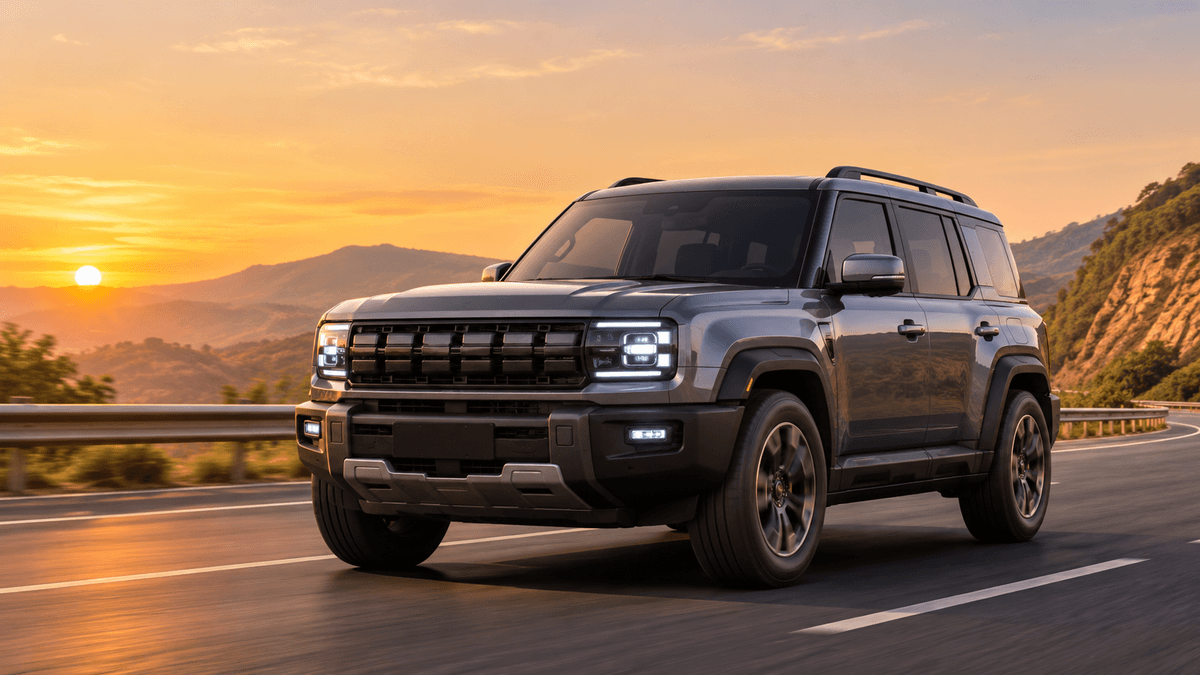
Alright, folks, buckle up! JSW, the new kid on the block that's making waves, has pulled back the curtain a bit more on their upcoming Combat PHEV. Everyone's been buzzing about this one, especially since we know JSW isn't here to play small. The big reveal? We're finally getting a clearer picture of its electric range, battery size, and what kind of total distance you can expect to cover.
This isn't just another car. This is JSW's entry into a segment that's slowly but surely gaining traction in India: the Plug-in Hybrid. For those of you who've been eyeing an EV but are still a bit nervous about charging infrastructure on long drives, a PHEV like the Combat could be the sweet spot. It's a pragmatic approach, offering the best of both worlds, and honestly, the expected range figures are quite interesting.
How Far Can This Combat Go on Electric?
Let's get straight to what you really want to know: how much electric goodness are we talking about here? While official, precise figures are still under wraps, the industry chatter suggests the JSW Combat PHEV is aiming for a substantial electric-only driving range. We're hearing it's likely to hover around the 70-90 km mark on a single charge.
Now, think about that for a second. For most city dwellers, that's enough to cover your daily commute, dropping the kids to school, doing your grocery run, and getting back home – all without sipping a drop of petrol. That's a huge saving on your fuel bill, isn't it? The battery capacity, while not officially stated, is expected to be a reasonably sized pack, balancing the cost and the usable electric range. This sweet spot means you won't be carrying around an unnecessarily heavy and expensive battery, but you'll still get practical EV driving for everyday use. And when you need to go further, the petrol engine kicks in seamlessly. It's like having your cake and eating it too, without the range anxiety that often comes with pure EVs on a long highway sprint.
Total Range & Practicality for the Indian Buyer
Here's the thing — an electric-only range is great, but for a country like India, total range is just as, if not more, important. With a full tank of petrol and a charged battery, the JSW Combat PHEV is expected to offer a combined total range that could easily cross the 900-1000 km mark. Yes, really. That kind of figure puts it right up there with some of the most efficient petrol-only cars on sale, but with the added benefit of significant electric-only running.
Imagine taking a trip from Mumbai to Goa, or Delhi to Jaipur, with minimal fuel stops. That's the kind of freedom a PHEV with this much range can offer. It's perfect for those who do a mix of city driving and occasional long highway hauls. You get the environmental benefits and lower running costs in the city, and the peace of mind of a petrol engine when you venture out. JSW seems to be playing a smart game here, targeting a customer who wants to embrace green tech without compromising on practicality or long-distance capability, which frankly, is a big deal for us Indians who love our road trips.
Specs At A Glance
Feature | Details (Expected) |
|---|---|
Electric-only Range (ARAI) | Likely 70-90 km |
Battery Capacity | Expected to be a moderately sized LFP/NMC pack (TBA kWh) |
Total Range (PHEV Combined) | Expected to exceed 900-1000 km |
Engine Type | Petrol engine + Electric motor (Specifics TBA) |
Charging Time (AC) | Expected to be 3-4 hours (from 0-100%, depending on charger) |
Charging Time (DC Fast) | DC fast charging capability expected (Specifics TBA) |
How Does It Stack Up Against The Competition?
When you talk about PHEVs in India, the market isn't exactly flooded, is it? Most of what we have are either pure EVs or strong hybrids. The JSW Combat PHEV will likely go up against some established players, though perhaps not direct PHEV rivals. For comparison, let's look at the Tata Nexon EV Max, which offers a decent 453 km ARAI range for a full EV. The Combat PHEV's 70-90 km electric-only range might seem less on paper, but remember, it's supplemented by a petrol engine, making it fundamentally different.
Then there's the Mahindra XUV400 EV, another strong contender in the electric SUV space. Both these EVs are great for urban use, but the Combat PHEV offers that crucial flexibility. For those who might also consider strong hybrids like the Maruti Grand Vitara or Toyota Hyryder, the Combat PHEV provides a significantly larger electric-only range and the ability to plug in, which those mild/strong hybrids don't. It's carving out its own niche, offering more electric-first driving than a hybrid and more long-distance freedom than a pure EV, all wrapped up in an SUV package.
The Good And The Not-So-Good
What We Like
- Practical Electric Range: 70-90 km is more than enough for most daily city commutes, cutting down fuel bills significantly.
- Exceptional Total Range: Over 900 km combined means no range anxiety on long drives, giving you true versatility.
- Fuel Flexibility: The best of both worlds – electric for city, petrol for highways. You're never stranded.
- Lower Running Costs: Cheaper to run daily than a pure petrol car.
- Pioneering Segment: JSW is pushing the PHEV segment, offering a unique proposition in the Indian market.
What Could Be Better
- Likely Higher Initial Cost: PHEVs are complex, combining two powertrains, so they usually cost more upfront than equivalent petrol or even some pure EV models.
- Charging Dependency: To truly benefit from the PHEV, you'll need to regularly charge it, which might still be a hurdle for some.
- Complexity: More components mean potentially more things to maintain in the long run compared to a simpler petrol car.
- Weight: Carrying both a battery and an engine adds weight, which can impact dynamic performance slightly.
Price & When You Can Buy It
As excited as we all are about the JSW Combat PHEV's capabilities, the crucial question of pricing remains. Currently, JSW hasn't revealed any official price brackets. Given the technology involved and its positioning, we expect the JSW Combat PHEV to be priced at a premium, likely in a segment above most mass-market compact SUVs. Pricing will be officially announced closer to its market launch.
As for when you can get your hands on one, the Combat PHEV is expected to hit showrooms later this year or early next year. JSW is keen on making a strong entry, so we anticipate a comprehensive launch strategy. Keep an eye out for booking announcements and test drive opportunities, because this one's definitely worth a closer look!
Our Verdict
Honestly, the JSW Combat PHEV could be a real game-changer for the Indian market, particularly for buyers who are on the fence about going full EV. The expected 70-90 km electric range is genuinely usable for daily urban commutes, saving you money where it matters most. And that claimed total range of over 900 km? That's just brilliant for our highway-loving nation. It effectively eliminates range anxiety, a major hurdle for many.
While the initial cost might be a bit steep compared to a petrol equivalent – that's just the nature of PHEVs – the long-term running cost savings and the sheer versatility it offers could make it a very compelling package. We feel JSW is hitting a sweet spot here, offering a pragmatic green solution that doesn't ask you to compromise on freedom. If they get the pricing right and back it up with a solid service network, the Combat PHEV isn't just a combatant; it could be a segment leader.