What's The Big News?
So, remember how we were all tracking the EV sales numbers? Well, the first half of 2026 just dropped, and let me tell you, it's a game-changer! India's electric vehicle market exploded with a whopping 79 percent year-on-year growth, clocking over 1.48 lakh units sold. That's a massive leap from the 82,535 units we saw in the same period last year.
But the real headline isn't just the growth; it's the tectonic shift in the leaderboard. Tata Motors, no surprise there, still owns the top spot. But below them? Mahindra's pulled a rabbit out of the hat, leapfrogging JSW MG to snatch the second position! And guess who's quietly making their presence felt at number four? None other than Maruti Suzuki. Talk about a shake-up!
Mahindra's Electric Charge: What's Driving The Surge?
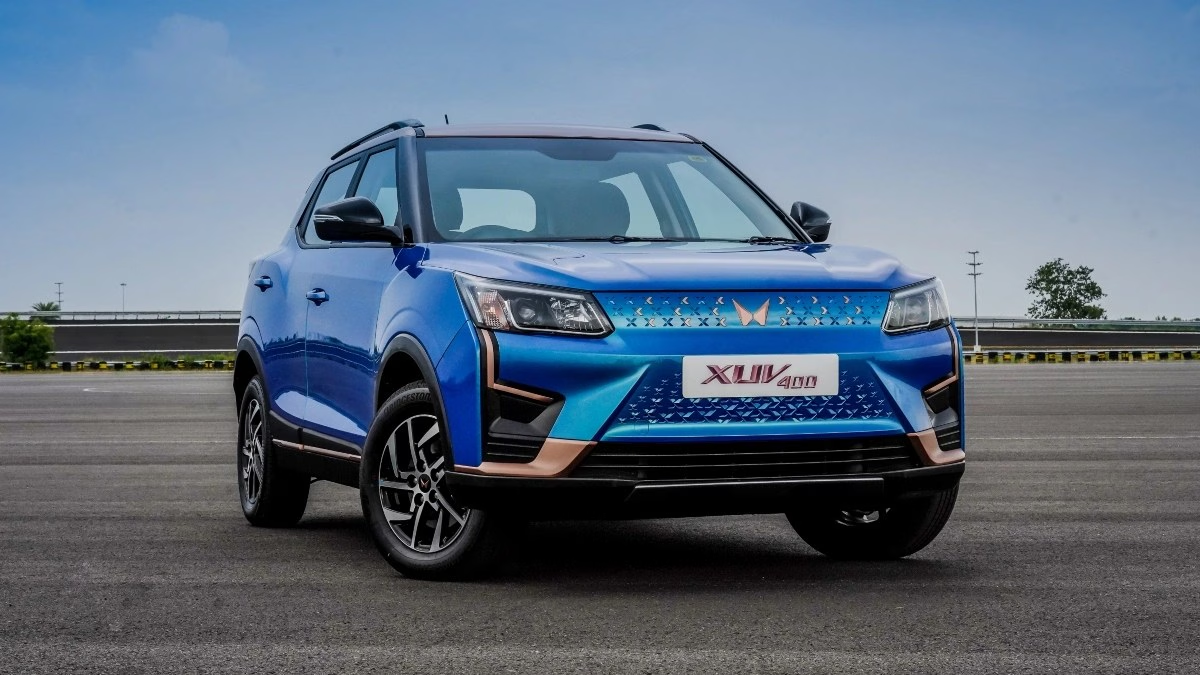
Mahindra's performance has been nothing short of phenomenal. They've recorded the highest growth among the top three EV players, and honestly, it shows. A lot of this surge is down to their renewed focus and, let's be frank, the XUV400. It's not a perfect car, but it offers a solid package for the price, especially for someone looking for a proper SUV stance with an electric powertrain.
They've been aggressive with their marketing, expanding charging infrastructure partnerships, and pushing sales in Tier 2 and Tier 3 cities where the XUV400’s rugged appeal resonates. It feels like they've really listened to customer feedback and focused on reliability and range, two things Indian buyers prioritize heavily. We're also seeing the initial fruits of their future EV portfolio announcements, like the upcoming BE.05 and the iconic Thar.e, which are definitely generating a lot of buzz and perhaps influencing purchase decisions even for current models.
The Shifting Sands: JSW MG's Slide & Maruti's Slow Burn
Now, for JSW MG, slipping to third place after holding strong isn't ideal, but it's not the end of the world either. The Comet EV is a niche product, and while the ZS EV is a competent offering, perhaps the competition has simply caught up or even surpassed it in terms of perceived value or availability. With JSW's recent investment and partnership, we're expecting to see some fresh models and a renewed strategy soon, so I wouldn't count them out just yet.
Then there's Maruti Suzuki. Finishing fourth in H1 2026 might not sound like much, but for a brand that was a late entrant to the EV party, it's a significant statement. They don't have a wide range of EVs out yet – their current offerings are limited, but they're building momentum. This position clearly indicates that even with limited models, the Maruti badge still holds immense trust and pulling power. People trust Maruti for reliability and low running costs, and if they can deliver that in an EV, you'll see those numbers climb even faster. Their forthcoming models, like the eVX-based production car, are going to be crucial here.
Specs At A Glance
Since this isn't about a single new car launch but rather market performance, we'll give you a snapshot of the H1 2026 EV sales data:
Metric | Value |
|---|---|
Total EV Sales (H1 2026) | 1,48,023 units |
YoY Growth | 79% |
Total EV Sales (H1 Previous Year) | 82,535 units |
Market Leader | Tata Motors (Retained) |
Second Position | Mahindra (New) |
Third Position | JSW MG (Slipped) |
Fourth Position | Maruti Suzuki |
How Does It Stack Up Against The Competition?
When we talk about stacking up, we're looking at the big picture here, not just one car against another. Tata Motors, despite the rising competition, continues to be the undisputed king. Their wide portfolio, from the tiago-ev">Tiago EV to the nexon-ev">Nexon EV and punch-ev">Punch EV, covers multiple price points and body styles, giving them an unmatched advantage. They've also been early movers, building a strong ecosystem.
Mahindra's strategy seems to be focusing on a more premium, SUV-centric approach. While the XUV400 takes on the Nexon EV directly, their upcoming models like the BE.05 and Thar.e are targeting different segments, aiming for a distinct brand identity. They're not just chasing volume but also brand perception, which is smart.
JSW MG, on the other hand, has had a slightly mixed bag. The ZS EV is a strong contender, but the Comet EV, while innovative, hasn't been a volume driver for everyone. Their upcoming models and partnership with JSW will be critical to regain lost ground and truly compete with the diversified portfolios of Tata and Mahindra.
Maruti Suzuki, the late entrant, is playing the long game. They're leveraging their massive dealership network and reputation for reliability. Their current limited offerings mean they're not yet going for the kill, but their presence at fourth spot clearly shows the potential once their dedicated EV platforms start rolling out more models. They're a silent but formidable force, and everyone's watching what they do next.
The Good And The Not-So-Good
What We Like
- The sheer pace of EV adoption: 79% growth is phenomenal, showing Indian buyers are embracing electric.
- Mahindra's aggressive comeback: It's fantastic to see an Indian giant really push the boundaries and challenge the status quo.
- Maruti Suzuki's quiet rise: Even with limited models, their entry at fourth spot signals huge future potential and brings more mainstream trust to EVs.
- Intensified competition: More players mean better products, better tech, and ultimately, better value for us, the buyers.
What Could Be Better
- JSW MG needs a stronger follow-up: While their current EVs are good, they'll need new, compelling models to reclaim their footing.
- Charging infrastructure: Still a major hurdle for wider adoption, especially outside metros. We need more reliable and faster chargers.
- Lack of affordable options: While numbers are growing, the sub-10 lakh EV segment is still largely underserved, limiting access for many.
- Policy consistency: Clear, long-term government policies are crucial to sustain this growth and attract further investment.
Price & When You Can Buy It
Since we're discussing market trends and not a specific product launch, there's no 'price' or 'buy date' for the overall market. However, what this data does tell us is that the market is maturing, and manufacturers are offering a wider range of price points. You've got options starting from around ₹8-9 lakh for entry-level models to upwards of ₹20-25 lakh for more premium offerings.
The good news is, with more players entering and competition heating up, we can expect even more competitive pricing and diverse options in the coming months and years. So, if you're planning to go electric, you'll have plenty to choose from, likely at better value than before.
Our Verdict
Honestly, this H1 2026 sales report isn't just a bunch of numbers; it's a loud and clear message: India's EV revolution is well and truly underway, and it's accelerating faster than anyone anticipated. We're past the early adopter phase, and now real competition is kicking in.
Mahindra's leap is a testament to their renewed focus and product strategy, while Maruti's quiet ascent is a strong indicator of the mass market's readiness for electric. Yes, there are still challenges like infrastructure and pricing, but the momentum is undeniable. Here's the thing — this isn't just about environmental responsibility anymore; it's about smart business and giving Indian buyers what they truly want: reliable, affordable, and practical electric mobility. The next few years are going to be absolutely electrifying!