What's The Big News?
Remember when people said electric cars were just a rich man's toy? Well, those days are long gone. The latest sales numbers for the first half of 2026 are out, and they show a massive, undeniable shift in how India wants to commute. We are looking at a jaw-dropping 79 percent year-on-year growth in electric passenger vehicles, with total sales hitting 1,48,023 units. That is up from 82,535 units in the same period last year.
But the real story isn't just the big number. It's who is taking home the trophies. While Tata Motors continues to sit comfortably at the top of the mountain, Mahindra has pulled off a massive coup by overtaking JSW MG Motor to grab the second spot. To make things even more interesting, Maruti Suzuki has quietly slipped into the fourth position (about time, Maruti). The playground is getting crowded, and the old guard is starting to sweat.
The Rise of Mahindra: How the Tables Turned
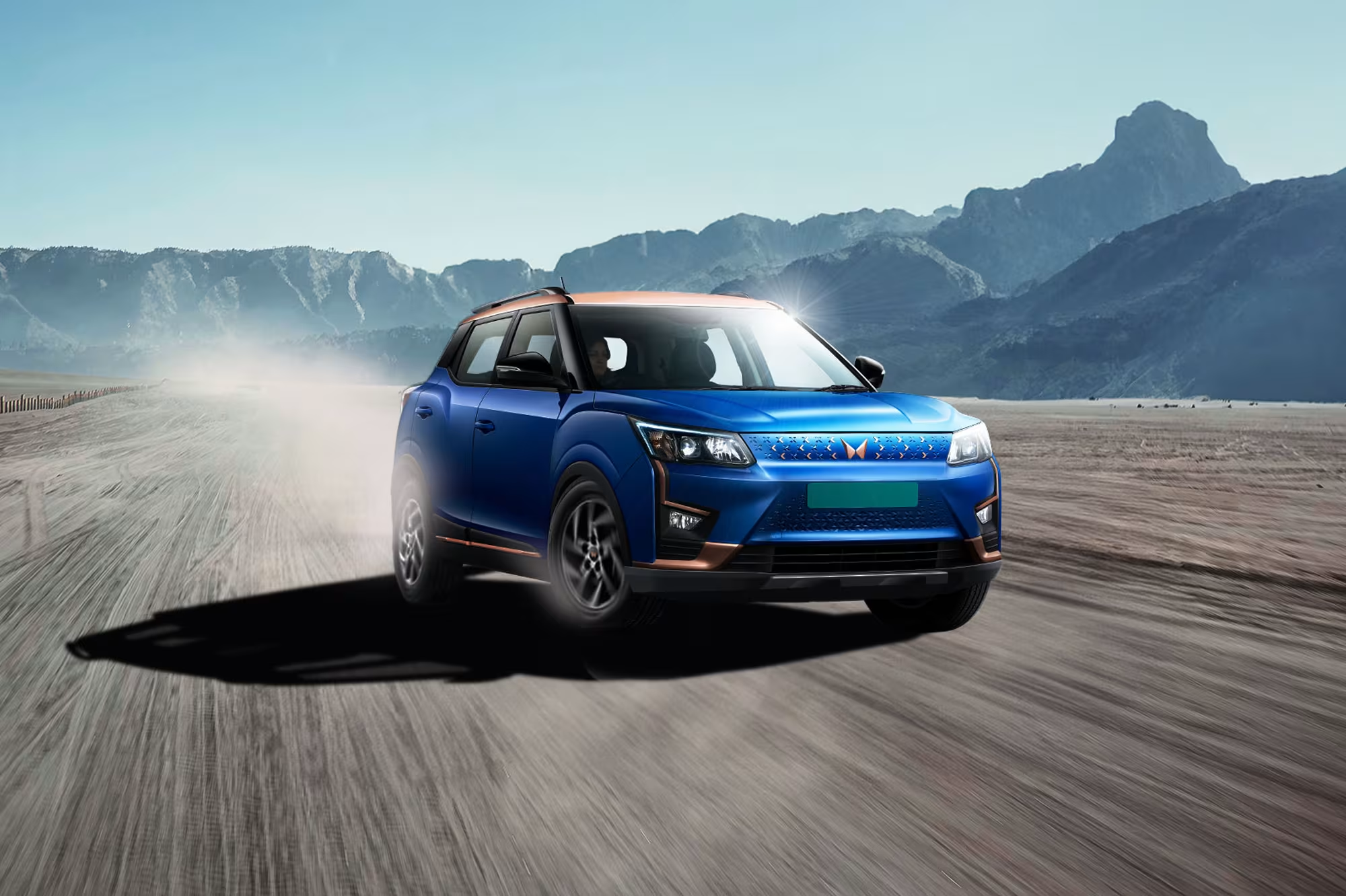
Let's look at Mahindra. For the longest time, they had just one real horse in the race—the XUV400. While it was a decent effort, it often felt like a stopgap measure compared to Tata's onslaught of the Nexon, Tiago, and Punch EVs. But Mahindra did not just sit back and watch. They ramped up production, improved their software, and worked hard on their dealer network.
This hustle has paid off in spades. By recording the highest growth rate among the top three EV manufacturers, Mahindra managed to leapfrog MG Motor. It's a huge psychological win. MG has been a serious player with the ZS EV and the quirky Comet, but they couldn't hold off the sheer domestic force of Mahindra. It turns out Indian buyers still love their big, muscular SUVs, even when they run on battery power.
Tata's Lead and Maruti's Calculated Entry
Tata Motors is still the undisputed king of this jungle. Make no mistake, they sell more EVs than almost everyone else combined. However, their market share is slowly being chipped away as stronger rivals enter the ring. You can't expect to hold 70-80% of a rapidly maturing market forever.
Then there's Maruti Suzuki. They took their sweet time entering the electric arena, preferring to let others do the heavy lifting of building the ecosystem. But now they have grabbed the fourth spot. While they don't have a massive portfolio of EVs yet, their sheer distribution network and brand trust mean that even a soft entry translates to big numbers. It is like buying a mid-spec Swift—people trust the badge blindly, and that's working in their favor even in the EV space.
Specs At A Glance
Parameter | H1 2025 Performance | H1 2026 Performance | Growth / Status |
|---|---|---|---|
Total EV Passenger Vehicle Sales | 82,535 units | 1,48,023 units | 79% YoY Growth |
Market Leader | Tata Motors | Tata Motors | Leader (Share Slightly Reduced) |
Second Place Holder | JSW MG Motor | Mahindra & Mahindra | Mahindra Overtook MG |
Fourth Place Holder | Others | Maruti Suzuki | New Entry in Top 4 |
Highest Growth Rate (Top 3) | TBA | Mahindra | Confirmed Leader in Growth |
How Does It Stack Up Against The Competition?
Let's break down this battle of the titans. Tata Motors remains the gold standard for budget and mid-range EVs. Their strategy of converting existing internal combustion engine platforms has given them a massive head start. They offer something for everyone, from the entry-level Tiago EV to the premium SUVs.
Mahindra, on the other hand, is playing the premium, rugged angle. They aren't trying to sell you cheap hatchbacks. They want you to buy into their lifestyle SUV narrative, and with their upcoming born-EV range, they are aiming straight for Tata's premium offerings.
MG Motor is the wild card here. They have the Comet EV for tight city spaces and the ZS EV for highway cruisers. While they have fallen to third place, they still offer some of the most tech-loaded cabins for the price. They need to refresh their lineup quickly if they want to reclaim their silver medal from Mahindra.
The Good And The Not-So-Good
What We Like
- Massive 79 percent growth shows that Indian buyers are genuinely embracing electric mobility.
- Healthy competition between Tata, Mahindra, and MG means better features and pricing for you and me.
- Maruti's entry into the top four ensures that EV service networks will soon reach the remotest corners of India.
What Could Be Better
- Public charging infrastructure still isn't keeping pace with this massive surge in sales.
- Tata's monopoly is shrinking, but they still hold a massive chunk, limiting aggressive price wars.
- We need more affordable long-range options under the fifteen lakh bracket.
Price & When You Can Buy It
Since we are talking about overall industry sales rather than a single car launch, there isn't a single price tag to discuss here. However, the market dynamics suggest that we are heading towards a very competitive price war. With Maruti entering the fray and Mahindra expanding its electric portfolio, expect upcoming EVs to be priced very aggressively.
We expect the next wave of mass-market EVs to start around the ₹10–15 lakh mark, making them highly accessible to the average Indian family. If you are planning to make the switch to electric, the next twelve months will bring an absolute flood of new options across all price brackets.
Our Verdict
Look, the numbers don't lie. India's EV revolution isn't a future projection anymore; it is happening right now in front of our eyes. Mahindra’s jump to the second spot is proof that buyers are willing to trust other legacy Indian brands if they bring the right product to the table.
Here's the thing — while Tata has enjoyed a peaceful reign at the top, they can no longer afford to be complacent. With Mahindra breathing down their neck and Maruti Suzuki slowly waking up from its slumber, the real winners of this battle are going to be us, the consumers. More choices, better range, and sharper pricing are just around the corner.